


 SK Hynix, Intel Discuss U.S. Memory Chip Production Deal
  Meta Unveils Muse Charm AI Device, Expands Smart Glasses Lineup
  SpaceX Nasdaq 100 Weight to More Than Double in Rebalance
  France Urges Faster AI Push Despite Safety Risks
  Microsoft Stock Upgraded as Stifel Sees Stronger Azure Growth
  SoftBank Raises $11.1 Billion in Bond Sale to Fund OpenAI Investment
  US Federal Register Drops Alibaba Qwen AI Search Tool
  Guterres Urges Stronger Global AI Safeguards Ahead of UN Assembly
  Apple Pay Set for India Launch With Axis Bank
  China Reviews Broadcom Switch Use in State Data Centres
  Meta Partners With Shopify to Bring Shop Pay Checkout to Muse AI
  Nvidia CEO Jensen Huang Expected at Trump-Xi State Dinner
  Westinghouse Targets $50 Billion Valuation in U.S. IPO
  Meta CEO Zuckerberg Backs Independent AI Safety Reviews Over Development Slowdown
  OpenAI Urges US-Led Global Standards for Frontier AI
  Hyundai CEO Warns Chinese Automakers Could Disrupt US Market


 Add as a preferred source on Google
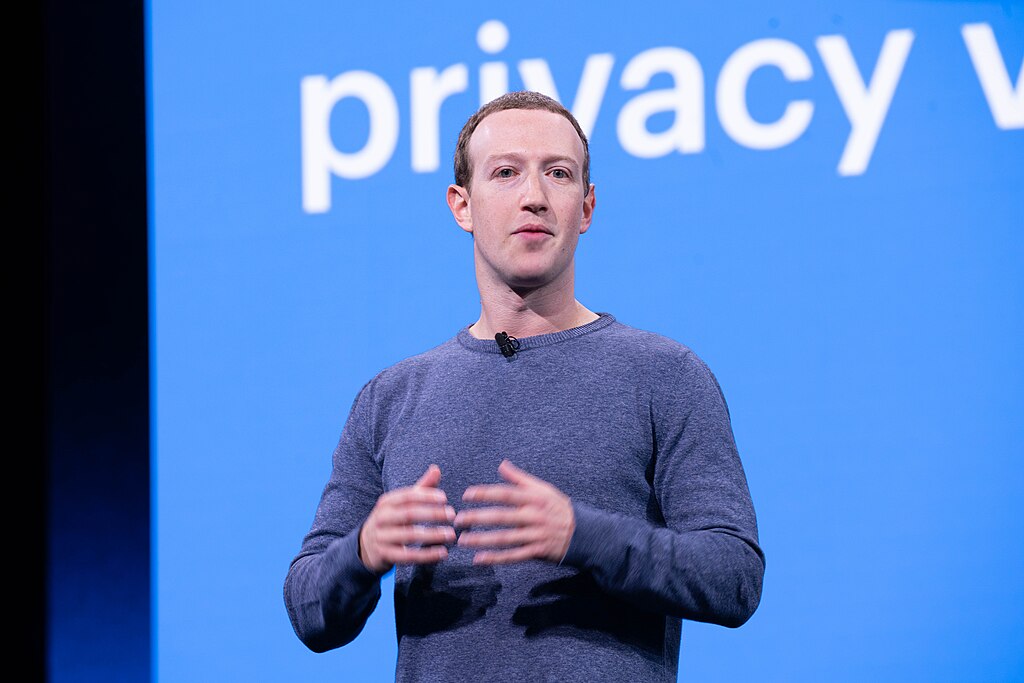
After the social media giant revealed its fourth-quarter earnings, investors in Facebook parent Meta's shares were in for a pleasant surprise: a 14% increase in shares.
Facebook CEO Mark Zuckerberg was interrogated by the Senate with "blood on his hands" from illegal content on his company's social media platform. The company announced its first dividend in history, and investors rewarded Meta with a spike in share price despite a challenging macroeconomic climate that caused worldwide advertising spending to decline.
In addition to announcing a substantial 25 percent increase in revenue, Meta's fourth-quarter results showed an equally impressive 201% increase in profits, as per Bloomberg. The company also announced a dividend without letting the public know about it before today's news release.
Mark Zuckerberg Emphasizes AI Focus Amidst New Dividend Policy and Market Response
Zuckerberg, like Alphabet CEO Sundar Pichai, focused his remarks on Meta's fourth-quarter results call on artificial intelligence. Meta is a significant player in artificial intelligence, much like Google, Microsoft, and Amazon. The company made headlines last month when Zuckerberg revealed that Meta will purchase hundreds of thousands of NVIDIA GPUs for his AI models this year.
Nevertheless, Meta had declared a 50-cent dividend for its Class A and Class B shares prior to his remarks. The company's earnings release also stated that the dividend would now be paid every three months as if that weren't shocking enough. Wall Street was forced to realign Meta's shares as a result, and in post-market trading, the company's management was rewarded with a healthy 14% increase in share price.
In comparison to several other companies, Meta's 50 basis point (0.50%) dividend yield on a 50-cent payout, based on its most recent regular hours closing price of $394.78, is quite low. The stock's annualized payout ratio is 13.4%.
Mark Zuckerberg Outlines Meta's Strategic AI Focus and Capacity Building Amidst Financial Shifts
Regarding expansion, Zuckerberg revealed that Meta's objective is to create the most sophisticated and well-liked artificial intelligence goods as well as offerings. This is being done with the intention of spreading AI to extensive use cases that give developers, entrepreneurs, and creative access to artificial intelligence models to suit their requirements. Furthermore, the Facebook CEO acknowledged that Meta's "leaner" approach helps it concentrate on staying competitive in the AI race.
In addition, Zuckerberg acknowledged that Meta had "underbuilt" its GPU clusters for Reels and that, in the process of building capacity, Meta should have built enough capacity to support both Reels and a "Reels sized A.I. service" in order to avoid having to deal with a capacity shortage sooner rather than later. According to Zuckerberg, future models will require more "compute-intensive" training and operation, though it's still unclear how big and capable they will be.
Photo: Anthony Quintano from Westminster, United States, CC BY 2.0, via Wikimedia Commons








.jpg)