


 Gold Price Rises as Softer Dollar and Fed Rate Expectations Boost Bullion Demand
  Moody’s Says Peru’s President-Elect Keiko Fujimori Could Boost Investor Confidence
  Gold Price Drops as Strong Dollar and Fed Rate Outlook Weigh on Bullion
  Oil Prices Slip as OPEC+ Boosts August Output, Oversupply Concerns Weigh on Crude Market
  Goldman Sachs Raises USD/JPY Forecast, Sees Yen Weakness Persist Through 2027
  Asian Markets Slip as AI Earnings Season Looms, Oil Prices Fall Ahead of Key Fed Signals
  FxWirePro: Daily Commodity Tracker - 21st March, 2022


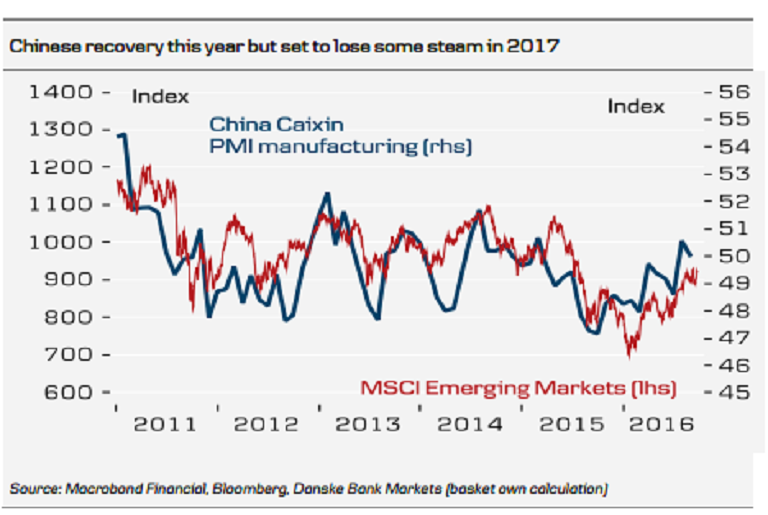
China’s growth momentum is expected to lose steam over the coming months, especially in the second quarter of 2017 as the stimuli that helped in the process of a slight economic recovery is likely to fade out in the near term.
A fiscal stimulus via infrastructure investments, a rebound in the construction sector due to strong home sales and reduction in home inventories amid a moderation in exports, supported by a 10 percent weakening of the CNY that boosted the country’s performance in the past few months, are all expected to fade out going into 2017, Danske Bank reported.
Chinese growth indicators continue to support the case for a moderate recovery this year. PMIs have trended higher and industrial production and profits have rebounded too. Indicators for electricity production and steel production confirm this.
In addition, monetary policy is expected to be on hold for the rest of this year but may witness a resumption of easing during the second quarter of 2017 as the cycle loses some steam. However, fiscal policy is the preferred tool for now as the government is concerned over rising leverage in the financial system and regional housing bubbles. The government has already indicated a further fiscal easing in the second half but not how much.
"We believe the fiscal growth impact will on average be slightly smaller in 2017 versus 2016. Also, we look for a continuation of the weakening trend of the CNY, not least versus the EUR where we expect a 10 percent depreciation +12M," the bank commented in its research report.
However, stock markets can be expected to remain more challenged in 2017 as growth momentum fades a bit again.







