


 Asian Stocks Fall as Bond Yields Surge Ahead of Trump-Xi Summit
  Wall Street Ends Flat as Oil, Treasury Yields and Fed Jitters Rattle Markets
  China’s ‘Lipstick King’ Says AI Won’t Replace Livestream Hosts
  US Stock Futures Fall as Treasury Yields Surge Ahead of Trump-Xi Summit
  Russian Envoy Dmitriev Heads to US for Ukraine Talks
  Australia Unemployment Hits Five-Year High Despite Strong Jobs Growth
  RBI Uses $10 Billion Currency Swaps to Drain Excess Rupee Liquidity
  U.S. Dollar Hits Two-Month High as Oil, Treasury Yields Surge
  Fed Unveils Stablecoin Rules Under GENIUS Act
  U.S. Treasury Yields Surge as 30-Year Hits 22-Year High
  U.S. 10-Year Treasury Yield Hits 2007 High as Fed Rate Hike Bets Rise
  Oil Prices Jump 3% as Houthi Attack Revives Supply Fears
  Asian Stocks Fall as Surging Bond Yields Rattle Markets
  Gold Holds Near $4,275 as Rising Treasury Yields Fuel Fed Rate Hike Bets
  Asian Currencies Mixed as Dollar Holds Near Two-Month High
  Gold Prices Fall as Treasury Yields Rise on Fed Rate Hike Bets
  European Stocks Fall as Bond Yields and Geopolitical Risks Weigh


 Add as a preferred source on Google
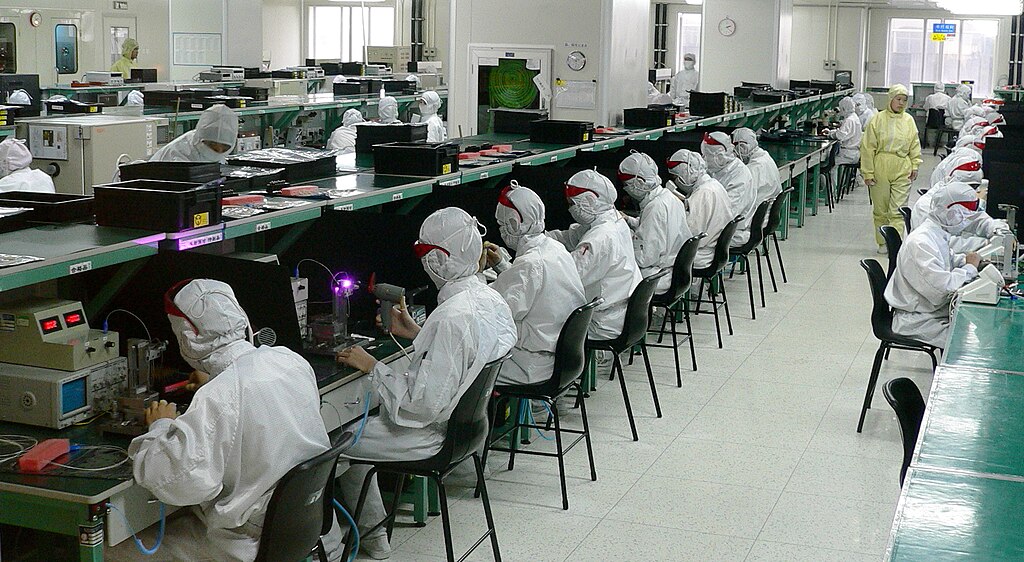
China’s manufacturing sector showed strong momentum in February, with factory activity expanding at the fastest pace since December 2020, supported by stronger domestic and overseas demand. A private-sector survey released Wednesday indicated that improving orders and supply chain conditions are helping boost confidence among Chinese manufacturers.
The RatingDog China General Manufacturing Purchasing Managers’ Index (PMI), compiled by S&P Global, climbed to 52.1 in February from 50.3 in January. The reading exceeded analysts’ expectations of 50.2 and marked the highest level recorded in more than five years. In PMI surveys, a reading above 50 signals expansion in manufacturing activity, while a figure below 50 indicates contraction.
The results differed from an official government survey released earlier in the day, which showed factory activity contracting for the second straight month. Economists note that such differences are common because private and official PMI surveys often vary in their coverage, sample sizes, and types of companies surveyed.
According to the private survey, demand for Chinese manufactured goods strengthened in February, with new orders increasing for the ninth consecutive month. The pace of growth in new orders was the fastest since December 2020, pushing overall factory output growth to its strongest level since June 2024.
Export demand also improved significantly, as new export orders recorded their sharpest increase since September 2020. A furniture exporter based in eastern China reported that improved supply chain efficiency and overseas warehouse availability helped boost its orders by 30% to 40% in January compared to a year earlier. The company said demand continued to grow in February.
Yao Yu, founder of RatingDog, said the manufacturing PMI is likely to maintain moderate expansion in the near term. However, he noted that sustaining the recovery will depend on consistent demand and whether rising confidence encourages companies to increase hiring and investment.
Global trade developments may also benefit Chinese manufacturers. Economists say China could gain an advantage after the U.S. Supreme Court ruled against former President Donald Trump’s emergency tariffs imposed last year, potentially narrowing tariff gaps with other countries.
Meanwhile, the U.S. Trade Representative’s office said it will continue monitoring China’s compliance with last year’s trade truce while working to maintain balanced and fair bilateral trade relations.
Manufacturers’ optimism about future production also improved, with business sentiment reaching its highest level in 11 months. Despite this, hiring remained cautious. Employment rose slightly for the second consecutive month, marking the first back-to-back increase since mid-2021.
Stronger demand led factories to increase purchasing activity, which in turn pushed input costs higher. Input price inflation rose to its fastest pace since June 2022, with metal prices cited as a major contributor. As a result, manufacturers raised output prices for the second month in a row, with charge inflation reaching a 15-month high.
Investors and analysts are now watching China’s upcoming annual parliamentary meeting, where the government is expected to announce key economic targets for 2026. Markets are also awaiting the release of the country’s next Five-Year Plan, which will outline China’s future strategies for economic development, technological innovation, and green transition.







