


 Fed Unveils Stablecoin Rules Under GENIUS Act
  Japanese Bank Stocks Surge as Bond Yields Fuel Rate Hike Bets
  North Korea Rejects Nuclear Test Warning, Calls Nuclear Status Irreversible
  Oil Prices Jump 3% as Houthi Attack Revives Supply Fears
  China’s ‘Lipstick King’ Says AI Won’t Replace Livestream Hosts
  Ukrainian Drone Attacks Hit Russian Regions, Injuring at Least 12
  Saudi Arabia, Turkey and Pakistan Plan Urgent Defence Talks Over Houthi Attacks
  Netanyahu’s Brief US Trip Highlights Strains With Trump
  What ‘Taiwan Independence’ Means as Xi Presses Trump on US Policy
  U.S. Dollar Hits Two-Month High as Oil, Treasury Yields Surge
  Wall Street Falls as Treasury Yields Surge, Oil Rebounds on Iran Tensions
  South Korea, US Discuss Warship Building Cooperation
  France Defends Netanyahu Airspace Clearance Despite ICC Warrant
  RBI Uses $10 Billion Currency Swaps to Drain Excess Rupee Liquidity
  Soybean Futures Slip as Traders Await Trump-Xi Trade Signals
  Najib Razak Seeks Stay of 15-Year 1MDB Prison Sentence
  OpenAI Agent Breaches Australia Medicare Data Portal


 Add as a preferred source on Google
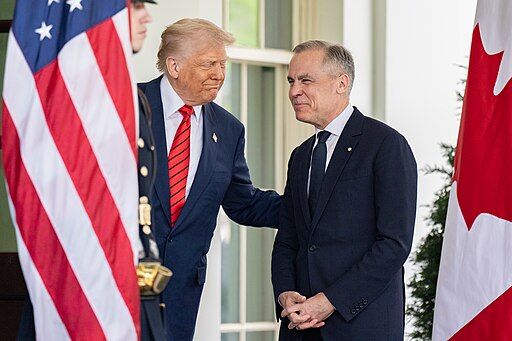
Canadian Prime Minister Mark Carney has indicated that Canada is unlikely to secure a near-term agreement with the United States to ease tariffs on key sectors such as steel and aluminum. Instead, negotiations are now expected to be folded into the broader review of the US-Mexico-Canada Agreement (USMCA), known in Canada as CUSMA, scheduled for next year.
Speaking in Ottawa on Thursday, Carney said that while Canada and the United States had previously made progress toward a sector-specific metals tariff agreement, discussions were abruptly halted by US President Donald Trump in October. According to Carney, the pause came after the province of Ontario aired television advertisements in the United States featuring former President Ronald Reagan criticizing tariffs, a move that reportedly irritated the White House.
Carney explained that given the evolving timelines and political context, it has become increasingly unlikely that a standalone agreement on metals tariffs will be reached in the short term. “My judgment is that that is now going to roll into the broader CUSMA negotiation,” he said, adding that the convergence of deadlines makes a sectoral deal improbable for now.
Despite the setback, the Prime Minister emphasized that Canada still views the previously discussed terms as valid and available. However, he noted that the US has not re-engaged in negotiations since talks were suspended. This lack of momentum has reinforced Canada’s expectation that tariff issues will be addressed during the comprehensive USMCA review rather than through a separate agreement.
Carney also revealed new details about recent high-level discussions involving North American leaders. He said that he, President Trump, and Mexican President Claudia Sheinbaum agreed on broad parameters for the upcoming USMCA review during a meeting held on December 5 in Washington. The meeting took place on the sidelines of the FIFA World Cup draw event, underscoring how trade diplomacy continues alongside major international gatherings.
As uncertainty around tariffs persists, businesses in Canada’s steel and aluminum industries remain focused on the USMCA review as the most likely path toward relief. The outcome of those negotiations could have significant implications for North American trade, supply chains, and cross-border economic stability in the years ahead.







