


 Fed’s Logan Signals 50 Basis Points More in Rate Hikes
  Trump Demands Powell Resign Over Fed Renovation Cost Overruns
  Morgan Stanley Predicts $10 Trillion RWA Market by 2030
  Fed’s Williams Sees One More Rate Hike in 2026, None in 2027
  IMF, World Bank Meetings Face Global Economic Risks Amid Iran War
  XRP Ledger Foundation Confirms 100B Supply Safe After Security Fix
  Hong Kong’s Second Solana ETF Launches With Lower Fees
  Bitcoin Price Drops as US Dollar Hits 18-Month High
  Fed’s Hammack Says Bond Yield Surge Is Not Driven by Inflation Fears
  RBI Uses $10 Billion Currency Swaps to Drain Excess Rupee Liquidity
  Oil Prices Fall as Russia Signals Higher Diesel Exports
  Philippines Current Account Deficit Seen at $19.1 Billion in 2026
  RBA Signals More Rate Hikes as Inflation Risks Rise
  Samsung, SK Hynix Shares Plunge as China Chip Competition Grows
  Gold's Tug-of-War: Geopolitical De-escalation Fights Falling Yields as Markets Eye US CPI


 Add as a preferred source on Google
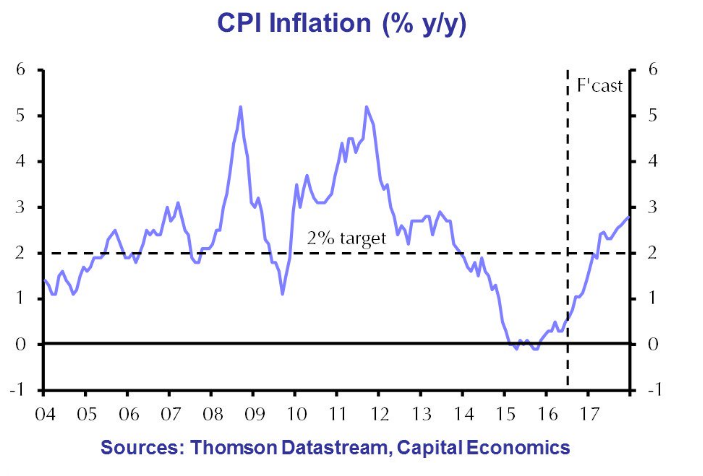
Data released by the Office for National Statistics on Tuesday showed that UK annual inflation rate as measured by the Consumer Prices Index (CPI) rose to 0.6 percent in July from 0.5 percent in June, beating expectations at 0.5 percent. The core inflation gauge (excluding energy, food, alcohol and tobacco) eased a bit to 1.3 percent in July versus 1.4 percent last, in line with expectations.
Today’s inflation report is the first official government data that covers the period after the EU referendum. There was no obvious impact from Brexit on today’s consumer price data, but it’s probably too early to spot signs of Brexit damage. It will be some time before the full effect of the fall in sterling following the Brexit vote feeds into the headline inflation rate. A weaker pound will cause inflation to rise more sharply in the coming months.
The pound is down by more than 12 percent since the EU referendum and almost 19 percent since its 2015 peak. Fall in the value of the pound had increased the cost of imports for manufacturers. Input prices faced by manufacturers rose 4.3 percent in the year to July, compared with a fall of 0.5 percent in the year to June. The cost of imported food materials rose 10.2 percent, and the price of imported metals rose 12.4 percent.
"There is no obvious impact on today's consumer prices figures following the EU referendum result, though the Producer Prices Index (PPI) suggests the fall in the exchange rate is beginning to push up import price faced by manufacturers," said Mike Prestwood, head of prices at the ONS.
Higher inflation will make it harder for the Bank of England to cut interest rates any further. The previously statically low headline inflation reading is now beginning to bounce higher in the first real set of data following the EU referendum vote. Joshua Mahony, of IG says "Inflation data doesn’t yet move the dial for the Bank of England’s monetary policy makers, who have arguably shifted their focus to growth and jobs in the wake of the referendum result."
The pound rallied after inflation rose faster than expected. The pound has gained almost one cent against the US dollar since the inflation report was released, to $1.2993. It has also recovered from three-year low against the euro, and was trading at €1.1506 at around 11:00 GMT, up from €1.1464 earlier.







