


 Makemation: a Nollywood movie that shows AI in action in Africa
  Trump Administration to Launch Autism Initiatives Targeting Acetaminophen Use and New Treatment Options
  NASA and Roscosmos Chiefs Meet in Florida to Discuss Moon and ISS Cooperation
  Meta and Google just lost a landmark social media addiction case. A tech law expert explains the fallout
  Astronomers have discovered another puzzling interstellar object − this third one is big, bright and fast
  FDA Pilot Program Eases Rules for Nicotine Pouch Makers
  Neuralink Plans High-Volume Brain Implant Production and Fully Automated Surgery by 2026
  Federal Reserve Balance Sheet Reduction: Brookings Research Outlines Possible Path Forward
  Trump Signs Executive Order to Boost AI Research in Childhood Cancer
  How the war in Iran is already affecting UK farmers and food production
  SpaceX’s Starship Completes 11th Test Flight, Paving Way for Moon and Mars Missions
  Trump and Merck KGaA Partner to Slash IVF Drug Costs and Expand Fertility Coverage


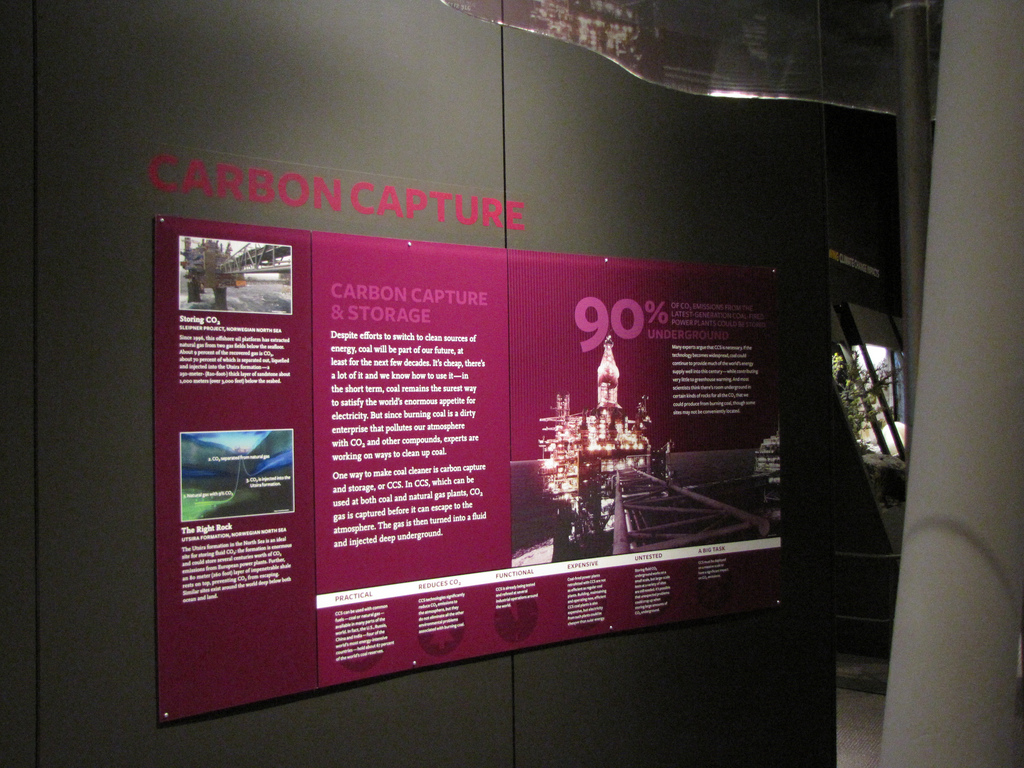
The government is giving no sign that it intends to replace fossil fuels with renewables, so the only way to avoid the carbon emissions from burning natural gas and oil is the widespread use of carbon capture and storage (CCS) technology to extract CO₂ from the exhaust gases. But there’s still no commercial CCS in operation, grants for developing it are being axed, and the process of separating hot gases is inefficient and energy intensive, which adds to the cost.
However, while natural gas produces CO₂ when the methane it contains is burned, it also contains the cleanest fuel: hydrogen. When separated from carbon, hydrogen is a perfect zero-emission fuel, for example for vehicles with high energy requirements. Hydrogen-powered vehicles can use reverse electrolysis in hydrogen fuel cells to generate electricity, or burn hydrogen in an engine, driving pistons through combustion. The only emission from this is pure water.

Hydrogen fuel cells are already in, albeit limited, use. Tom Page, CC BY-SA
The trick, then, is to separate the hydrogen from the carbon. The technology used to do this for decades has converted methane to hydrogen but only with CO₂ as a by-product. Now the Institute for Advanced Sustainability Studies and the Karlsruhe Institute of Technology in Germany have demonstrated a process through which it’s possible to strip hydrogen from methane – without producing any greenhouse gases.
Cracking idea
In a device only 1.2 metres high built from stainless steel and quartz, the technique passes methane bubbles through a column of molten tin where 78% of the methane is cracked into pure hydrogen without producing any CO₂. Instead, pure carbon forms a solid on the surface of the molten tin. This can be used in car tyres as a filler, as a pigment or, if activated like charcoal, in filters. As a solid, carbon does not contribute to greenhouse warming.
The process requires heating to 1,200°C, but this can be powered by using some of the hydrogen generated. Cracking methane this way is a more efficient way of removing carbon than using CCS on exhaust gases, and it can be done before the hydrogen fuel is burnt. New or older gas power stations refitted to burn pure hydrogen would emit mostly water as steam.
A heavier reliance on gas will result in higher prices and increased pressure to retrieve gas from unconventional sources such as through fracking. This may remain objectionable for those who fear ground water contamination, but using this methane cracking technique it should not be objectionable on climate change grounds.
Future fuel
What will gas refineries of the future look like, and how will hydrogen fuel be distributed? One problem is that transporting hydrogen is hazardous. A possible workaround is ammonia, a combination of hydrogen and nitrogen that is usually found in fertilisers and bleach but is also a fuel. Once hydrogen is bound to nitrogen as ammonia it can be transported at lower pressure, meaning cheaper and lighter fuel tanks. In World War II, Belgian buses were fitted to run on ammonia.
However, weight for weight, ammonia has less energy than petrol and unless burnt carefully it produces poisonous nitrogen oxides, which would mean strictly enforcing emissions standards like those for diesel engines (with all their problems). Even with leaps in battery technology, the charging infrastructure for low-emission vehicles is still lacking but zero emission vehicles could carry ammonia for their fuel cells.
The advantage of deriving low emission fuels from natural gas is that there is already enormous infrastructure in place and giant energy firms that are skilled at using it, with known reserves for many years. Now the industry has the techniques to make it carbon free.

Mark Shackleton does not work for, consult, own shares in or receive funding from any company or organization that would benefit from this article, and has disclosed no relevant affiliations beyond the academic appointment above.
Mark Shackleton, Professor of Finance, Associate Dean Postgraduate Studies, Lancaster University
This article was originally published on The Conversation. Read the original article.








