


 China’s ‘Lipstick King’ Says AI Won’t Replace Livestream Hosts
  Japan Private-Sector Growth Slows as Domestic Demand Weakens
  RBI Uses $10 Billion Currency Swaps to Drain Excess Rupee Liquidity
  US Stock Futures Fall as Treasury Yields Surge Ahead of Trump-Xi Summit
  Australia Unemployment Hits Five-Year High Despite Strong Jobs Growth
  Gold Prices Fall as Treasury Yields Rise on Fed Rate Hike Bets
  Fed Unveils Stablecoin Rules Under GENIUS Act
  Asian Currencies Mixed as Dollar Holds Near Two-Month High
  Canadian Dollar Faces Pressure as Fed-BoC Policy Gap Widens
  Oil Prices Fall on U.S.-Iran Hormuz Deal Hopes
  U.S. Treasury Yields Surge as 30-Year Hits 22-Year High
  Asian Stocks Fall as Bond Yields Surge Ahead of Trump-Xi Summit
  Gold Holds Near $4,275 as Rising Treasury Yields Fuel Fed Rate Hike Bets
  European Stocks Fall as Bond Yields and Geopolitical Risks Weigh
  Asian Stocks Fall as Surging Bond Yields Rattle Markets
  US Comfortable With Canada Trade Standoff as Import Bans Loom
  Dollar Holds Near Two-Month High as Yen Approaches 160


 Add as a preferred source on Google
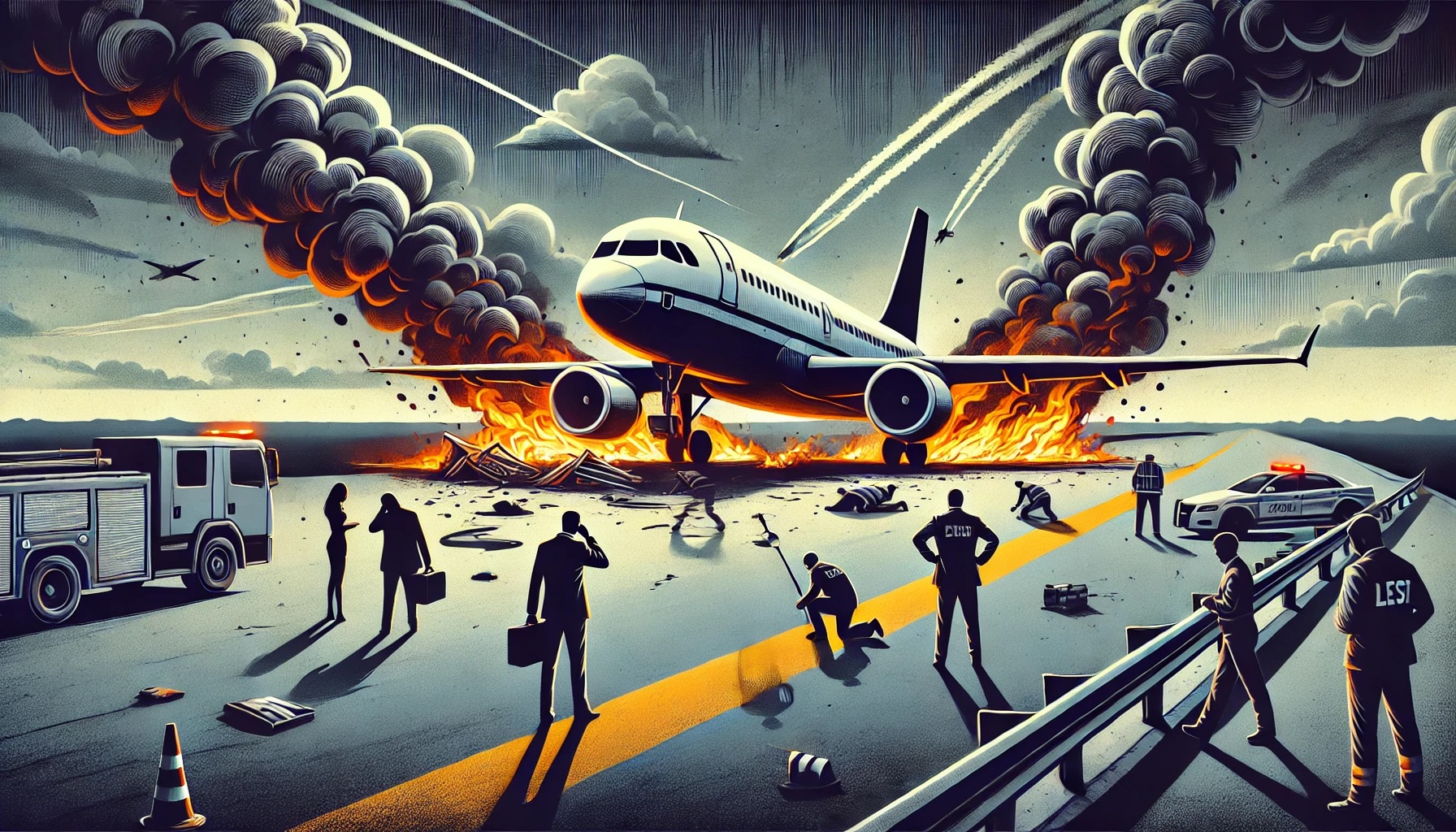
A deadly plane crash in South Korea has experts disputing whether a bird strike or landing gear failure triggered the catastrophe, leaving 179 dead.
Bird Strike Theory Questioned in Deadly South Korea Plane Crash
On Sunday, aviation experts voiced their doubts about the possible role of a bird strike, which authorities have mentioned as a possible cause of the Jeju Air tragedy, casting doubt on the circumstances surrounding the deadliest jet crash in South Korean land.
There were many unanswered concerns surrounding the twin-engine Boeing 737-800, including when it belly-landed at Muan International Airport, rumors of a potential bird strike, and the apparent lack of landing gear.
Local media showed the single-aisle plane hurtling down the runway without landing gear before it slammed into a wall, sending flames and debris flying in all directions.
"At this point there are a lot more questions than we have answers. Why was the plane going so fast? Why were the flaps not open? Why was the landing gear not down?" this was stated by Gregory Alegi, a former instructor at the Italian Air Force Academy and an authority on aviation.
Investigators Focus on Bird Strike and Weather Factors
Investigating factors such as weather and the possibility of a bird attack are part of the ongoing investigation into the crash of Jeju Air Flight 7C2216 in South Korea. Out of the 181 individuals on board, 179 perished that day, Reuters reports.
The 2,800-meter length of the runway was deemed irrelevant by Deputy Transport Minister Joo Jong-wan, who also stated that the end barriers were constructed in accordance with industry norms.
No one from Jeju Air could be reached for comment at this time. During press briefings, Jeju Air said that an investigation is underway but declined to comment on the cause.
Landing Gear Failure and Pilot Response Under Scrutiny
According to Christian Beckert, a flight safety specialist and pilot with Lufthansa, the footage appeared to indicate that the majority of the plane's braking systems were not engaged, leading to a "big problem" and an abrupt landing.
If the landing gear had been destroyed when it was down, it would have been difficult to raise it again, according to Beckert, who also noted that it was improbable that a bird hit would have damaged it while it was up.
"It's really, really very rare and very unusual not to lower the gear, because there are independent systems where we can lower the gear with an alternate system," according to him. Further information should be revealed by the probe, he said.
South Korea will take the lead in a civil inquiry and collaborate with the National Transportation Safety Board in the US, the country of manufacture, in accordance with international aviation regulations.
Experts Suggest Multiple Factors Behind Crash
It might take months to piece together the sequence of events in an aviation catastrophe, according to experts, and the causes are typically a mix of elements.
According to South Korean officials, the flight data recorder and cockpit voice recorder were discovered approximately 2.5 hours after the disaster, at 11:30 a.m. (0230 GMT) and 2:24 p.m., respectively.
According to Trevor Jensen, an aviation expert from Australia, "so this appears to be unplanned." Jensen added that generally, emergency personnel would be prepared for a belly landing.
Shortly after the control tower sent out a bird strike warning, the pilots reportedly made a mayday call and tried to land, however it remained unclear if any birds were really hit.
Bird Strike and Emergency Decisions Raise More Questions
"A bird strike is not unusual, problems with an undercarriage are not unusual. Bird strikes happen far more often, but typically they don't cause the loss of an airplane by themselves," according to Geoffrey Thomas, editor of Airline News.
The CFM International engines could have been affected by a bird hit if a flock had been drawn into them, but the engines wouldn't have shut down immediately, allowing the pilots time to react, according to Geoffrey Dell, an expert in airline safety in Australia.
The pilots tried to land on the runway from the opposite direction after the bird attack warning and the mayday statement, according to an official from the transport ministry.
Marco Chan, a former pilot and current senior lecturer in aviation operations at Buckinghamshire New University, stated that this change of plan caused investigators to have more concerns.
"It was changed to the opposite direction fairly late as well, which added to the workload," said Chan. "It's a lot of guessing games at this stage."
Per Investing.com, the captain of the Boeing 737-800 had 6,823 flying hours and had been employed at that rank since 2019, according to the South Korean authorities. With almost 1,650 flying hours under his belt, the first officer had been with the company since 2023.
Among the most frequently flown aircraft in the world, the 737-800 has an excellent reputation for passenger safety. Its development predated the current Boeing safety crisis involving the MAX version.
According to Alegi, an aviation specialist from Italy, the magnitude of the accident could not be explained by birds colliding with the plane on their own.
"Of course there might have been a bird strike," remarked the doctor. "But the consequences are much too big for that to be the direct cause of the accident."







