


 Solidigm Eyes $150 Billion IPO as SK Hynix Expands AI Storage Push
  US Backs Musk in Fight Against EU’s €120 Million X Fine
  Pezeshkian Says US Must Choose When Iran War Ends
  SpaceXAI to Double Nvidia Chips at Colossus 2 by Year-End
  Trump Asks Supreme Court to Restore Third-Country Deportations
  France Defends Netanyahu Airspace Clearance Despite ICC Warrant
  Asian Currencies Mixed as Dollar Holds Near Two-Month High
  China Reviews Broadcom Switch Use in State Data Centres
  Trump Warns China Against Supporting Iran in Xi Talks
  Pope Leo Backs Press Freedom After White House Media Ban
  EU Defence Build-Up Too Slow for 2030 Russia Readiness Goal
  BlackBerry Shares Rise as Q2 Earnings, Revenue Beat Estimates
  What ‘Taiwan Independence’ Means as Xi Presses Trump on US Policy
  China’s ‘Lipstick King’ Says AI Won’t Replace Livestream Hosts
  Tencent Launches TenPayGo Payment App for Foreign Tourists in China
  Netanyahu Defends Israel at UN as Delegates Stage Walkout
  Ukrainian Drone Attacks Hit Russian Regions, Injuring at Least 12


 Add as a preferred source on Google
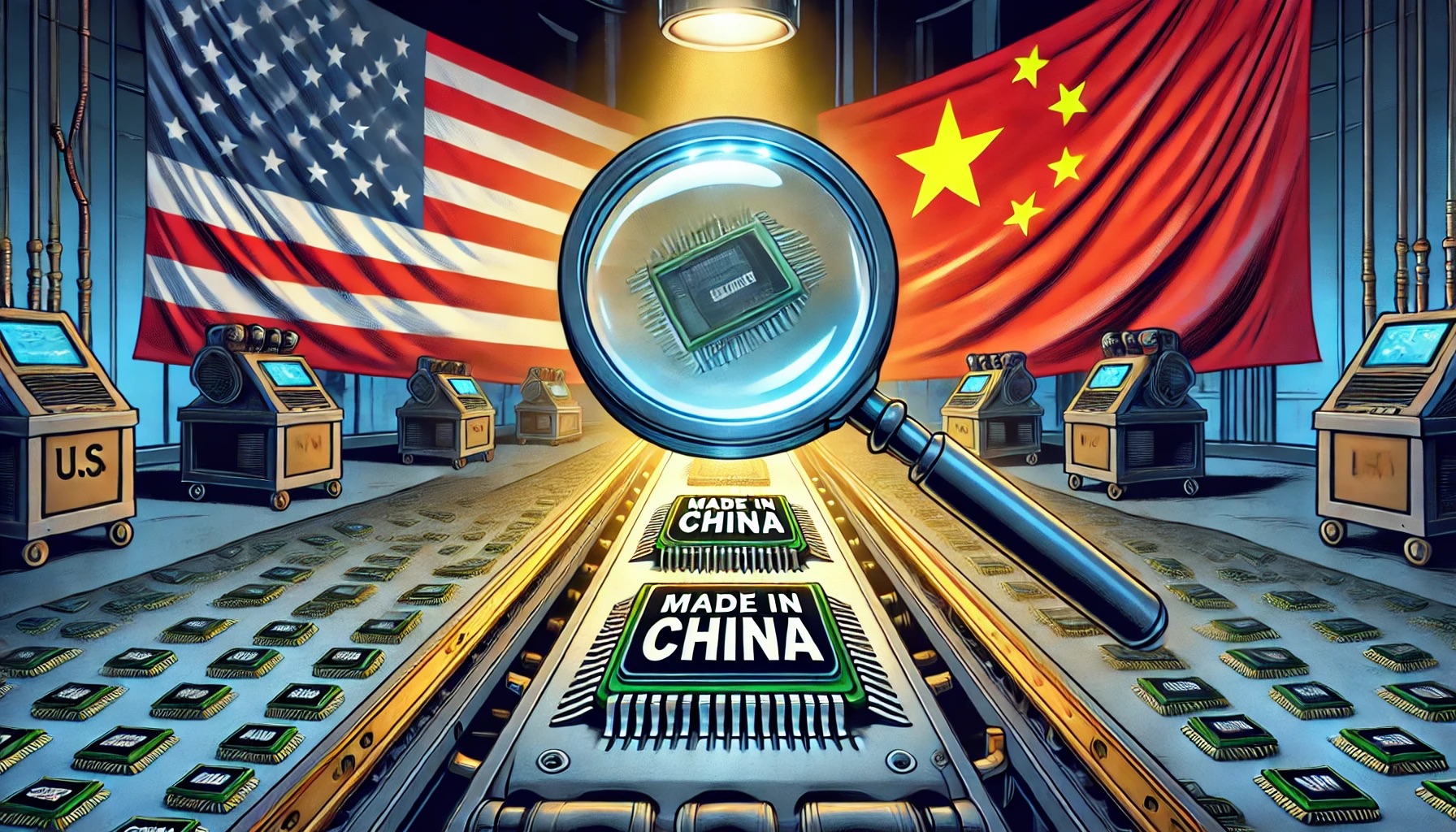
The U.S. has opened a trade investigation into Chinese legacy semiconductors, aiming to curb Beijing's state-driven chip buildup. The probe, announced just weeks before Donald Trump's inauguration, could lead to additional tariffs on imports from China.
Biden Launches Legacy Chip Trade Probe Targeting Chinese Semiconductors
U.S. taxes on Chinese chips used in commonplace products like cars, washing machines, and telecommunications equipment could increase as a result of a trade inquiry that the Biden administration launched on Monday into "legacy" semiconductors manufactured in China at the last minute.
The investigation, according to U.S. Trade Representative Katherine Tai, is an effort to safeguard the semiconductor industry from China's enormous state-driven stockpile of homegrown chips.
Officials from the Biden administration have stated that the "Section 301" investigation, which began four weeks prior to President-elect Trump's inauguration on January 20, will be transferred to his administration in January for finalization.
Trump to Inherit Tariff Plans Amid Semiconductor Tensions
Trump may have found an easy way to implement some of the steep 60% tariffs he warned on Chinese goods through this endeavor.
A 50% U.S. duty on Chinese semiconductors will be implemented on January 1st, as previously announced by President Joe Biden, who is leaving office. Advanced memory chips, artificial intelligence systems, and chipmaking machinery are all subject to stricter export restrictions under his government, Reuters reports.
The manufacturing processes utilized by legacy chips are over a decade old, and they are often significantly less complex than the chips used in artificial intelligence applications or advanced microprocessors.
U.S. Raises Alarms Over Chip Origins and Defense Concerns
On Monday, U.S. Commerce Secretary Gina Raimondo expressed her department's concern over research showing that a significant number of U.S. products contain chips manufactured in China. Raimondo explained that half of U.S. companies, including those in the defense industry, do not know where their chips originate, which she described as "fairly alarming."
The U.S. chips investigation, according to China's commerce ministry, is "protectionist" and will have negative effects on American companies while also causing disruptions in the worldwide chip supply chain. Chinese officials promised to "take all necessary measures to firmly defend its rights and interests."
Requests for comment were not promptly addressed by a representative of Trump's transition team.
China's Chip Production Sparks U.S. Investigation
While addressing reporters, Tai stated, "This is enabling its companies to rapidly expand capacity and to offer artificially lower-priced chips that threaten to significantly harm and potentially eliminate their market-oriented competition." He went on to say that the trade agency has found evidence that China is targeting the semiconductor industry for global domination.
A Federal Register notice on the probe states that the Biden administration has scheduled a public hearing for March 11-12 and will start receiving public comments on the matter on January 6. The notification states that the probe is expected to be finished within a year.
Trade Group Warns of Supply Chain Impacts
In 2018 and 2019, Trump triggered a nearly three-year trade war with Beijing by invoking Section 301 of the Trade Act of 1974 to apply tariffs of up to 25% on about $370 billion worth of Chinese imports. The probe is being undertaken under this same statute.
As a trade association for the United States' technology industry, the Information Technology Industry Council warned that the investigation would affect supply chains and economies around the world and encouraged the USTR to "not prejudge the outcome."
"And we strongly urge officials in the current and incoming administrations to conduct the inquiry in an objective and collaborative manner," added ITIC President Jason Oxman, who expressed his concern over the probe's launch during a presidential transition.
Focus Shifts to Critical U.S. Industries
Imports from China continue to dominate the U.S. market for consumer electronics, including smartphones, laptops, and gaming consoles.
According to a Biden administration official, the investigation would not only evaluate the effects of the imported chips but also their usage in downstream components and final items for vital sectors including healthcare, transportation, and defense.
The semiconductor fabrication industry in China, including its silicon carbide substrate and wafer production, will also be the focus.
In response to the COVID-19 pandemic's impact on semiconductor supply and the subsequent temporary halt in auto and medical equipment production, the United States has pledged $52.7 billion in additional subsidies to support chip production, research, and workforce development in an effort to establish its own semiconductor supply chain.







