


 Gold Price Rebounds as U.S.-Iran Tensions and Fed Minutes Keep Markets on Edge
  Nasdaq Futures Slide as AI Chip Stocks Sink Despite Samsung Earnings; SpaceX Debuts in Nasdaq-100
  Japan Revises Economic Blueprint to Reassure Markets on BOJ Independence
  Asia Stocks Fall as Samsung Earnings Fail to Ease AI Valuation Concerns
  Iran Begins Oil Sale Talks With Japan Under U.S. Sanctions Waiver Amid Shipping Risks
  Germany Seen Gaining as U.S. China-Built Ship Fees Reshape Trade
  European Stocks Hold Steady as Consumer Shares Rise, AI Tech Selloff Weighs on Markets


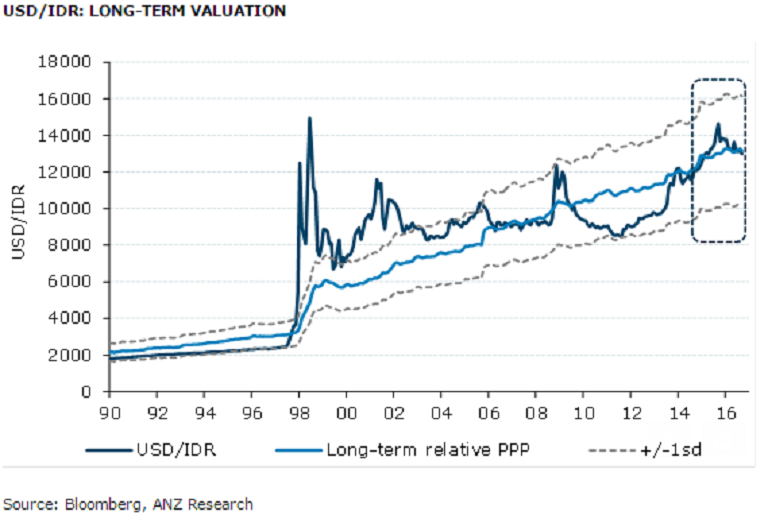
The better-than-expected tax amnesty flows at the end of the first phase of the program (1 July to 30 September) have reduced the downside risks to growth given that the extent of cuts in expenditure will be smaller. Still, Bank Indonesia is expected to cut the 7-day reverse repo rate by another 25 basis points to 4.75 percent at the October 20 monetary policy meeting to counteract weakness in public spending and ease liquidity tightness in the banking system.
The good progress in the tax amnesty program has helped underpin sentiment even though fund repatriation under the program has been hovering at a low 4-5 percent of total funds declared. Clearly, there has been a boost to investor confidence although the impact on the IDR via actual conversion is modest, ANZ reported.
A firm and stable IDR bodes well for Indonesian government bonds. The reduced risk of a larger budget deficit has helped ease our concerns over bond supply. Indeed, given the healthy funding run-rate (90.0 percent) and a likely positive reception to the retail bond offer, the government may meet its full-year bond issuance target in November.
"We maintain our 2016 fiscal deficit projection at 2.5 percent of GDP. A significant fiscal slippage from the government’s 2.4 percent target is unlikely as we turn more constructive on tax amnesty revenues after the good take-up rate in the first phase," ANZ commented in its latest research note.







