


 Jeff Bezos Invests $32 Billion in Blue Origin as Space Firm Targets Major Growth
  Australia Unemployment Hits Five-Year High Despite Strong Jobs Growth
  Airbus Finds A321neo Fuselage Quality Issue
  Fed Unveils Stablecoin Rules Under GENIUS Act
  Fed Unveils Stablecoin Rules Under GENIUS Act
  Gold Holds Near $4,275 as Rising Treasury Yields Fuel Fed Rate Hike Bets
  Meta Found Liable in New Mexico Facebook Data Privacy Case
  EQT Plans €1.7 Billion Sale of Parques Reunidos Stake
  Oracle Shares Fall as New Mexico AI Data Center Faces Power Delays
  FDA Approves Mirum’s Atebrioz for Rare Bone Disorder FOP
  Asian Stocks Fall as Surging Bond Yields Rattle Markets
  U.S. Treasury Yields Surge as 30-Year Hits 22-Year High
  Oil Prices Fall on U.S.-Iran Hormuz Deal Hopes
  Novo Nordisk Strikes €1.17 Billion Nanexa Drug Delivery Deal
  Japanese Yen Rebounds as Trump Flags Currency Weakness
  Wall Street Ends Flat as Oil, Treasury Yields and Fed Jitters Rattle Markets
  US Stock Futures Fall as Treasury Yields Surge Ahead of Trump-Xi Summit


 Add as a preferred source on Google
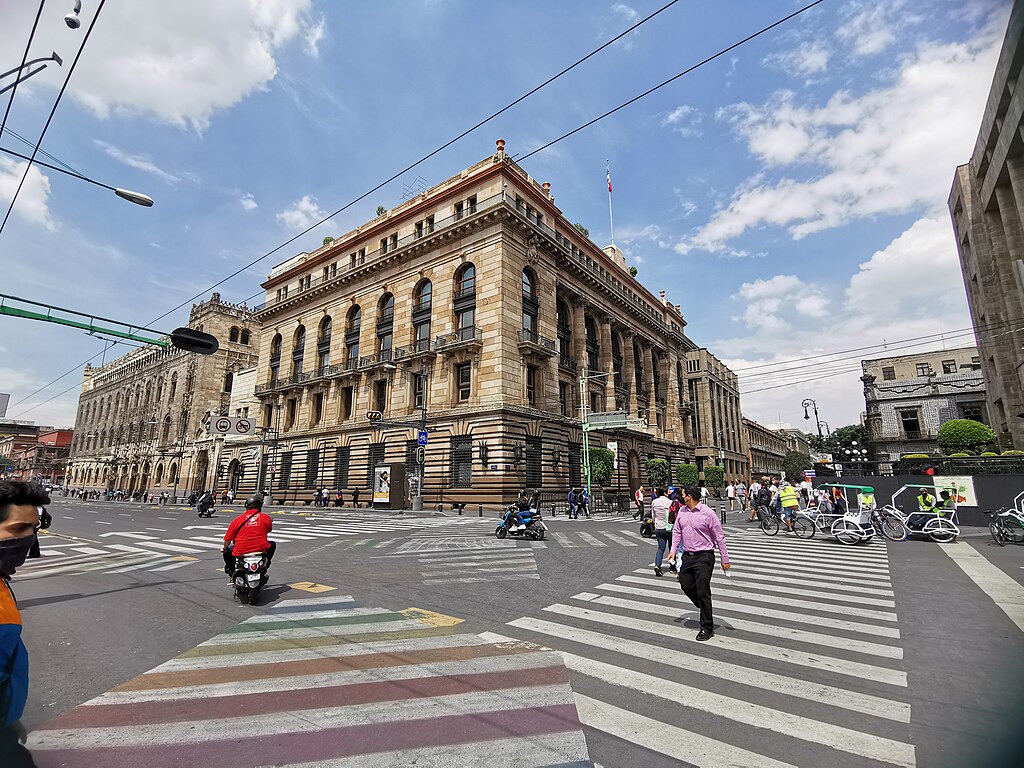
The Bank of Mexico lowered its benchmark interest rate by 25 basis points on Thursday, marking its third consecutive rate cut. This decision reflects progress in managing inflation and signals that additional rate reductions could be on the table if economic conditions remain favorable. Mexico’s central bank, commonly known as Banxico, dropped its key rate to 10.25%, a move widely anticipated by analysts.
The five-member governing board of Banxico voted unanimously to implement the reduction, reinforcing its commitment to stabilizing prices. The decision comes just a week after the U.S. Federal Reserve implemented a similar rate cut, underscoring a cautious yet supportive stance among North American central banks to stimulate growth while maintaining inflation control.
In a statement accompanying the decision, Banxico highlighted the improving inflation outlook, with core inflation expected to continue on a downward trajectory. "Looking ahead, the Board expects that the inflationary environment will allow further reference rate adjustments," the central bank noted, hinting at the possibility of additional rate cuts in the coming months.
Mixed Signals in Inflation Data
Mexico’s recent inflation data reflects mixed signals. In October, core inflation—which excludes volatile categories such as food and energy—fell to 3.80% year-over-year, down from 3.91% in September. However, headline inflation, which includes all consumer prices, ticked up slightly from 4.58% in September to 4.76% in October. Banxico has set a target of 3% for headline inflation, with an acceptable margin of one percentage point.
As inflation remains above the target, the central bank’s cautious approach aims to maintain stability while leaving room for potential adjustments. With this latest move, Banxico has left the door open for further cuts, depending on how inflation trends evolve.
Peso Woes and Economic Uncertainty
Despite the recent rate cuts, the Mexican peso has struggled, weakening sharply over the past six months. A series of post-election reforms in Mexico and concerns over U.S.-Mexico trade relations, particularly tariff threats, have contributed to investor unease. Economists are also watching the peso closely, as its continued depreciation could complicate the central bank’s monetary policy strategy.
“The board left the door open to further interest rate cuts over the coming months, but officials will be keeping a close eye on the peso—especially if the incoming Trump administration steps up its threats to impose tariffs on Mexico,” said Jason Tuvey, deputy chief emerging markets economist at Capital Economics. Such tariff threats could heighten trade tensions and add pressure to Mexico’s currency and economy.
Potential for Additional Cuts
Looking ahead, Banxico may continue easing its monetary policy. Alberto Ramos, head of Latin America research at Goldman Sachs, anticipates that Banxico will implement another 25-basis-point cut at its December meeting. However, he warns that an acceleration in the pace of cuts may be unlikely given the ongoing uncertainty in both domestic and external factors, particularly concerning Mexico’s bilateral relations with the United States.
For now, Banxico has raised its projection for average headline inflation in the fourth quarter of this year. Nevertheless, it remains optimistic that inflation will converge with its 3% target by the fourth quarter of 2025. This projection underscores the central bank’s long-term approach to managing inflation without disrupting economic stability.
As Banxico navigates these complex economic dynamics, its cautious rate reductions reflect an effort to balance growth and stability in an uncertain environment. The potential for further cuts hinges on inflation trends and the peso’s performance in the months ahead, setting the stage for a closely watched December meeting.







