


 China Keeps Loan Prime Rates Unchanged for 13th Straight Month as Policymakers Prioritize Credit Demand Recovery
  Taiwan Central Bank Likely to Keep Interest Rates Unchanged Through 2027
  RBA Minutes Signal Australia Central Bank Remains Ready to Raise Interest Rates if Inflation Persists
  New Zealand Unemployment and Inflation Debate Intensifies Ahead of 2026 Election
  Fed Chair Kevin Warsh Signals Policy Overhaul as Hawkish Rate Outlook Rattles Markets
  Best Gold Stocks to Buy Now: AABB, GOLD, GDX
  FxWirePro: Daily Commodity Tracker - 21st March, 2022
  BoE Policymaker Alan Taylor Signals No Need for Interest Rate Hike Amid Iran War Inflation Risks


The Bank of England’s policy announcement in August saw the Monetary Policy Committee vote for a multifaceted policy package as a reaction to the altered economic outlook after the Brexit vote. The stimulus package included a 25 basis points reduction in Bank Rate to 0.25 percent, a rise in asset purchases, and a new Term Lending Scheme to help ensure the transmission of policy. The MPC minutes showed that a majority on the committee were already in favour of lowering the rate to its ‘effective’ zero bound during its August meeting.
The central bank has averted specifying the exact level of the lower bound. It indicated that it judges it to be “close to, but a little above zero”.
“Our base scenario sees Bank Rate eased to 10bp at November’s policy meeting, alongside the next update of the Inflation Report projections. On prevailing market pricing, Bank Rate is not expected to return to the previous level of 0.50% until 2023,” said Lloyds Bank in a research note.
Beyond further reductions to the Bank Rate, the BoE Governor Carney has indicated that there is scope to expand all aspects of the stimulus package.
“With the initial £60bn of gilt purchases scheduled to last until February 2017, we consider February’s MPC meeting, alongside the updated Inflation Report projections, as the most likely time to deliver a further expansion of asset purchases,” added Lloyds Bank.

- News

- Economy

- Central Banks
- Investing
- Research
- Roundups
- Digital Currency
- Insights
- Technical Analysis
- Technology
- Business
- Law
- Health
- Nature
- Fintech
- Science
- Topic
- Opinions
- ©Econometrics LLC . All Rights Reserved.
Bank of England likely to further cut bank rate in November
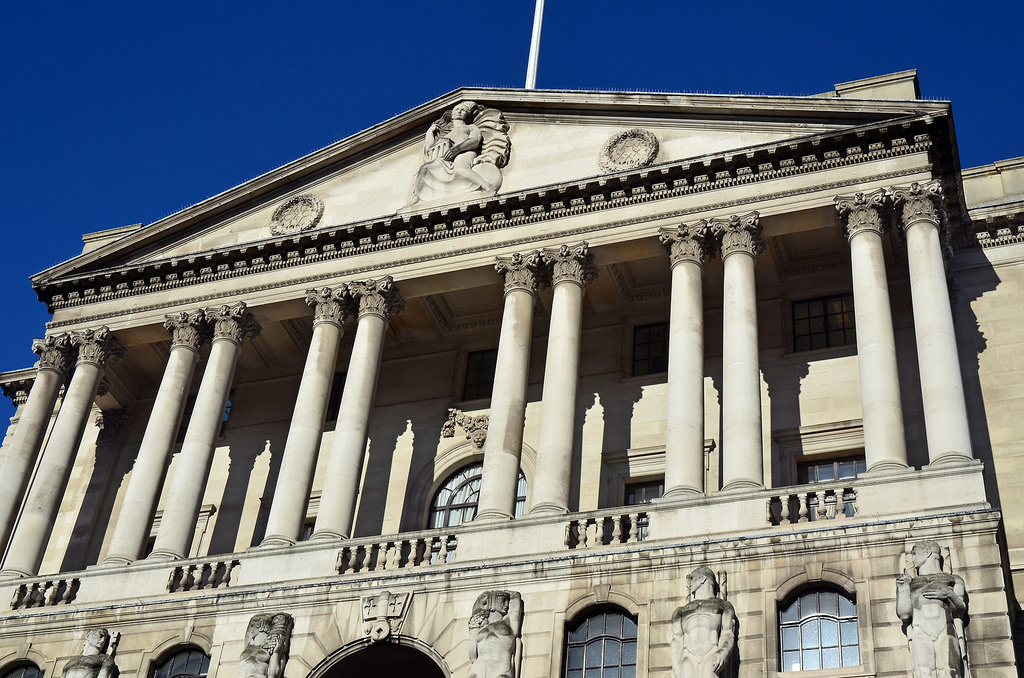
Part of facade of the Bank of England on Threadneedle Street. George Rex/flickr
Monday, August 15, 2016 12:19 PM UTC
Editor's Picks



- Market Data
Most Popular




