


 CDC Vaccine Review Sparks Controversy Over Thimerosal Study Citation
  Lost in space: MethaneSat failed just as NZ was to take over mission control – here’s what we need to know now
  NASA Partners with Katalyst to Save Swift Observatory with Innovative Docking Mission
  FDA Adds Fatal Risk Warning to J&J and Legend Biotech’s Carvykti Cancer Therapy
  Eli Lilly’s Inluriyo Gains FDA Approval for Advanced Breast Cancer Treatment
  Trump and Merck KGaA Partner to Slash IVF Drug Costs and Expand Fertility Coverage
  SpaceX Starship Explodes in Texas During Test, Citing Nitrogen Tank Failure
  SpaceX’s Starship Completes 11th Test Flight, Paving Way for Moon and Mars Missions
  Cogent Biosciences Soars 120% on Breakthrough Phase 3 Results for Bezuclastinib in GIST Treatment
  Neuren Pharmaceuticals Surges on U.S. Patent Win for Rare Disorder Drug
  SpaceX Prioritizes Moon Mission Before Mars as Starship Development Accelerates
  Is space worth the cost? Accounting experts say its value can’t be found in spreadsheets


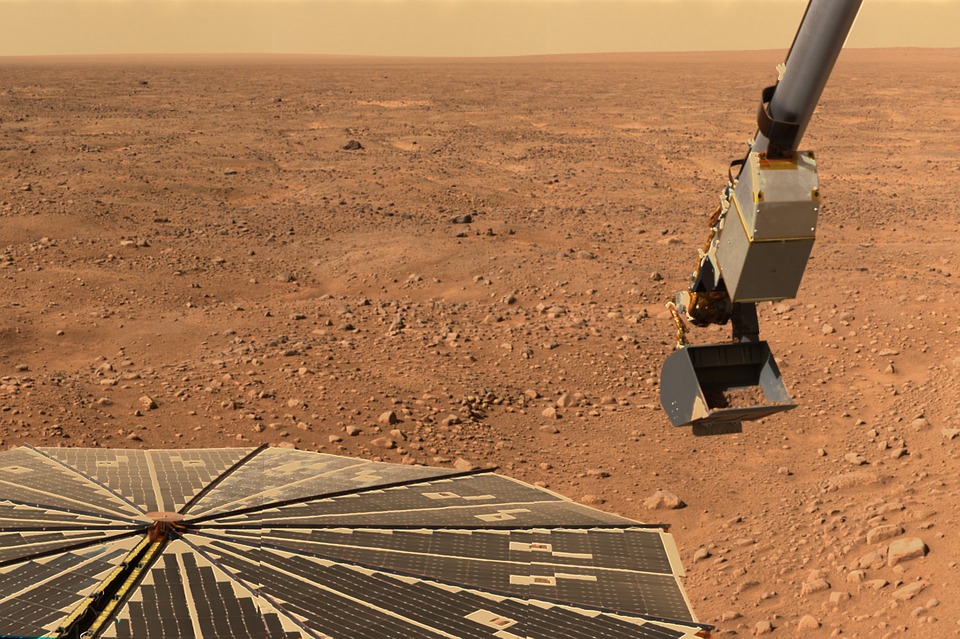
The atmosphere on Mars is so thin that humans won’t be able to breathe on the red planet unless they are wearing space suits. With plans to colonize it, wearing the bulky apparel would pose a considerable level of inconvenience to astronauts. Making Mars breathable to humans would be the best solution to this problem, and a species of sea-dwelling bacteria might be the key.
This new revelation comes courtesy of a new study by researchers, who published their findings in the journal Science. According to the results, cyanobacteria could be the solution to terraforming Mars to the point that it becomes breathable. This is due to its ability to conduct photosynthesis even under low-light conditions, which could then help in the production of oxygen under harsh conditions.
“The authors identified the primary donor chlorophyll as one of a few chlorophyll molecules in the red light–adapted enzymes that were chemically altered to shift their absorption spectrum. Kinetic measurements demonstrated that far-red light is capable of directly driving water oxidation, despite having less energy than the red light used by most photosynthetic organisms,” the study’s Abstract reads.
In a press release, one of the authors of the study, Jennifer Morton, notes how space agencies could send the cyanobacteria to Mars. This is to help cultivate the kind of environment that would allow for humans to breathe without needing a space suit.
“This work redefines the minimum energy needed in light to drive photosynthesis,” she says about their research.
It’s worth noting that this study is still in its early stages and there are still numerous factors about Mars that are unknown. Making solid conclusions with regards to the environment on the red planet, particularly in terms of what can help bring life to its surface, is just not possible right now. However, this news is still an encouraging development.













