


 EU Weighs New Trade Restrictions on Israeli West Bank Settlements
  Asian Stocks Rise as AI Chip Rally Offsets Middle East Tensions
  Dollar Slips as Oil Prices Ease, Fed Rate Outlook Remains Uncertain
  Oil Prices Jump as U.S.-Iran Conflict and Strait of Hormuz Tensions Shake Global Markets
  US-Iran Strikes Escalate as Strait of Hormuz Crisis Pushes Oil Prices Higher
  Oil Prices Slip but Stay on Track for Weekly Gains as U.S.-Iran Conflict Persists
  US Stock Futures Steady as Oil Prices Ease, Iran Talks Boost Market Sentiment
  Gold Prices Fall as US-Iran Conflict, Rising Oil Prices Fuel Fed Rate Concerns
  Asian Currencies Weaken as Stronger Dollar Weighs, Yen Supported by GPIF Repatriation Hopes


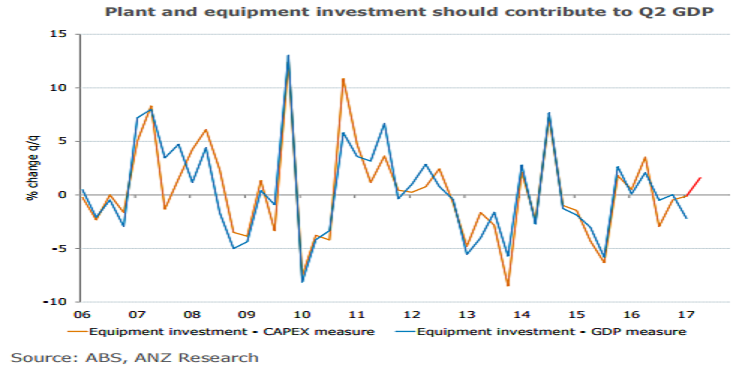
After a surprise rise in Q1, Australia’s CAPEX is forecast to decline in Q2, driven by falling mining investment. It’s not all bad news though, with one of the building blocks for GDP, plant and equipment investment, expected to post solid growth, while overall non-mining capex is likely to rise solidly.
Q2 CAPEX is expected to fall 0.8 percent q/q in Q2, more than reversing the rise in Q1. This decline is likely to be driven by falling buildings and structures spending, with ongoing weakness in the mining sector, especially in Western Australia, likely to weigh on the overall result, ANZ Research reported.
There is some risk around this result, given the potential impact of the Prelude floating LNG plant. The vessel departed Korea bound for Australia in late June, but the RBA noted in the August Statement on Monetary Policy that strength in mining investment earlier in the year “predominantly reflected earlier-than-expected prepayments on existing projects”. Variations in the timing of these payments may cause some further volatility to the mining figures in both the CAPEX and national accounts data.
Aside from this temporary factor, the most important part of the Q2 result is spending on plant and equipment investment as it will flow directly into the Q2 GDP result. P&E investment likely rose by 1.6 percent q/q, in line with solid capital goods imports in the quarter.
In particular, non-mining CAPEX is expected to be revised higher to AUD65bn, from AUD56.9bn. This implies a modest rise of 1 percent y/y – a welcome improvement from the two previous years of decline.
"We also expect firms will upgrade their investment plans for 2017-18, in line with the strength in business conditions. While the drag from the mining sector still has a bit further to run, the transition to other parts of the economy is well underway," the report commented.
Meanwhile, FxWirePro launches Absolute Return Managed Program. For more details, visit http://www.fxwirepro.com/invest







