


 Bendigo and Adelaide Bank Posts Strong Q3 Earnings, Announces AI-Driven Job Cuts
  Anthropic Fights Pentagon Blacklisting in Dual Federal Court Battles
  Goldman Sachs, ANZ Cut Oil Forecasts Amid U.S.-Iran Ceasefire Hopes
  Alibaba Shares Slide as Jefferies Slashes Price Target Over AI Spending and Business Losses
  Chalco Stock Surges as Q1 2025 Profit Forecast Jumps Up to 58%
  China's AI Stocks Surge as Zhipu and MiniMax Hit Record Highs
  Bill Ackman Eyes New Fund to Bet Against Market Complacency
  OpenAI Addresses Security Vulnerability in macOS App Certification Process
  Pilots Fear Retaliation for Refusing Middle East Flights Amid Ongoing Conflict
  SanDisk Joins Nasdaq-100, Replacing Atlassian on April 20
  FedEx Pilots and Union Reach Tentative Agreement on 40% Pay Increase
  Disney Plans to Cut 1,000 Jobs Amid Ongoing Restructuring Efforts
  Ford Issues Major Recall on Over 422,000 Vehicles Due to Windshield Wiper Defect
  BHP's Incoming CEO Visits China Amid Pricing Dispute with CMRG
  China Vanke Seeks Bond Extension Amid Mounting Debt Crisis
  MATCH Act: How New U.S. Chip Legislation Could Freeze China's Semiconductor Ambitions


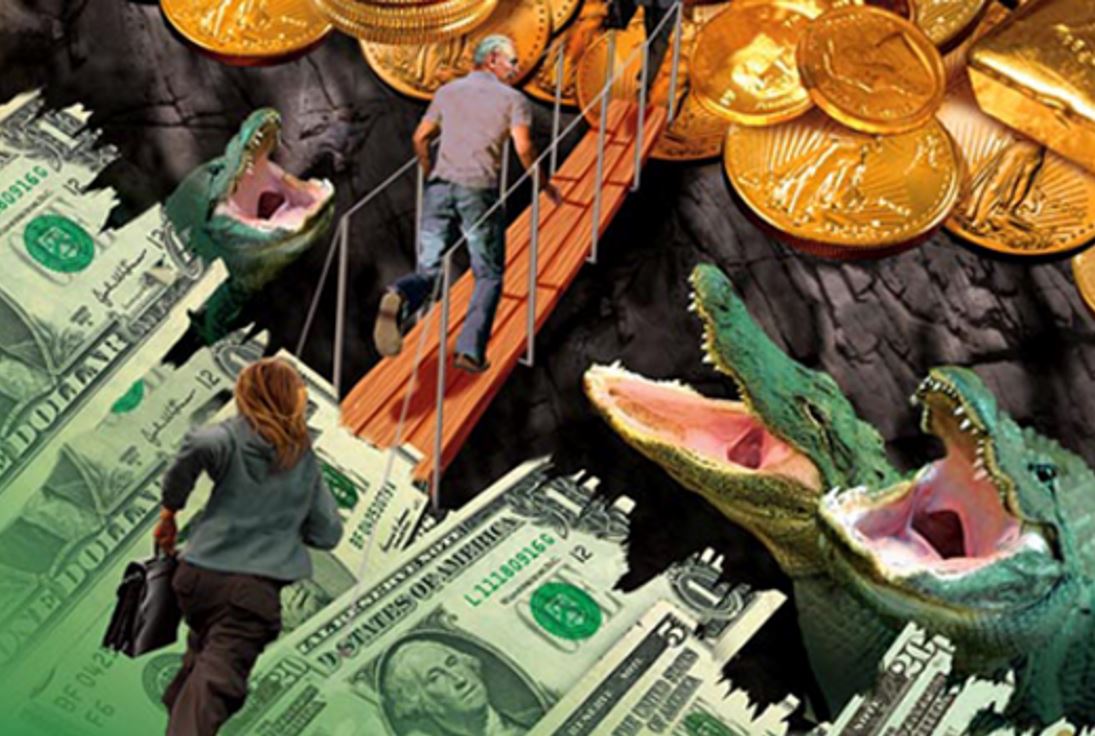
The United States is traditionally considered the icon of stability and beacon of hope in the global economic landscape. When the world treads on the edge of an economic downturn, investors often rush to the stability that American assets promise. High on the list of U.S. assets which global investors consider a safe haven are Treasury bills. Treasury bills have an enormous market, they are liquid and the almighty U.S. government backs them.
Increased appetite for U.S. treasury bills also provides a positive boost of the U.S dollar because foreign investors first need to buy the greenback before they can buy treasuries. Hence, the USD also tends to enjoy a boost that triggers a self-fulfilling prophecy that the greenback is a safe haven in times of international market volatility.
Unfortunately, the safe haven status of U.S. assets is being threatened as an economic impasse and political stalemate looms on Washington. This piece provides insight for rethinking your thesis on the safe haven status of U.S. assets.
Trouble is brewing on the U.S. front
The biggest threat looming over the U.S. economy is the possibility that Washington might not be able to meet its debt obligations in the next couple of months. When the U.S. Congress reconvenes next month, the first problem that the house must solve is how to raise the U.S. debt limit. For one, Republicans need to court the support of the house Democrats to raise the debt ceiling – a support that they are not likely to get. The second option will be to find a way to create a bipartisan agreement – creating such an agreement is often an agonizingly slow process.
If Congress is unable to raise the U.S. debt limit, it risks putting the U.S. government in a position where it is unable to repay its obligations. Arturo Hammond, an analyst at ECN Capital notes that "if the U.S government is unable to meet debt obligations, its ability to back Treasuries will be placed under serious scrutiny and investors won't waste time to seek out other safe haven assets."
Another threat (with low odds) hanging over the U.S. economy is the possibility of a nuclear war with North Korea. In the last couple of weeks, Washington and Pyongyang have been engaged in a war of words leading to a raising of the DEFCON level. Of course, North Korea has backed off its threats but the possibility of U.S. military action on Pyongyang is not yet off the table.
You may want to consider these safe havens
The first non-U.S. safe haven asset that investors may want to consider buying is gold – gold is a traditional safe haven asset that manages to keep its shine. Gold is a reasonable hedge against the potential fallout of the U.S. government's inability to raise the debt ceiling. Of course, you shouldn't sell all your assets to buy gold; yet, you should consider holding between 5% and 10% of your assets as gold.
On the forex front, investors may want to consider loading up on the Euro as a safe-haven asset in lieu of the USD. To begin with, the European economy has largely recovered and the bloc is recovering at a rapid pace. In fact, the Euro is currently the second-most important asset in the world and its liquidity is backed by the financial centers of the eurozone.







