


 Add as a preferred source on Google
The distinctions among different occupations are quite different than focusing on different industrial sectors, or education levels. For example, US manufacturing and construction took significant hits during the downturn, but ultimately account for roughly 1/8th of US employment, making up around 19mn jobs combined.
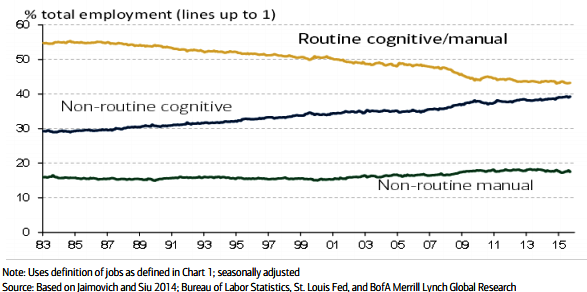
In contrast, the occupations that combine for routine jobs make up over 40% of total employment. Similarly, while the US is becoming more of a 'service" sector economy, "service" occupations occur within different industries, only at different levels.
And while skill level is to some extent proxied by education, polarization is still a distinct issue compared to education.
"There have been some secular trends in the labor force as the share of workers with a bachelor's degree or higher is now around 30% of the population, but generally the occupational impact from changing educational attainment has been aligned with the difference between cognitive and manual jobs, as opposed to routine and non-routine ones", says Bank of America.
Since the early 1980s, the share of occupations that are non-routine, both in terms of cognitive as well as manual jobs, have risen over the past 30 years, compared to the decline in overall routine jobs.

- News

- Economy

- Central Banks
- Investing
- Research
- Roundups
- Digital Currency
- Insights
- Technical Analysis
- Technology
- Business
- Law
- Health
- Nature
- Fintech
- Science
- Topic
- Opinions
- ©Econometrics LLC . All Rights Reserved.
“Polarization” is not new semantics for US industry shifts or educational attainment
Wednesday, October 28, 2015 5:06 AM UTC
Editor's Picks



- Market Data
Most Popular




