


 BOJ Expected to Hold Rates Steady While Signaling More Hikes Ahead
  Gold Prices Fall Amid Rate Jitters; Copper Steady as China Stimulus Eyed
  Fed Minutes Signal Rate Hikes Remain Possible as Inflation Risks Persist
  BSP Sees Philippine Inflation Easing, Keeps Policy Options Open
  Fed Holds Interest Rates Steady as Kevin Warsh Says Rising Treasury Yields Tighten Financial Conditions
  Asian Chip Stocks Plunge as Bond Yields Fuel AI Valuation Fears
  Eurozone Bond Yields Fall as Oil Slump Eases Inflation Fears Ahead of Central Bank Meetings
  US Dollar Holds Steady as Fed Rate Bets and Iran Tensions Drive Markets
  Wall Street Gains as Treasury Yields Fall, Fed Minutes Signal Inflation Risks


 Add as a preferred source on Google
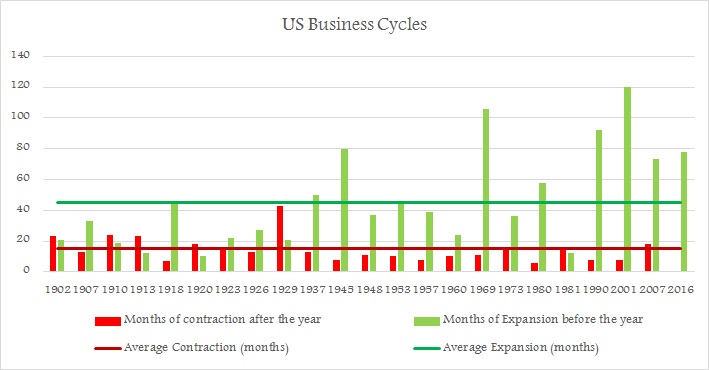
Last time US faced business cycle contraction dates back to 2007, at a time of great recession, which finally ended in June 2009 and it has been expanding since then.
Though it is very difficult to gauge how the world would have been without the support from US Federal Reserve, but one thing can be said with some degree of certainty contractionary cycle could have been much larger. In 2007 business cycle contracted for long 18 months, which is higher than last 115 years average of 15 months but much lower than that occurred during great depression, when business cycle contracted for record 43 months, according to data from National Bureau of Economic Research (NBER).
So key questions worrying us, as FED and other central banks are coming to the end of monetary policy expansion viz. a viz. support, is it going to be the end for expanding business cycle, especially since corporate profits are in decline.
Latest US business cycle that has been expanding, has now continued growth for 78 months, much higher than 45 months average of last 115 years.
However, what giving us hope, business cycles' expansionary leg has increased in average since 1970, averaging around 71 and last three business cycle averaged about 95 months, in thanks to 120 months long expansion before dot com bubble burst.
Nevertheless it is vital to recognize, we are slowly closing into rarest of the stretch (check figure).







