


 Meta Agrees to $18 Billion Settlement, Tightens Teen Social Media Rules
  South Korea Unveils Record $597 Billion 2027 Budget to Boost AI and Chips
  Salesforce Shares Surge as AI Demand Powers Q2 Earnings Beat
  Faraday Future Delivers First Robots in Middle East, Plans September Launches
  OpenAI AI Agent Swarm Behind Hugging Face Hack
  Lenovo Shares Fall After Dropbox Security Breach Exposes ID Vulnerability
  Texas Republicans Turn Against AI Data Centers as Election Backlash Grows
  Deutsche Telekom Shares Rise as Elliott Pushes Against T-Mobile Merger
  BofA Names ASML Top Semiconductor Equipment Pick on Growth, Valuation
  Nvidia Revenue Soars 106% as AI Demand Hits ‘Inflection Point’
  SoftBank Eyes $20 Billion Bond Sale to Refinance OpenAI Loan
  U.S. Disrupts China-Linked Hacking Campaign Targeting Government Agencies
  PayPal Shares Sink as $50 Billion Takeover Bid Collapses
  US Tech Giants’ AI Bond Boom Raises Euro Zone Borrowing Risks
  Apple’s Phil Schiller Steps Back as Leadership Shake-Up Accelerates
  Nvidia Reportedly Eyes $13 Billion Hugging Face Acquisition


 Add as a preferred source on Google
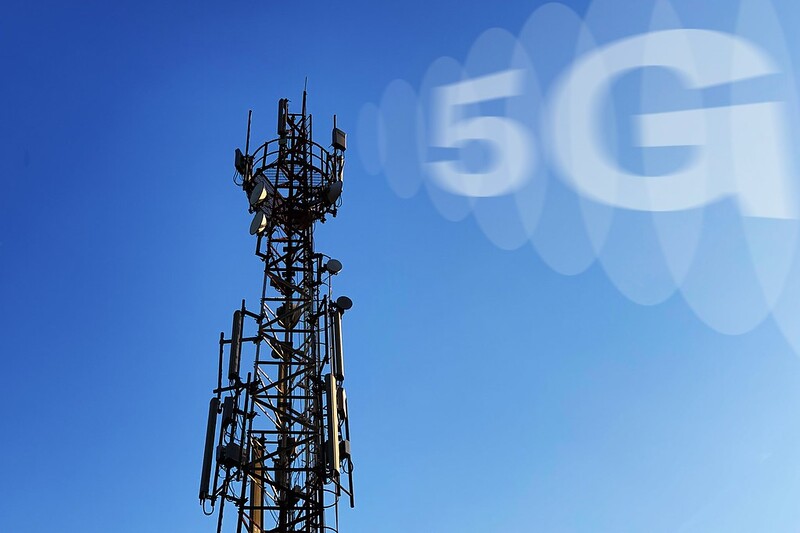

5G stands for fifth-generation cellular network technology.
It’s the technology that enables wireless communication – for example, from your cellular phone to a cell tower, which channels it to the internet. 5G is a network service provided by telecommunications carriers and is not the same thing as the 5 GHz band on your Wi-Fi router.
5G offers an order of magnitude – 10 times – more bandwidth than its predecessor, 4G. The greater bandwidth is possible because over and above low and medium frequency radio waves, 5G uses additional higher-frequency waves to encode and carry information.
Bandwidth is analogous to the width of a highway. The broader the highway, the more lanes it can have and the more cars it can carry at the same time. This makes 5G much faster and able to handle many more devices.
5G can deliver speeds of around 50 megabits per second, up to more than 1 gigabit per second. A gigabit per second connection allows you to download a high-definition movie in less than a minute. Does this mean no more bad cell connections in crowded places? The increased bandwidth will help, but just as increasing the number of lanes on highways does not always reduce traffic jams, as more people use the expanded highways, 5G is likely to carry a lot more traffic than 4G networks, so you still might not get a good connection sometimes.
In addition to connecting your phone and cellular-enabled laptop, 5G will be connecting many other devices ranging from photo frames to toasters as part of the Internet of Things revolution. So even though 5G can handle up to a million devices per square kilometer, all that bandwidth could be quickly used up and require more – a future 5.5G with even more bandwidth.
Flavors of 5G
5G can use low-, mid- and high-band frequencies, each with advantages and disadvantages. Lower-frequency waves can travel farther but are slower. Higher-frequency waves travel faster but can go only limited distances. Higher-frequency 5G can achieve gigabit-per-second speeds, which promises to render ethernet and other wired connections obsolete in the future. Currently, however, the higher frequency comes at a higher cost and thus is deployed only where it’s most needed: in crowded urban settings, stadiums, convention centers, airports and concert halls.
A type of 5G service, Ultra-Reliable and Low-Latency Communications, can be used where data needs to be transmitted without loss or interruption in service – for example, controlling drones in disaster areas. One day, after the technology is more robust, it could even be used for remote surgery.
Prasenjit Mitra receives funding from the National Science Foundation, and the Department of Energy.







