


 Bayer Wins Major U.S. Supreme Court Roundup Lawsuit, Shares Surge
  DOJ Opens Investigation Into NYC Coffee Shop Over Anti-Goldman Social Media Post
  Texas Man Charged After Fatal Tesla Full Self-Driving Crash in Katy
  US Appeals Court Limits ICE Detention Without Bond Hearings After 90 Days
  Trump has made more than $1 billion from crypto in a year. How?
  Brazil Supreme Court Convicts Eduardo Bolsonaro Over U.S. Lobbying Efforts
  Gold Surges Past $4150 on Dovish Fed Signals and Weak Jobs Data; Bullish Outlook Prevails
  Goldman Sachs Flags 3 Key Risks Ahead of Europe’s Earnings Season
  China Submarine Missile Test Sparks Concern Across Asia-Pacific
  Australian PM Anthony Albanese Apologizes After Kylie Minogue Podcast Remarks Spark Backlash
  AI can be a personal trainer in your pocket – but is it safe?
  Kim Jong Un Oversees North Korea Destroyer Missile Tests, Orders Rapid Naval Deployment
  Trump May Reopen F-35 Program Access for Turkey Ahead of NATO Summit
  Israeli Airstrike Kills Two in Gaza City as Ceasefire Violations and Truce Talks Persist


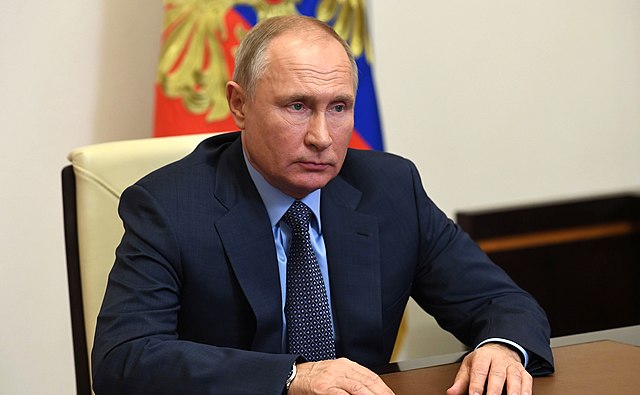
Vladimir Putin’s recognition of Donetsk and Luhansk as independent has escalated Russia’s slow annexation of Ukrainian territories. This is a violation of international law, according to Marija Pejčinović Burić, secretary general of the Council of Europe, the continent’s top organisation to promote human rights and democracy. Since Russia is a member, one would be right to question why the council hasn’t taken further action.
The Council of Europe does not have an army to prevent military escalation, or economic power to apply effective sanctions, but could its leadership have done more to try to prevent this crisis? Chiefly, it could have suspended Russia’s membership, sending a strong signal that Russia has violated the council’s statute.
The Council of Europe – not to be confused with the European Union or European Council – was created after the second world war. Its aim is to promote the values of human rights, democracy and the rule of law, and prevent serious confrontations, including military ones, between members. One of its most important aspects is the European court of human rights, which hears cases from individuals whose rights were violated by the member states.
The council has 47 member states – effectively all European states except Belarus. Russia became a member in 1996, though many argued that the country was not ready to join, since it was not clear that the Russian authorities fully shared the values of the organisation.
One argument in favour of Russia’s accession came from David Atkinson, a British delegate to the council. He made the point that if Russia failed to fulfil its obligations, it could always be suspended. This appears to have been much more difficult than anticipated.
Accession and suspension
In the beginning, there was some enthusiasm about Russia joining this European family of states. This clearly changed in 2014 with Russia’s annexation of Crimea, which posed a significant test for the organisation. The Council of Europe’s parliamentary assembly adopted a resolution demanding Russia withdraw its troops from Crimea. When this did not happen, the assembly suspended some of the Russian delegation’s rights, including voting. In response, Russia stopped paying its membership fees.
Four years later, the parliamentary assembly voted in favour of inviting the Russian delegation back, and agreed to its demands to make the application of any future sanctions more difficult in principle. It seems, however, that the main motive for permitting Russia to return was not financial, but diplomatic.
Some representatives of the council argued that Russia’s membership provided a valuable venue for continued dialogue. Additionally, if Russia withdrew or was expelled, its population of millions would no longer have access to the European court of human rights. This is crucial, as Russia is the biggest supplier of cases to the court.
There is one problem with this argument: although the court delivers hundreds of judgements against Russia every year, the Russian authorities are not always eager to comply. Furthermore, the Russian constitutional court ruled in 2015 that it can decide if Russia should execute some of the European court’s judgements at all. There are still instances where the European court is very effective in protecting rights of some people, but is it enough to justify Russia’s membership?
Tied hands
The Council of Europe can only be effective if the member states share common values of respect to human rights, democracy and the rule of law. If a member state does not, then its membership needs to be suspended. It is unlikely that these fundamental values can be forced upon Russia through dialogue. It is clear that the Council of Europe hardly facilitates any meaningful dialogue between Russia and the other member states on the issues that matter, such as human rights, non-violation of the territorial integrity of other members, and democracy.
Russia’s continued membership in the council perhaps even encourages Putin’s actions and shows that if some pressure (financial, diplomatic or military) is applied, the council’s principles and values can be cracked. The Russian authorities have even, in recent years, said that if the procedure of suspension is initiated, they would withdraw.
This suggests that the Russian authorities do not value their membership very much. Therefore, the council has hardly any tools that would impact the Russian authorities besides the ultimate one – suspension, followed by expulsion. If Russia remains a member, the council’s diplomatic efforts will fall on deaf ears. But if the council suspends Russia, it sacrifices even a minimal impact on the country’s human rights situation for the sake of a symbolic finger-wagging. The choice is not an easy one.







