


 Asian Stocks Fall as Bond Yields Surge Ahead of Trump-Xi Summit
  Mexico-US Trade Talks Delayed to October as Tariff Negotiations Continue
  Oil Prices Surge as U.S.-Iran Diplomacy Hopes Fade
  European Stocks Fall as Bond Yields and Geopolitical Risks Weigh
  U.S. Treasury Yields Surge as 30-Year Hits 22-Year High
  Australia Unemployment Hits Five-Year High Despite Strong Jobs Growth
  U.S. 10-Year Treasury Yield Hits 2007 High as Fed Rate Hike Bets Rise
  Gold Holds Near $4,275 as Rising Treasury Yields Fuel Fed Rate Hike Bets
  Fed Unveils Stablecoin Rules Under GENIUS Act


 Add as a preferred source on Google
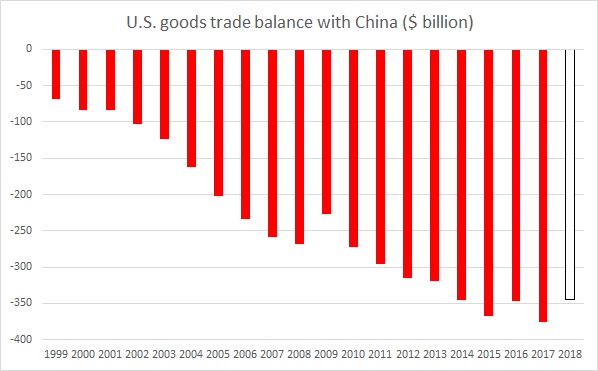
President Trump’s harsh rhetoric to reign on China’s massive trade surplus with the United States has so far born little fruit than to make China cautious and reluctantly agreeing to discuss ways to resolve the trade imbalances between the two countries.
Since inauguration, the U.S. Commerce Department under Secretary Wilbur Ross has taken a more toughened stance against China with an almost 250 percent increase in countervailing anti-dumping duty investigations, and President Trump announcing tariffs on $250 billion worth of goods from China, as well as banning several U.S. companies from procuring equipment from Chinese companies like Huawei; but, that has done little to reduce goods imbalances with China.
In fact, the U.S. goods deficit with China has now ballooned to a record high.
According to data from the U.S. census bureau, China’s goods trade surplus with the United States reached a record high of $43.1 billion in the month of October, with exports rising to record high of $52.2 billion and imports declining to just $9.1 billion, the lowest since July 2016. At this rate, China’s goods trade surplus with the United States would easily surpass last year’s record high of $375.6 billion.
The numbers are not likely to make President Trump happy, who after negotiations with Chinese President Xi Jinping to give negotiations another 90 days before imposing an additional 15 percent on Chinese goods worth $200 billion. The 90-day window expires at the end of March next year.







