


 FxWirePro: Daily Commodity Tracker - 21st March, 2022
  Gold Prices Fall Amid Rate Jitters; Copper Steady as China Stimulus Eyed


 Add as a preferred source on Google
Looking distinctly at occupations in the US labor market, as opposed to different industrial sectors or education levels, winds up being very helpful in terms of understanding how jobs are evolving over time, and especially since this approach covers the entire US economy.
"Polarization" refers to the disappearance of occupations in the middle of the skill distribution, along with increasing concentrations of employment in the highest and lowest-wage occupations. If anything, we simply want to get to the specifics of polarization.
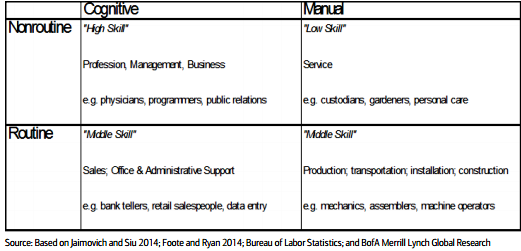
The chart shows the core division among the types of skills required in different categories of jobs, depending on whether there is a large "routine" or "non-routine" component. "Cognitive" vs "Manual" occupations reflect the difference between whether a job has a dominant physical or mental activity.
But the distinction between "routine" against "non-routine" occupations depends on whether a job consists of tasks that can be done by following defined instructions and procedures, or whether it requires significant flexibility, creativity, and human-interaction.
"In the chart, the specific type of occupational categories are seen within each description of routine/non-routine and cognitive/manual combinations, as well as examples of actual jobs that fit", says Bank of America.

- News

- Economy

- Central Banks
- Investing
- Research
- Roundups
- Digital Currency
- Insights
- Technical Analysis
- Technology
- Business
- Law
- Health
- Nature
- Fintech
- Science
- Topic
- Opinions
- ©Econometrics LLC . All Rights Reserved.
US routine and middle-skill jobs likely suffered
Wednesday, October 28, 2015 4:42 AM UTC
Editor's Picks



- Market Data
Most Popular




