


 Ukraine Races to Counter Russia’s Faster Jet-Powered Drones
  Global Poll Shows Rising Trust in Institutions as US-China Leadership Support Falls
  Lula, Flavio Bolsonaro Deadlocked in Brazil Election Polls
  Ovechkin Faces Scrutiny Over United Russia Campaign Video
  Saudi Arabia Raises Security Alerts as Houthi Attacks Threaten Oil Routes
  Mahmoud Khalil Sues Columbia Over Alleged Pro-Palestinian Harassment
  Houthi Red Sea Gains Strengthen Iran’s Leverage Over Gulf States
  Ukraine Tests New Anti-Drone Weapon After Successful Shahed Intercept
  China to Push Global Security Vision at Xiangshan Forum
  Nvidia CEO Jensen Huang Expected at Trump-Xi State Dinner
  Judge Blocks Trump Rule Limiting Foreign Student Visas
  Europe can’t achieve space sovereignty alone. Here’s why
  What is Zionism? The different meanings of a contested term
  US Immigration Arrests Surge as Deportations Lag Behind
  Trump Rejects Calls for Tougher AI Regulation
  Bill Gates Warns Governments Are Unprepared for AI Disruption


 Add as a preferred source on Google
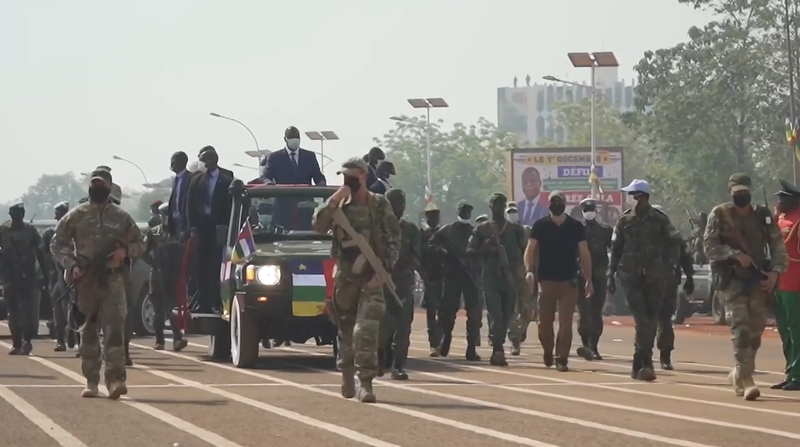
The United States State Department has added the Russian Wagner mercenary group, as well as countries Cuba and Nicaragua, to a blacklist on international religious freedom. The designation would clear the way for potential sanctions to be imposed.
The State Department Friday last week announced that it was placing the Russian mercenary group and longtime US adversaries Cuba and Nicaragua on a blacklist over international religious freedom. Cuba and Nicaragua were listed by the agency as “Countries of Particular Concern,” which would put them at risk of facing further sanctions.
The Wagner mercenary group was designated on the blacklist for alleged abuses in the Central African Republic. The group was also allegedly involved in Mali and was accused of committing human rights violations in Libya, Syria, and Ukraine.
“Around the world, governments and non-state actors harass, threaten, jail, and even kill individuals on account of their beliefs,” said Secretary of State Antony Blinken in a statement. “The United States will not stand by in the face of these abuses.”
Nicaragua’s authoritarian President, Daniel Ortega, has clamped down on the Catholic Church. Ortega accused the Catholic Church of supporting the 2018 anti-government protests.
The designation follows the latest annual assessment on religious freedom by the State Department back in June, citing the violence and arrests of Cuban religious figures over alleged involvement in rare public protests and restrictions on Protestant churches that were not recognized.
Blinken retained the blacklist of the countries that were designated under the category in 2021 - China, Eritrea, North Korea, Myanmar, Pakistan, Russia, Saudi Arabia, Tajikistan, and Turkmenistan.
On Sunday, Blinken warned Israeli Prime Minister Benjamin Netanyahu against annexing the occupied West Bank. Speaking to left-leaning pro-Israel advocacy group J Street, Blinken said that President Joe Biden’s administration would work to preserve a “horizon of hope” for the creation of a Palestinian state.
“We will also continue to unequivocally oppose any acts that undermine the prospects of a two-state solution, including but not limited to settlement expansion, moves toward annexation of the occupied West Bank, disruption to the historic status quo of holy sites, demolitions and evictions, and incitement to violence,” said Blinken.







