


 IEA Releases Record 400 Million Barrels of Oil Amid U.S.-Iran War
  Mexico's Electoral Reform Bill Fails in Congress as Coalition Fractures
  Russian Drone Strikes Hit Kharkiv and Dnipro, Injuring Over 20 Civilians
  Trump Doubts Iran Mining Reports as Strait of Hormuz Tensions Escalate
  Japan's BOJ Independence Under Fire as PM Takaichi's Rate Stance Draws Political Heat
  Taiwan's MQ-9B SkyGuardian Drone Order Stays on Schedule Despite Middle East Conflict
  Iran Mines Strait of Hormuz: Crude Oil Prices Surge Amid Middle East Tensions
  Venezuela Names Paula Henao as New Oil Minister Amid U.S.-Led Industry Overhaul
  Israel-Iran War: Herzog Urges Patience as U.S. and Israeli Strikes Intensify
  U.S. Calls for Reassessment of International Aid to Taliban-Ruled Afghanistan
  Iran-U.S. Oil Tensions Escalate as Revolutionary Guards Threaten Strait of Hormuz Blockade
  Trump Announces New U.S. Oil Refinery in Texas with Indian Energy Giant Reliance
  Ukraine Strikes Russian Missile Component Factory in Bryansk Using British Weapons
  Trump Hints at Possible U.S. Takeover of Cuba Amid Deepening Humanitarian Crisis
  After the Iran war, Persian Gulf nations face tough decisions on the US – a former diplomat explains
  Bipartisan Housing Bill Advances in Senate, Aims to Tackle U.S. Affordability Crisis
  Trump-Putin Call Addresses Iran War, Ukraine Peace, and Global Oil Crisis


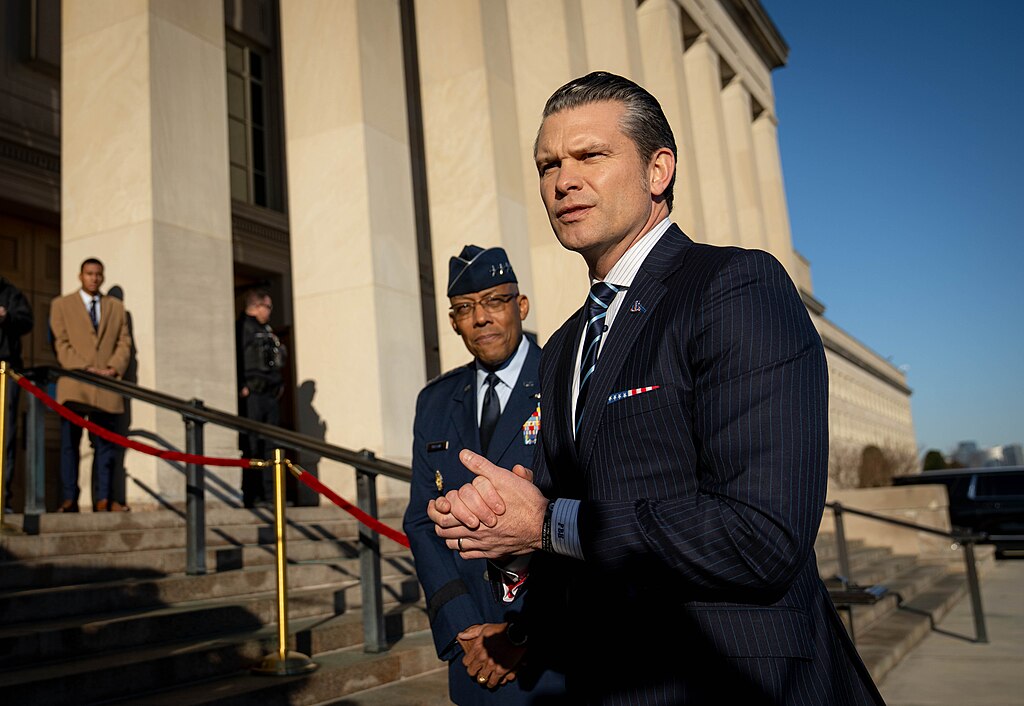
U.S. Defense Secretary Pete Hegseth said Thursday that the United States is not expanding its military objectives in Iran despite ongoing strikes across the country and rising tensions in the region. The statement comes amid the escalating conflict between U.S.-Israeli forces and Iran, as well as remarks by President Donald Trump indicating that Washington expects to influence who leads Iran in the future.
According to Hegseth, the Pentagon’s military campaign—known as Operation Epic Fury—remains focused on neutralizing Iran’s offensive military capabilities. The operation specifically targets Iran’s missile systems, missile production infrastructure, and naval forces while ensuring that Tehran does not develop or possess nuclear weapons. Hegseth emphasized that the United States has a clear strategy and has not broadened its mission beyond these defined goals.
Speaking during a press briefing, Hegseth said the administration understands exactly what it aims to accomplish in Iran. However, he acknowledged that President Trump’s comments about helping determine Iran’s next leader reflect the political implications of the ongoing conflict.
In a phone interview with Reuters, Trump said the United States would need to play a role in choosing the next leadership in Iran as the conflict continues. The remarks came as U.S. and Israeli military operations intensified across multiple regions in the country.
The joint military campaign began Saturday and has since struck targets throughout Iran. In response, Tehran launched retaliatory attacks across the Middle East, targeting several countries aligned with Washington and its allies. Iran has reportedly launched attacks against Israel, the United Arab Emirates, and Qatar. A missile strike in Bahrain also caused a refinery fire that emergency crews later extinguished.
Regional tensions have spread further as Azerbaijan accused Iran of launching drones into its territory. In response, Azerbaijan temporarily closed its southern airspace for 12 hours as a precautionary measure.
Hegseth said Iran’s decision to attack countries in the region could ultimately strengthen alliances against Tehran. According to him, these actions are reinforcing cooperation among nations opposed to Iran’s military aggression and bringing them closer to the United States.
Meanwhile, U.S. Central Command confirmed that American forces have struck more than 2,000 targets in Iran since the operation began. Admiral Brad Cooper, the commander of U.S. Central Command, said the strikes are designed to weaken Iran’s ability to rebuild its military infrastructure.
Cooper revealed that U.S. forces have destroyed 30 Iranian warships, including a drone carrier ship targeted earlier Thursday. He explained that the next phase of Operation Epic Fury will focus on dismantling Iran’s long-term missile production capabilities.
“As we move into the next phase of the operation, we will systematically target Iran’s ability to rebuild its missile manufacturing capacity,” Cooper said, noting that the effort will take time but is already underway.
The conflict has also resulted in casualties among U.S. forces. The U.S. military confirmed the identities of six U.S. Army Reserve soldiers who were killed after a drone strike hit a U.S. military facility in Port Shuaiba, Kuwait.
Trump and other senior officials have warned that the confrontation with Iran could lead to additional U.S. military casualties as the campaign continues.
Despite those risks, Hegseth stressed that the United States is prepared for a prolonged conflict if necessary. He warned that Iran is miscalculating if it believes Washington cannot sustain the military campaign.
According to Hegseth, the United States remains committed to its strategy and is prepared to determine the timeline of the conflict as operations continue.













