


 Trump Sanctions International Criminal Court, Sparking EU Backlash
  Djibouti Migrant Boat Capsizes, Killing 139 and Leaving 84 Missing
  Trump Plans White House Shake-Up of Key AI Safety Agency
  Flydubai Co-Pilot Planned Suicide Attack on Israel Airport, UAE Says
  Zelenskiy Offers Russia Energy Truce Amid Trump Pressure
  Greenland Lawmakers Back Trump Security Deal Despite Economic Concerns
  Trump Defends Russian Diesel Deal Amid US Sanctions Backlash
  European Auto Stocks Rise as EU-China Trade Deal Targets Hybrid Imports
  Most Americans Oppose Election Betting on Prediction Markets, Poll Finds
  North Korea Fires Ballistic Missiles as Tensions With South Korea Escalate
  UK Finance Minister Healey Calls for Fiscal Discipline Amid Global Risks
  US Authorities Raid Ilhan Omar’s Home Amid Immigration Fraud Probe
  US Judge Blocks Trump Administration’s Taxpayer-Funded Political Ads
  Russian Strikes Kill Six in Ukraine, Including Three in Kharkiv
  Mahmoud Abbas Postpones Palestinian Elections to September 2027
  JD Vance Questions Pentagon Plan to Livestream Fort Hood Shooter’s Execution
  Panama Declares Emergency After 7.7 Earthquake Triggers 200 Aftershocks


 Add as a preferred source on Google
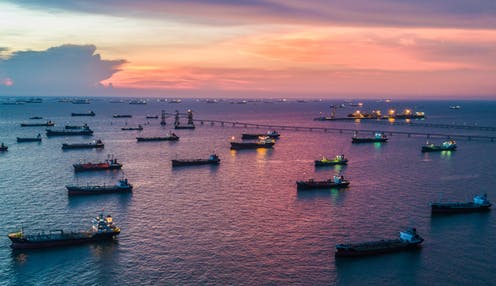
Oil tankers are diverting away from the Strait of Hormuz as the United States prepares to enforce a naval blockade beginning Monday morning, following the collapse of weekend peace negotiations between Washington and Tehran. The move has sent shockwaves through global shipping lanes and raised serious concerns about oil supply disruptions worldwide.
President Donald Trump announced Sunday that the U.S. Navy would begin blockading the strategically critical waterway after marathon diplomatic talks with Iran ended without agreement, threatening a fragile two-week ceasefire that had briefly calmed tensions in the region. U.S. Central Command confirmed that enforcement would begin at 10 a.m. ET, targeting all maritime traffic entering or departing Iranian ports along the Arabian Gulf and Gulf of Oman.
Washington clarified that vessels transiting the strait to and from non-Iranian ports would not be impeded, with formal guidance to be issued to commercial mariners ahead of the blockade's implementation. Despite this assurance, tanker operators are already adjusting routes as uncertainty grips the energy shipping sector.
Iran's Revolutionary Guards responded defiantly, warning that any military vessels approaching the Strait of Hormuz would be treated as a ceasefire violation and met with a decisive response, escalating fears of a broader confrontation.
Shipping data from LSEG and Kpler revealed mixed movements across the Gulf. Pakistan-flagged tankers Shalamar and Khairpur entered the Gulf on Sunday, bound for the UAE and Kuwait respectively. Meanwhile, the Malta-flagged supertanker Agios Fanourios I, which had been heading toward Iraq to load Basra crude destined for Vietnam, reversed course and is now anchored near the Gulf of Oman. Separately, three fully loaded supertankers successfully exited the Gulf on Saturday, reportedly the first vessels to do so since the ceasefire was established last week.
The developing standoff threatens to disrupt a waterway through which a significant portion of the world's oil supply flows daily.







