


 Carney’s Trump Tariff Pushback Wins Canadian Support, but Economic Risks Mount
  US Raises Concerns Over Chinese Artist Gao Zhen’s Prison Sentence
  Qatar PM Heads to Tehran to Revive Iran-US Diplomacy
  Israel Weighs Expelling UK Officials From Gaza Coordination Center
  Trump Administration Plans New Drug Pricing Deals With Biotech Firms
  ICE Awards $16.7M Contract for Electric Shock Gloves
  U.S. Disrupts China-Linked Hacking Campaign Targeting Government Agencies
  CIA Chief Ratcliffe Holds Talks With Russian Intelligence in Moscow
  Mojtaba Khamenei’s Absence Fuels Iran Leadership Doubts
  Australia Pledges $3.6M for Nepal-China Flood Relief
  Prince Harry and Meghan Return to Britain With Children After Six Years in U.S.
  Taiwan Foreign Minister Heads to Palau for Pacific Islands Summit Events
  European Allies Seek to Reassure Pentagon as US Reviews Troop Presence
  Dan J. Sullivan Advances in Alaska Senate Race, Setting Up Name Confusion
  Trump Floats ‘Lake America’ Rename as US-Canada Trade Tensions Deepen
  Iran Weighs Conditions to Reopen Strait of Hormuz


 Add as a preferred source on Google
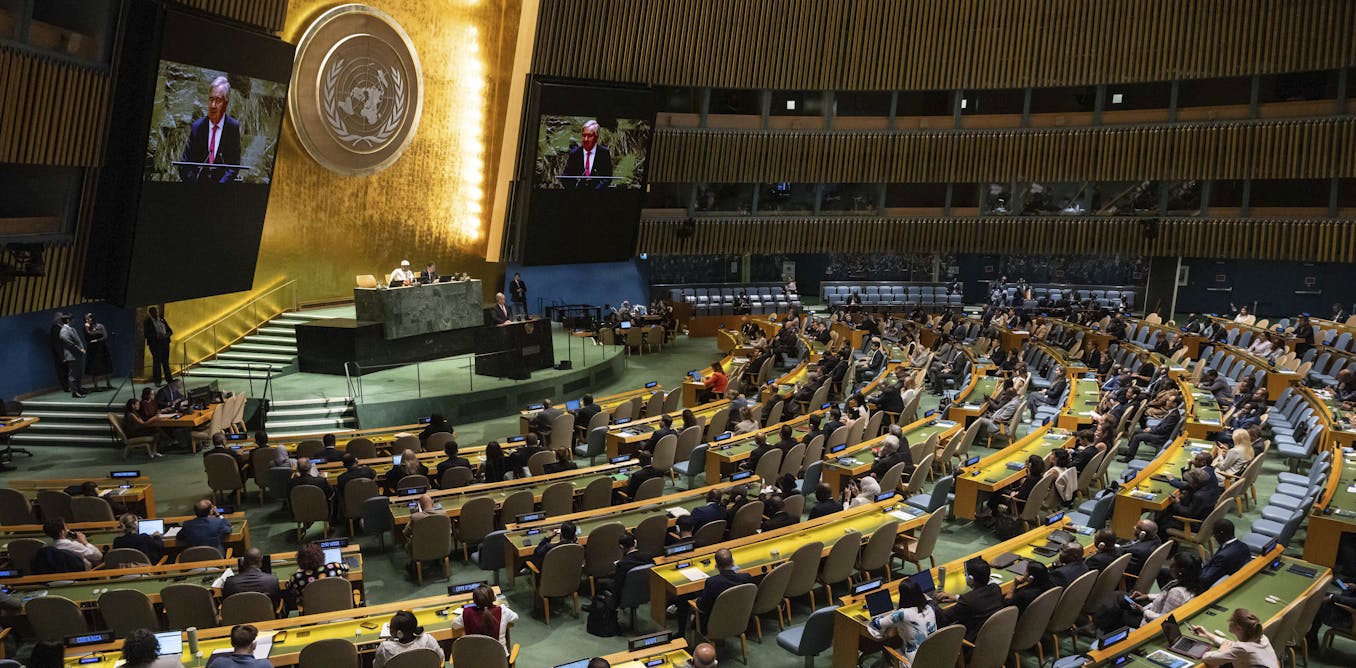
The United Nations human rights office has criticized the Trump administration’s decision to designate Palestine Action as a terrorist organization, warning that the move could restrict free speech and have a chilling effect on civic activity.
Washington formally designated Palestine Action as a terrorist group on Wednesday as part of President Donald Trump’s broader counter-terrorism campaign targeting left-wing organizations. Israel’s foreign ministry welcomed the U.S. decision.
The office of U.N. human rights chief Volker Turk said the designation appeared to impose a “disproportionate and unnecessary restriction” on freedom of expression, peaceful assembly, association and participation in public affairs. It also warned that applying the terrorism label too broadly can discourage legitimate political activity.
Britain previously banned Palestine Action as a terrorist organization, drawing similar criticism from Turk’s office. The UK Supreme Court is expected to hear an appeal concerning a lower court ruling that upheld the British government’s decision.
Palestine Action is known for targeting Israel-linked defense companies in Britain, particularly Elbit Systems, Israel’s largest defense company. Its activists have used tactics including blocking entrances and spraying red paint.
Britain banned the organization following a June 2025 break-in at the Royal Air Force’s Brize Norton base, where activists damaged two military aircraft. Protests against the UK ban subsequently resulted in roughly 3,000 arrests.
Palestine Action says its campaign seeks to disrupt what it calls the Israeli “war machine” and companies connected to Israel’s military-industrial sector.
The U.S. designation comes amid wider Trump administration measures targeting pro-Palestinian activism, including attempts to deport foreign protesters, threats to freeze university funding over demonstrations, increased social media screening for immigrants and sanctions against critics of Israel.
U.N. experts Ben Saul and Francesca Albanese also expressed concerns about Washington’s action. Albanese, who has been sanctioned by the United States, argued that such measures are intended to silence critics.
Sarah McLaughlin, senior scholar of global expression at the Foundation for Individual Rights and Expression (FIRE), also criticized the approach, saying the United States should reject censorship rather than adopt it.







