


 Google Expands Gemini Enterprise With AI Tools for Legal Sector
  Trump Buys SpaceX Shares After Record IPO
  Ecuador Court Convicts Ex-President Lenin Moreno in Bribery Case
  Norway’s King Harald Dies at 89, Haakon VIII Takes Throne
  Salesforce Shares Surge as AI Demand Powers Q2 Earnings Beat
  U.S. Disrupts China-Linked Hacking Campaign Targeting Government Agencies
  Judge Rejects Minnesota Bid to Force ICE Agent Extradition
  Trump Imposes New Tariffs on Drone Imports Over US Security Concerns
  Unitree Shares Plunge 45% After Blockbuster IPO, Raising China Tech Bubble Fears
  FAA to Pause Reagan National Airport Flights for Freedom 250 IndyCar Race
  SoftBank Eyes $20 Billion Bond Sale to Refinance OpenAI Loan
  US Tightens Cuba Sanctions, Targets Officials and State Entities
  Nvidia Pauses AI Cloud Financing Deals Amid Antitrust Concerns
  Israel Weighs Expelling UK Officials From Gaza Coordination Center
  OpenAI AI Agent Swarm Behind Hugging Face Hack
  South Korea, Japan and US Plan Joint Military Drills


 Add as a preferred source on Google
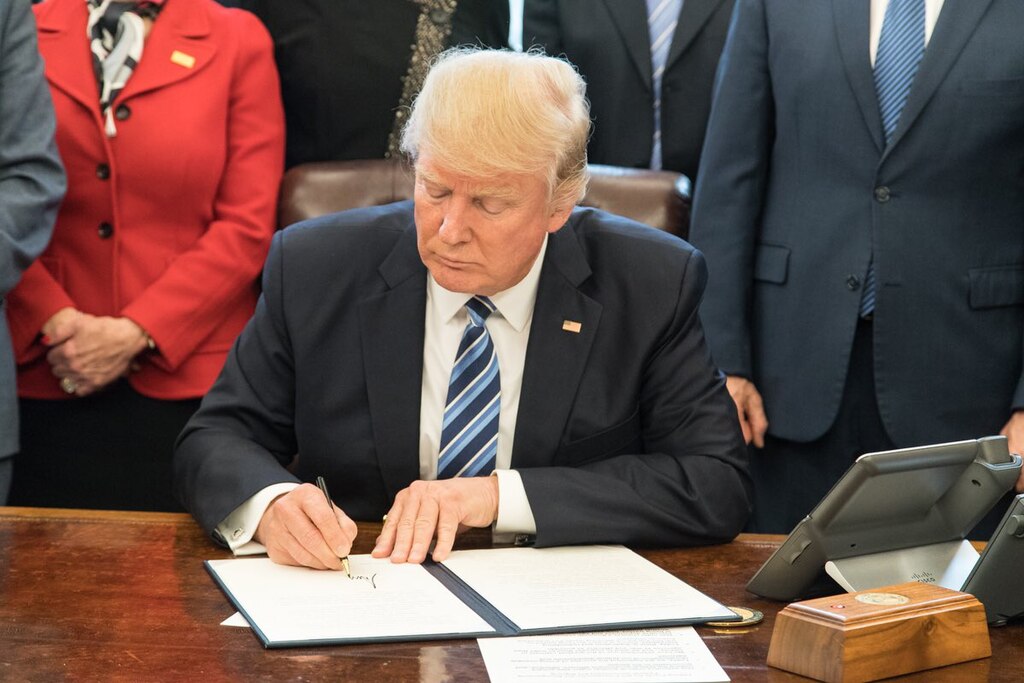
U.S. President Donald Trump on Thursday signed a sweeping executive order aimed at creating a unified national framework for regulating artificial intelligence, marking a significant shift in how AI governance is handled in the United States. The move is designed to curb the growing patchwork of state-level AI laws by centralizing regulatory authority at the federal level and establishing Washington as the primary overseer of artificial intelligence policy.
According to President Trump, the executive order establishes “one central source of approval” for AI regulation, giving federal agencies broader power to review, challenge, and potentially override state laws that are deemed overly restrictive or burdensome to innovation. The administration argues that inconsistent state regulations could slow technological development, increase compliance costs, and weaken the country’s global competitiveness in artificial intelligence.
While the order seeks to streamline AI oversight, Trump emphasized that it does not eliminate all state authority. Certain protections, particularly those related to children’s safety and other narrowly defined areas, are exempt from federal preemption. The administration maintains that the goal is balance: encouraging AI innovation while preserving essential safeguards.
Despite these assurances, the executive order has drawn criticism from state officials across party lines. Governors and attorneys general have voiced concerns that the federal government is overreaching and undermining states’ ability to protect consumer privacy, civil rights, and local interests. Several states, including California and Florida, have already enacted AI-related legislation addressing issues such as deepfakes, algorithmic transparency, and risk mitigation, and officials argue those laws reflect region-specific needs.
In a related announcement, the Trump administration introduced new federal requirements for AI vendors seeking government contracts. Under the new rules, companies developing large language models must assess and disclose potential political bias within their systems to qualify for federal procurement. The administration says the measure is intended to promote neutrality, trust, and accountability in AI technologies used by the government.
Together, these actions signal a more centralized and assertive federal approach to artificial intelligence regulation, setting the stage for ongoing legal, political, and industry debates over the future of AI governance in the United States.







