


 Ukraine Strikes Russian Missile Component Factory in Bryansk Using British Weapons
  FBI Warns of Possible Iranian Drone Attacks on California Amid U.S.-Iran War
  Trump Administration Launches Trade Investigations Against 16 Countries Over Industrial Overcapacity
  IEA Releases Record 400 Million Barrels of Oil Amid U.S.-Iran War
  Pentagon Taps Wall Street Talent to Manage $200 Billion Defense Investment Fund
  U.S. and Russia Hold Diplomatic Talks in Florida Amid Ongoing Tensions
  U.S. Senate Greenlights AI Chatbots for Official Staff Use
  Shots Fired at U.S. Consulate in Toronto in Suspected National Security Incident
  Bipartisan Housing Bill Advances in Senate, Aims to Tackle U.S. Affordability Crisis
  Boeing Secures $289 Million Smart Bomb Contract With Israel
  Trump Announces New U.S. Oil Refinery in Texas with Indian Energy Giant Reliance
  Mexico's Electoral Reform Bill Fails in Congress as Coalition Fractures
  Iran's Government Remains Stable Despite U.S. and Israeli Strikes, Intelligence Shows
  U.S.-Israel War on Iran Sends Crude Oil Prices Surging Amid Strait of Hormuz Tensions
  Iran-U.S. Oil Tensions Escalate as Revolutionary Guards Threaten Strait of Hormuz Blockade
  Trump-Putin Call Addresses Iran War, Ukraine Peace, and Global Oil Crisis


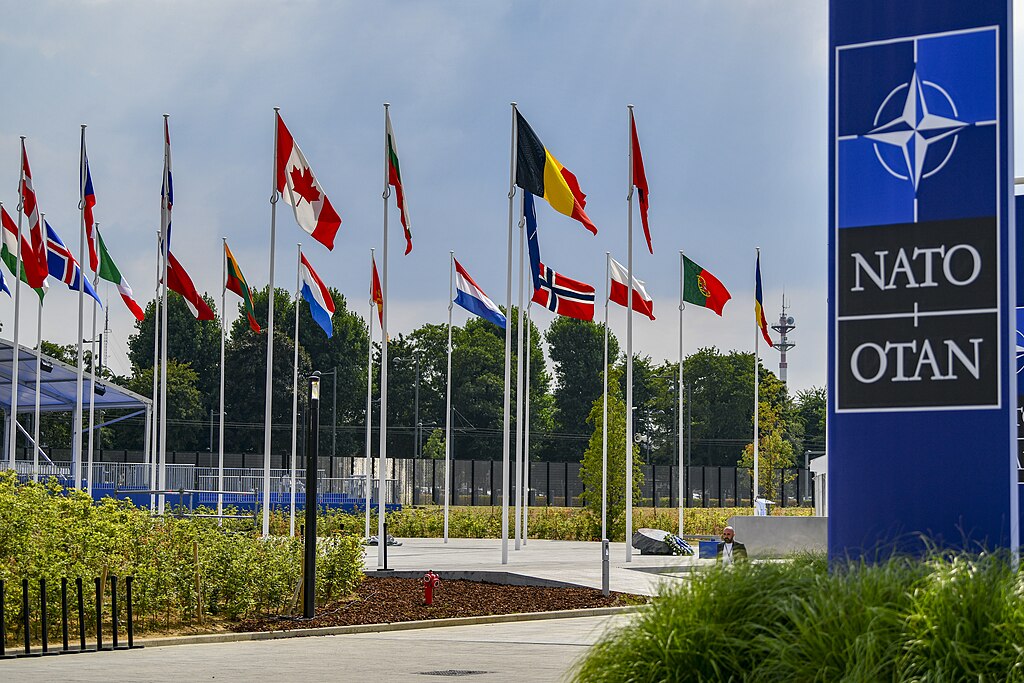
U.S. President Donald Trump said on Tuesday that the United States and NATO will eventually come to an agreement regarding the future of Greenland, emphasizing that any deal would satisfy both Washington and the military alliance. Speaking at a press conference, Trump stressed the strategic importance of Greenland, linking his comments to broader U.S. and NATO security concerns in the Arctic region.
Earlier the same day, Trump reiterated his long-standing interest in Greenland, stating there was “no going back” on his goal to gain control of the island. He notably refused to rule out the use of force, a remark that once again drew international attention to U.S. intentions toward the autonomous Danish territory. Greenland has been a recurring topic in Trump’s foreign policy rhetoric, largely due to its location, natural resources, and growing geopolitical significance as Arctic competition intensifies.
At the press conference, Trump expressed confidence that negotiations with NATO would lead to a mutually beneficial outcome. He stated that the United States “needs” Greenland for security purposes and suggested that NATO’s overall strength would be diminished without American leadership. According to Trump, U.S. involvement is essential to the alliance’s ability to address emerging global threats, particularly in strategically sensitive regions like the Arctic.
The president’s remarks come amid rising global interest in Greenland, as climate change opens new shipping routes and access to untapped resources. The Arctic has increasingly become a focal point for major powers, including the United States, Russia, and China, all of which see long-term strategic value in the region. Trump’s comments reflect Washington’s desire to secure a stronger foothold in the Arctic through Greenland.
While Trump did not provide details on how an agreement with NATO might be structured, his statements signal continued pressure for a resolution aligned with U.S. security objectives. The comments are likely to fuel further debate among NATO allies and raise questions about sovereignty, international law, and alliance unity as discussions over Greenland’s future continue.













