


 Venezuela Names Paula Henao as New Oil Minister Amid U.S.-Led Industry Overhaul
  Japan's BOJ Independence Under Fire as PM Takaichi's Rate Stance Draws Political Heat
  Iran-U.S. Oil Tensions Escalate as Revolutionary Guards Threaten Strait of Hormuz Blockade
  Russian Drone Strikes Hit Kharkiv and Dnipro, Injuring Over 20 Civilians
  Asian Markets Retreat as Oil Prices Surge Toward $100 Amid Middle East Tensions
  Chinese AI Stocks Surge as Tencent, MiniMax, and Zhipu Launch Agentic AI Programs
  Trump Doubts Iran Mining Reports as Strait of Hormuz Tensions Escalate
  Pentagon Taps Wall Street Talent to Manage $200 Billion Defense Investment Fund
  Iran-Israel War Sparks Global Oil Crisis as Tankers Burn in Gulf Waters
  Gold Prices Climb Above $5,200 as Iran War Uncertainty and Inflation Data Loom
  Trump Administration Launches Trade Investigations Against 16 Countries Over Industrial Overcapacity
  Iran Mines Strait of Hormuz: Crude Oil Prices Surge Amid Middle East Tensions
  U.S. Senate Greenlights AI Chatbots for Official Staff Use
  Dollar Steadies as Traders Await Clarity on U.S.-Israel-Iran War
  Asian Stock Markets Rise as Oil Prices Pull Back; U.S. CPI in Focus
  German Exports Drop 2.3% in January, Exceeding Forecast Decline
  Shots Fired at U.S. Consulate in Toronto in Suspected National Security Incident


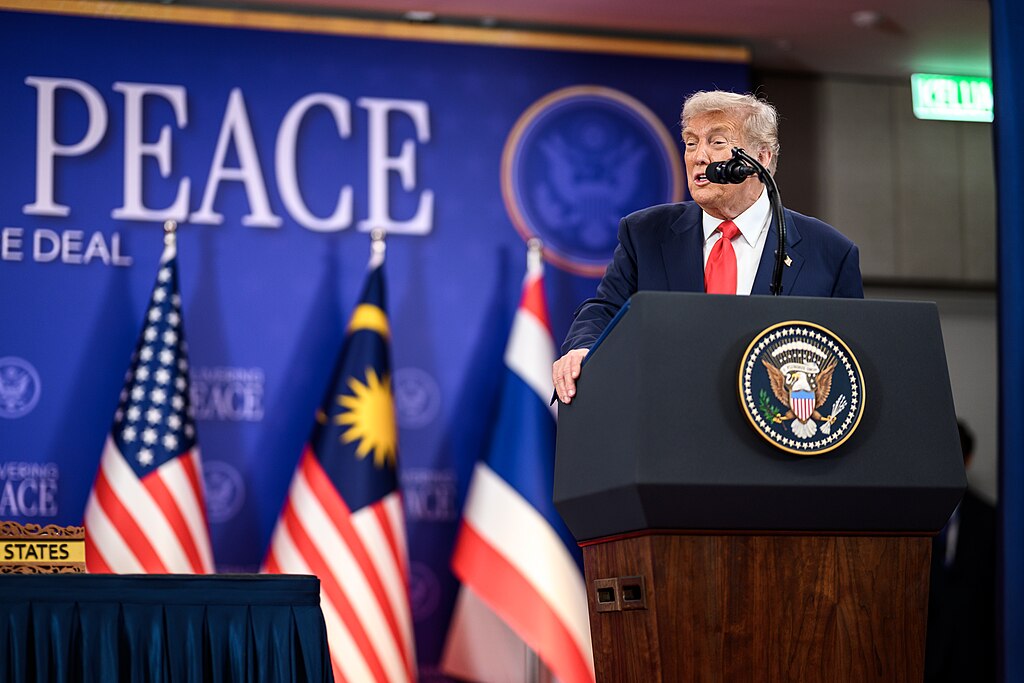
U.S. President Donald Trump intensified tensions with Europe on Sunday after claiming that Denmark has failed to counter what he described as a growing Russian threat to Greenland, adding that the United States would move to address the situation. In a social media post, Trump said NATO had warned Denmark for two decades that it needed to “get the Russian threat away from Greenland,” arguing that Copenhagen had been unable to act effectively.
Trump’s comments suggest a renewed push to bring Greenland under U.S. control, a demand he has made repeatedly in recent years. He framed the issue as one of national and transatlantic security, stating that the time had come for decisive action. The remarks come amid heightened strain between Washington and European capitals over trade and defense policy.
Only days earlier, Trump threatened to impose tariffs of up to 25% on several major European economies, including Denmark, France, and the United Kingdom. His Treasury Secretary, Scott Bessent, reinforced the administration’s stance by saying that European “weakness” made U.S. control of Greenland necessary, further inflaming diplomatic tensions.
Greenland, an autonomous territory within the Kingdom of Denmark, occupies a strategically critical position in the Arctic. Trump has argued that the island’s location makes it vital to U.S. national security, particularly as Russia increases its military and economic presence in the region. European leaders, however, have strongly rejected Trump’s claims and rhetoric. France has indicated it may consider retaliatory economic measures in response to both tariff threats and pressure over Greenland.
Concerns have also grown after Trump raised the possibility of military action related to Greenland, a statement that drew added scrutiny following a U.S. incursion in Venezuela earlier this year. Analysts warn that aggressive U.S. tactics over Greenland could undermine NATO unity and strain alliances at a time of global instability.
As debate continues, Trump’s stance on Greenland, Russia, and European trade policy underscores a broader shift toward hardline U.S. foreign policy, with potentially far-reaching consequences for transatlantic relations and the future of NATO.













