


 How ongoing deforestation is rooted in colonialism and its management practices
  We combed through old botanical surveys to track how plants on Australia’s islands are changing
  Hawkish Fed Fuels Gold Sell-off: Gold Dives Below $4300 Amidst Rate Hike Fears
  Rice feeds billions of people – but its role in fueling climate change is growing
  Wildfires ignite infection risks, by weakening the body’s immune defences and spreading bugs in smoke
  Lake beds are rich environmental records — studying them reveals much about a place’s history
  Ukraine minerals deal: the idea that natural resource extraction can build peace has been around for decades
  fnny Beta Launches With a Simple Idea: Find an Event, Show Up, Get Rewarded
  Extreme heat, flooding, wildfires – Colorado’s formerly incarcerated people on the hazards they faced behind bars


 Add as a preferred source on Google
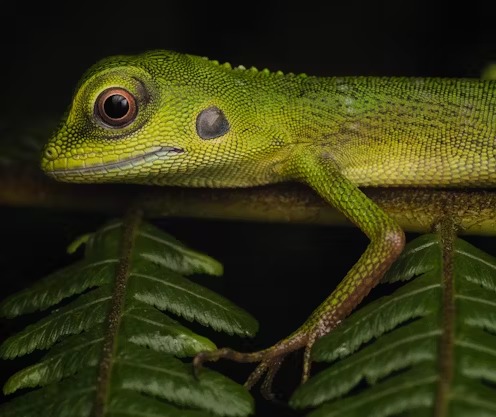


In parts of the tropics like the island of Borneo, the pace of environmental change has been dramatic. Not long ago, the forests that covered most of the island were largely intact. But in recent decades, the scale of logging has intensified, and more areas of harvested forest have been converted to farmland.
In Borneo, this is predominantly for plantations of oil palm trees used to produce palm oil, approximately three-quarters of which are located where pristine forest grew in the 1970s.
Understanding the environmental knock-on effects of these changes in land use is critical because these ecosystems are home to so much amazing biodiversity. These places also provide us with a whole host of benefits, such as food, clean water, medicine and oxygen.
Our new study, published in the journal Science, provides an exhaustive assessment of the effects of logging and conversion to oil palm plantations, with three key findings.
First, what is measured matters. Different properties of the forest ecosystem respond in different ways making comprehensive assessments essential. Second, conversion to oil palm plantation brings different and additional impacts to logging alone.
Taken together, these two results lead to a third conclusion: it is important to conserve areas of primary old growth with their unique properties as well as areas of logged forests that support higher levels of biodiversity than oil palm plantation.
While primary tropical forests are home to rare, unusual or endangered species, logged forests still feel and sound like forests, while oil palm plantations are, albeit complex, agricultural landscapes.
Because of the incredible complexity and biodiversity of tropical forests, measuring the effects of logging and conversion to oil palm has rarely been comprehensively done. This requires an understanding of impacts across a wide range of species, from microbes in the soil to hornbills up in the canopy. It also involves assessing changes in the forest structure, soil chemistry and the decomposition of leaf litter, for example.

The species richness of dung beetles, and the. rate of dung removal, remained high even in logged forest. Charlie Marsh, CC BY-NC-ND
To achieve this, we’ve been working with a diverse research team to investigate more than 80 metrics. We’ve analysed the structure, biodiversity and functioning of the tropical forest ecosystem in three areas of Sabah, Malaysian Borneo. Our research sites include undisturbed old growth forest, logged forest (moderately or heavily logged) and previous logged forests that had been converted to oil palm plantation.
Our data collection involved collaborating across different teams to coordinate dozens of researchers spending thousands of hours out in the field, often in incredibly demanding conditions. Our challenge was then to collate different types of complex and variable information into something meaningful. This allowed us to identify broad, general patterns of ecosystem change.

Researchers Maria Peni and Robecca Siwaring collecting small mammal data in the Bornean forest. Ed Turner, CC BY-NC-ND
Forests across much of the tropics have gone through a period of intensive logging. In Borneo, this tends to be “selective logging” in which the largest hardwood trees are removed. The forest remains, but it’s altered to a greater or lesser degree depending on the intensity of logging. This logging has tended to be unsustainable, removing trees across extensive areas more quickly than they can regrow.
After two or three rounds of logging, the large, most valuable trees have mostly been taken. These forests are often heavily degraded. In Borneo and much of south-east Asia, selective logging was followed by a period of conversion, whereby large areas of harvested forest were developed into plantations of oil palm.
Oil palm plantations are more productive than alternative vegetable oil crops. But, they are still monocultures of relatively young plants with simple structures, requiring heavy use of chemical fertilisers. As our recent research confirms, this means they function differently to forests and support far less biodiversity.

Surveys were carried out for a wide range of groups in the study area, including amphibians such as this toad, which were counted and measured along rivers. Ed Turner, CC BY-NC-ND
Borneo and beyond
Understanding the different effects of logging and conversion can help scientists identify priority habitats for conservation or restoration. Some areas initially intended for conversion to oil palm plantation have turned out to be economically marginal (such as less accessible areas further from the coast).
They could be better left as forest. It may even be possible to convert some uneconomic plantations back to forest.
Striking a sustainable balance between economic development and conservation is complex. But a comprehensive understanding of the pros and cons of different land use choices is an essential part of the process.
That begins with taking as many aspects of forest dynamics as possible into consideration. But such breadth was only possible through extensive international collaborations from researchers spanning a wide range of disciplines, along with long-term research initiatives that allow for many years of data collection.
The challenges are many, but by adopting these ambitious approaches elsewhere, maybe it will be possible to see whether some of the patterns we found in the forests of Borneo are repeated across other ecosystems around the world.







