


 Bayer Wins Major U.S. Supreme Court Roundup Lawsuit, Shares Surge
  US Egg Producers Settle Price Manipulation Probe, Agree to Pay $3.3 Million and Donate 53 Million Eggs
  In a rebuke to Trump, the Supreme Court rules that birthright citizenship is the law of the land
  Supreme Court Backs Lisa Cook, Defends Federal Reserve Independence Against Trump Firing Attempt
  California Drivers Sue BP, Walmart, 7-Eleven Over Alleged AI Gas Price Fixing
  Colombia Opens New Investigation Into Former President Álvaro Uribe Over Paramilitary Allegations
  California Court Dismisses Trump Administration Lawsuit Against Los Angeles Sanctuary Policy
  Trump Threatens ABC News Lawsuit Over Lincoln Memorial Reflecting Pool Coverage
  US Appeals Court Limits ICE Detention Without Bond Hearings After 90 Days
  Apple Challenges India Antitrust Probe, Says CCI Copied Rivals’ Claims in App Store Case
  Trump Orders DOJ Investigation Into Exxon, Chevron Over High Gas Prices
  US Judge Seeks Explanation for DOJ’s Decision to Drop Gautam Adani Bribery Case
  Australia Sues Amazon Over Prime Video Ads and Subscription Terms
  Frank Stronach Found Guilty of Sexual Assault and Indecent Assault in Ontario Court
  ICC Judges Sue Trump Administration Over Sanctions, Calling Measures Unlawful
  Sara Duterte Impeachment Trial Opens, Putting 2028 Philippine Election in Focus
  Pedro Sanchez’s Wife Ordered to Stand Trial in Spain Corruption Case



Ever since the 17th century, the rule of law has been regarded as one of the fundamental values of a free society. It means you cannot be forced to do something unless there is a law requiring you to do it.
It also means people in power can coerce you only if there is a rule justifying it. This is the opposite of the “rule of persons”, in which the rulers have arbitrary power: they have the authority to force you to do things simply because they think those things should be done.
In free societies, the courts are the chief institution tasked with upholding the rule of law. It is their job to police government and other officials, to make sure they act only in accordance with the law.
But no one polices the courts. If they uphold the rule of law in their own decisions, that’s fine. But increasingly often, they don’t. And this raises important questions about how we want to be governed as a society.
The role of judges
Take, for example, the law of negligence. This is an area of law that allows one person to sue another for injuries that have been carelessly inflicted. To work, the law requires a test that will tell us when a person can sue.
The current approach reads like a set of rules, but basically comes down to two steps: a judge needs to consider everything that relates to the relationship between the parties; and the judge then needs to consider everything else.
In the end, then, the “rule” is to consider everything. It is surely clear that this not really a rule. It is rather an open discretion pretending to be a rule.
Consider also the law of trusts. This is a difficult and technical area of the law, but we can describe what the New Zealand courts have permitted in simple terms.
Imagine you own some property that I am looking after. I then enter into a relationship. My partner helps me look after the property. Eventually, our relationship breaks down and she wants some reward for the work she has done.
She may well be entitled to reward from me, but the courts in this country have dealt with this problem by allowing partners to claim part ownership of the property (as happened in the case of Murrell v Hamilton in 2014, for example).
The problem is this violates fundamental principles of property law. You owned the house from the beginning. How, then, can what went on in my relationship mean my partner came to own what was your property?
The ‘rule of persons’
That this was possible saw one leading legal commentator observe that, “in effect theft was being sanctioned by the courts”.
Why has this happened? Because, although the rules of property law would not permit it, the judges think the outcome is fair. If this is not the “rule of persons”, what is?
There are other examples, but one more will suffice. Imagine I do something horrible to you. If it’s a crime, I can be punished by the criminal law. But the courts have also said that if you sue me, a court may impose a monetary punishment on me that will go to you (effectively a fine).
When will such punishment be justified? Some leading New Zealand judges, including the previous chief justice, have said this punishment is justified not on the basis of some rule, but when a judge finds my behaviour to be sufficiently outrageous. (See, for example, the cases of Bottrill v A from 2001 or Couch v AG from 2010).
In other words, the position is that I can be punished if a judge thinks I behaved badly enough. Could it be any clearer this is the rule of persons and not the rule of law?
Rule by experts
The judges who advanced this view were outvoted by the other judges who presided in those cases. But it would be wrong to conclude all is well. As another recent case showed, the idea remains attractive to judges.
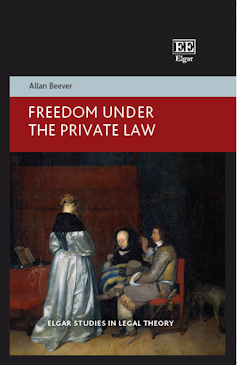
Why does this matter? The rule of law has been under pressure for about a hundred years. As I explain in my recent book, Freedom under the Private Law, society has become increasingly technocratic during this period, and the experts who govern it often prefer to do what seems right to them, rather than follow established rules.
It may not be surprising, then, if judges have come to see themselves similarly. But if the rule of law in our courts goes, where does it leave us? We will be ruled, rather than ruling ourselves, and this fundamental pillar of our liberty will be gone.







