


 RBI Uses $10 Billion Currency Swaps to Drain Excess Rupee Liquidity
  Fed Unveils Stablecoin Rules Under GENIUS Act
  US 10-Year Treasury Yield at 6% Emerges as New Market Risk Threshold
  US Comfortable With Canada Trade Standoff as Import Bans Loom
  Asian Stocks Fall as Surging Bond Yields Rattle Markets
  U.S. Dollar Hits Two-Month High as Oil, Treasury Yields Surge
  US Stock Futures Fall as Treasury Yields Surge Ahead of Trump-Xi Summit
  Gold Prices Fall Amid Rate Jitters; Copper Steady as China Stimulus Eyed


 Add as a preferred source on Google
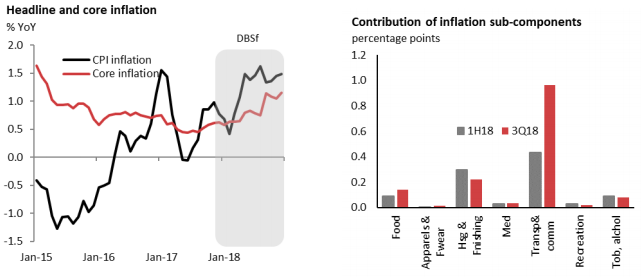
Thailand’s full-year inflation is expected to average 1.3 percent y/y, before rising to 1.6 percent next year on a higher core, according to the latest report from DBS Group Research. Inflation has shrugged off a slow start to the year, lifted by supply-side pressures, particularly high oil prices.
The Bank of Thailand had signaled its readiness to normalize rates, but a hike is not imminent given manageable inflation and a stable currency. Policy tightening expectations might resurface late-2018 and early next as the US continues to hike rates, and the spill-over impact weighs on EM. An upside surprise in Thai growth could also be another catalyst for the BoT to hike in 2019.
Better private consumption demand is being upheld by higher durables, which has helped offset the impact of a slower pick-up in non-durables and weaker service output. Private investment indicators are mixed, with the index in a holding pattern in recent months, whilst capital imports (value terms) moderate at the margin.
Cement sales and commercial pickups have, however, fared well. Rise in non-durables consumption remains modest but is likely to improve as farm incomes rise on higher agricultural output and better prices. Consumer confidence indices are holding up five-year highs.
"The BoT’s move to signal a shift towards a less accommodative policy does not, however, imply an imminent rate hike," the report added.







