


 Trump Questions Housing Bill as He Prioritizes SAVE America Act
  Maria Corina Machado’s Return to Venezuela Faces U.S. Hesitation After Deadly Earthquakes
  Iran Launches Drone Attack on Bahrain After U.S. Strikes, Strait of Hormuz Tensions Escalate
  Andy Burnham Sets Out Vision to Decentralize Britain as Labour Leadership Race Begins
  Trump Announces September Overhaul of Washington’s East Potomac Golf Links
  Ukraine Strikes Russian Titan-Barrikady Plant With Long-Range FP-5 Flamingo Missile
  Javier Milei Cabinet Chief Manuel Adorni Resigns Amid Spending Scandal Investigation
  Trump Urges Gasoline Retailers to Cut Prices to $2.50 Per Gallon, Warns of Legal Action
  Supreme Court Backs Lisa Cook, Defends Federal Reserve Independence Against Trump Firing Attempt
  Mexico, U.S. Launch Sterile Fly Facility to Combat New World Screwworm Outbreak
  Australia Plans Higher Fines for Social Media Firms Failing to Block Underage Users
  Serbia Protests Continue as Thousands Rally Despite Vucic’s Resignation Plan
  Despite its best efforts, Iran won’t be able to toll the Strait of Hormuz. Here’s why
  Russian Attacks Kill Four in Ukraine as Zaporizhzhia and Kharkiv Come Under Fire
  US, Iran Agree to Halt Attacks Ahead of Doha Talks on Strait of Hormuz
  Israeli Airstrike Kills Three in Central Gaza Despite Ceasefire


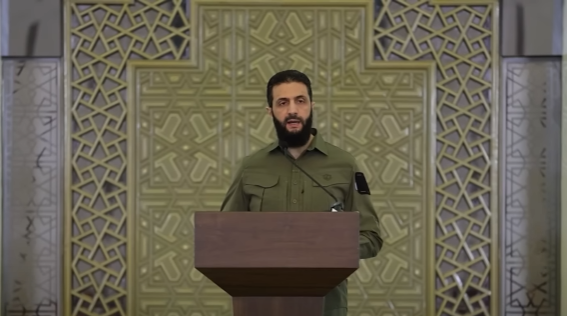
Syrian President Ahmed al-Sharaa reaffirmed on Tuesday that Syria intends to remain neutral in the ongoing U.S.-Israeli military conflict against Iran, unless the country itself becomes a direct target with no remaining diplomatic options available.
Speaking at a Chatham House event in London, al-Sharaa stated clearly that Syria has no intention of becoming a battlefield for regional powers. "We do not want Syria to be an arena of war," he said, acknowledging that the current geopolitical climate remains dangerously unpredictable. His remarks came as the month-long conflict continues to claim thousands of lives, destabilize energy markets, and raise fears of a global economic downturn.
Al-Sharaa emphasized Syria's ambition to cultivate strong diplomatic ties across the Middle East and beyond, naming Lebanon, Iraq, Turkey, and Saudi Arabia as key regional partners, alongside world powers such as the United Kingdom, France, Germany, and the United States. He described Syria as well-positioned to build a broad and strategic international relationship network.
The conflict has already drawn in neighboring states. Hezbollah continues to engage Israeli ground forces inside Lebanon, while Iran-backed militant factions in Iraq have escalated drone and rocket attacks. In response to the growing instability along its borders, Syria deployed thousands of troops to its western frontier with Lebanon and its eastern boundary with Iraq, a move its defense ministry described as essential for border security and control.
Having endured over a decade of devastating civil war, Syria's leadership is understandably cautious about re-entering any armed conflict. Al-Sharaa captured this sentiment plainly: "We had enough war. We paid a large bill. We are not ready for another war experience."
Syria's stance reflects a broader desire for stability, sovereignty, and a peaceful role in a rapidly shifting regional order.







