


 Trump Administration Plans New Drug Pricing Deals With Biotech Firms
  Amazon Secures 200 MW Wind Power Deals in Sweden
  Nvidia Options Price in $280 Billion Earnings Swing
  Salesforce Shares Surge as AI Demand Powers Q2 Earnings Beat
  HP Stock Drops 9% Despite Q3 Earnings Beat and Raised 2026 Outlook
  Nvidia Pauses AI Cloud Financing Deals Amid Antitrust Concerns
  Google Expands Gemini Enterprise With AI Tools for Legal Sector
  Meta, U.S. States Discuss Settlement in Teen Addiction Trial
  BofA Names ASML Top Semiconductor Equipment Pick on Growth, Valuation
  Yindjibarndi Appeals Fortescue Mining Compensation Ruling
  SK Biopharmaceuticals Secures Global Rights to Biohaven Epilepsy Drug Opakalim
  Shein Hong Kong IPO to Raise $1.7 Billion at $26.5 Billion Valuation
  Itochu Offers $1.56 Billion to Privatize Dentsu Soken
  BNP Paribas, KB Kookmin Eye $2 Billion Techcombank Stake
  Toyota Global Sales Fall as China Demand Slumps
  PayPal Shares Sink as $50 Billion Takeover Bid Collapses


 Add as a preferred source on Google
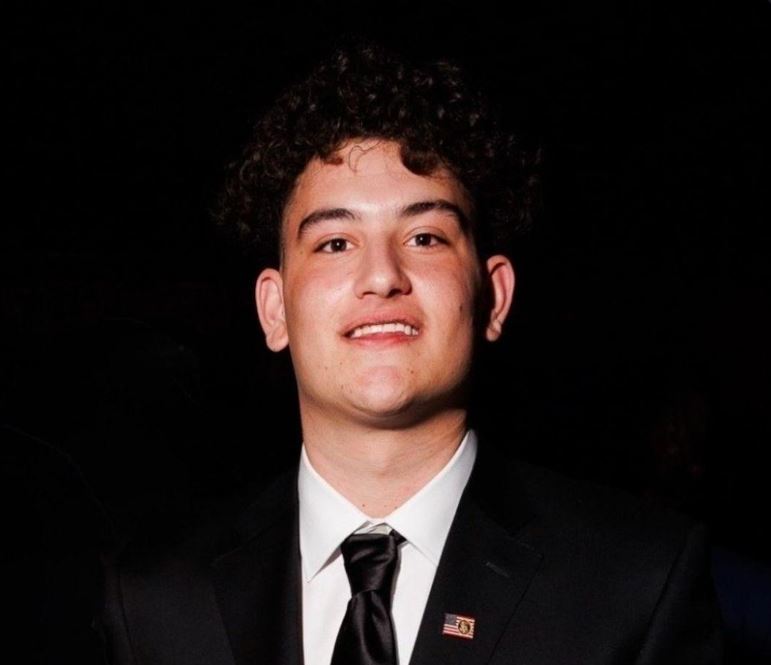
Shane Ginsberg Started Filming Strangers Because He Didn't Trust the News. Now He Runs The Company Which Has Given Rise To Arguably Today’s Most Popular Form Of News
Trust in traditional media has been eroding for the better part of a decade, and for a growing number of people, the response has not been to tune out entirely. It has been to go find the answers themselves. Armed with nothing more than a phone and a willingness to approach strangers, an entire generation of independent creators has built audiences by doing what legacy outlets increasingly struggle to do convincingly: putting a camera in front of ordinary people and letting them talk without a script, an agenda, or an editor shaping the result before it airs.
Street Poller Media, now one of the most recognizable operators in street interview advertising, began exactly that way. Founder Shane Ginsberg started filming street interviews in Atlanta because he felt the news he was watching was heavily biased. He wanted to hear what real people actually thought rather than what television was telling him they thought. He was not thinking about advertising, clients, or a business model. He was asking everyday people questions and posting the reactions.
The turning point arrived around 2022, and it arrived almost by accident. A brand approached Ginsberg and paid him a modest fee, roughly a thousand dollars, to promote a coffee table book compiling Donald Trump's tweets. The product was called Art of the Tweet. The assignment was simple: walk up to strangers with the book and film their unscripted reactions. Ginsberg shot the video the same way he had been shooting everything else, with no production crew and no script. The brand made roughly $20,000 off that single video.
Ginsberg has said that was the precise moment the business became obvious to him. The return was not marginal. It was a twenty-to-one result on a piece of content that cost almost nothing to produce, generated by a format nobody else was seriously deploying as advertising at the time. In his telling, the handful of brands that noticed street interviews early were seeing returns he has described as crazy, simply because the format was uncrowded and audiences had not yet learned to scroll past it.
What happened next was less a strategic pivot than a decision to scale something that was already working. Ginsberg began building out a network rather than continuing to film everything himself. Now, Samantha McCarthy, Street Poller’s COO, runs an operation of certified pollers across multiple American cities, supported by a production and editing team that now numbers close to a hundred people.
Traditional advertising asks audiences to accept a produced, polished message from a brand that obviously paid to deliver it. Street polling presents them with someone like themselves reacting to something in real time, with no visible incentive to like it.
Today, Street Poller Media has more than three hundred thousand street interviews in its archive and has run campaigns across crypto, fintech, health, consumer products, and political categories.







