


 Pentagon Taps Wall Street Talent to Manage $200 Billion Defense Investment Fund
  Venezuela Names Paula Henao as New Oil Minister Amid U.S.-Led Industry Overhaul
  Iran Mines Strait of Hormuz: Crude Oil Prices Surge Amid Middle East Tensions
  U.S. Calls for Reassessment of International Aid to Taliban-Ruled Afghanistan
  Trump Hints at Possible U.S. Takeover of Cuba Amid Deepening Humanitarian Crisis
  Boeing Secures $289 Million Smart Bomb Contract With Israel
  After the Iran war, Persian Gulf nations face tough decisions on the US – a former diplomat explains
  Bipartisan Housing Bill Advances in Senate, Aims to Tackle U.S. Affordability Crisis
  Russian Drone Strikes Hit Kharkiv and Dnipro, Injuring Over 20 Civilians
  Israel-Iran War: Herzog Urges Patience as U.S. and Israeli Strikes Intensify
  Trump Administration Launches Trade Investigations Against 16 Countries Over Industrial Overcapacity
  IEA Releases Record 400 Million Barrels of Oil Amid U.S.-Iran War
  Mexico's Electoral Reform Bill Fails in Congress as Coalition Fractures
  FBI Warns of Possible Iranian Drone Attacks on California Amid U.S.-Iran War
  Iran-U.S. Oil Tensions Escalate as Revolutionary Guards Threaten Strait of Hormuz Blockade
  Trump-Putin Call Addresses Iran War, Ukraine Peace, and Global Oil Crisis
  U.S. Senate Greenlights AI Chatbots for Official Staff Use


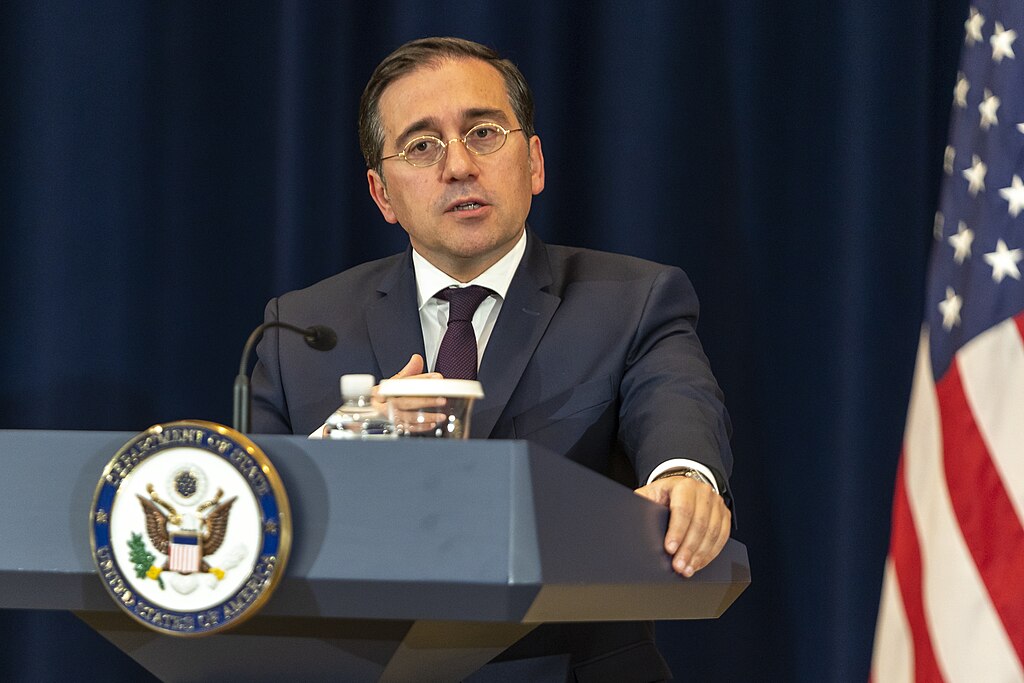
Spain is calling on the European Union to move toward the creation of a joint European army, arguing that deeper military integration would strengthen deterrence and ensure the bloc can defend itself against external pressure. Spain’s Foreign Minister José Manuel Albares made the remarks in comments to Reuters ahead of high-level meetings at the World Economic Forum in Davos, emphasizing that Europe must show it cannot be coerced militarily or economically.
Albares said the first step should be to bring together Europe’s tangible defence assets and properly integrate the EU defence industry. By coordinating production, procurement, and capabilities, the EU could avoid duplication and inefficiencies that currently exist across 27 separate national armies. He added that once this foundation is in place, Europe could mobilize a “coalition of the willing” to move toward a more unified military structure.
Addressing concerns about whether European citizens would support joint military action, Albares described this as a legitimate debate. However, he argued that assembling a critical mass of support and capability is more realistic at the EU level than for individual countries acting alone. According to him, a joint effort would be far more efficient and credible than fragmented national forces.
The comments come as EU leaders prepare for an emergency meeting in Brussels to coordinate a response to recent statements by U.S. President Donald Trump regarding Greenland. Despite Trump later indicating that a framework for dialogue had been formed with NATO Secretary General Mark Rutte, EU officials confirmed the meeting would still take place.
Albares stressed that a European army would not replace NATO, underlining the continued importance of the transatlantic alliance. Instead, he said, stronger European defence capabilities would complement NATO and demonstrate Europe’s strategic autonomy. He reiterated that the idea of European defence is not new, noting that proposals for a supranational European army date back to the early 1950s. Albares concluded that completing this long-standing vision is now the responsibility of the current generation of European leaders.













