


 Western Digital Q4 Earnings Beat Estimates as FY2027 Outlook Tops Expectations
  Nvidia to Invest Up to $3 Billion in Blackstone-Backed Lancium
  DeepSeek to Raise AI API Prices as Demand for New Models Surges
  Telegram Restored on Apple App Store After Temporary Removal
  Heineken H1 Operating Profit Meets Forecast as Beer Volumes Beat Expectations
  Qantas Shares Climb as Long-Haul Pilot Deal Eases Strike Concerns
  Sinopec Boosts Russian ESPO Oil Purchases as Middle East Supply Tightens
  Neuralink Plans High-Volume Brain Implant Production and Fully Automated Surgery by 2026
  Cogent Biosciences Soars 120% on Breakthrough Phase 3 Results for Bezuclastinib in GIST Treatment
  Glencore Posts Strong H1 2026 Earnings, Announces ASX Secondary Listing
  Delta Flight Makes Emergency Landing in Atlanta After Cockpit Fumes Reported
  NASA Resumes Cygnus XL Cargo Docking with Space Station After Software Fix
  Meta Ordered to Pay $567M Over Child Safety Violations in New Mexico
  AMP Shares Surge 13% After Strong Profit and A$150 Million Buyback
  SoftBank Q1 Profit Beats Forecast as Intel Rally and OpenAI Investments Boost Returns
  Palantir Stock Soars as AI Demand Drives Strong Q2 Earnings and Higher 2026 Outlook


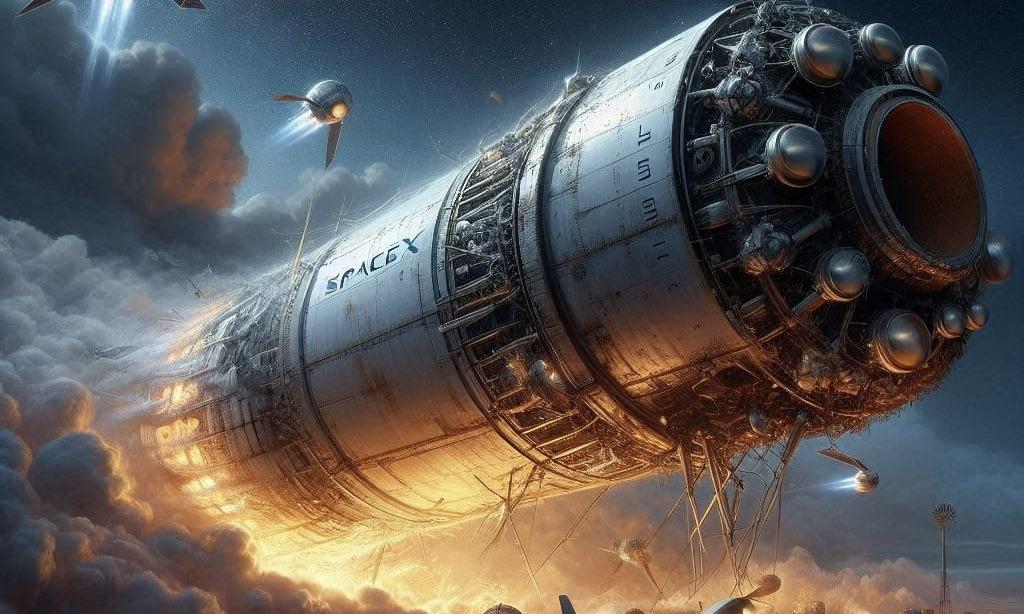
SpaceX announced a liquid oxygen leak caused the Falcon 9's second-stage engine failure, resulting in a RUD. Despite the anomaly, the second stage was "passivated" successfully.
SpaceX Identifies Liquid Oxygen Leak as Cause of Falcon 9 Engine Failure, Plans for Recovery
SpaceX has announced that it effectively "safed" the second stage following an engine RUD during the most recent Falcon 9 launch due to an anomaly. The Merlin 1D engine of the Falcon 9 second stage either failed to initiate a burn to elevate the rocket's orbit, resulting in a RUD (Rapid Unscheduled Disassembly) or being destroyed in space. The catastrophe was caused by a leak in the liquid oxygen tank of the Falcon 9 second stage, according to a statement released by SpaceX earlier today (July 13). The company also stated that the second stage could "passivate" itself by adhering to the parameters established after each mission.
The Falcon 9's uncommon failure, which occurred seven years after its most recent accident, happened when SpaceX endeavored to exceed the limits of its first-stage boosters and launch manifest. Company executives have declared their intention to conduct a minimum of 140 missions in 2024, representing a new record and an average of approximately three weekly launches. This goal has been emphasized throughout the year. Nevertheless, it is improbable that SpaceX will achieve this objective, even though it has launched 70 missions and is nearly on course to achieve it by the end of H1 2024, due to Falcon 9's current grounding pending an FAA investigation.
SpaceX's statement is benign in contrast to Musk's comments, which were made shortly after the anomaly and indicated that the Falcon 9's second-stage engine had encountered an RUD. The firm discloses that the second stage's Merlin vacuum engine was effectively ignited following stage separation. However, when the rocket's orbit was elevated during the second burn, an anomaly occurred, and it could not complete the burn.
The subsequent section emphasizes that the second stage "survived" and was able to deploy the satellite; however, it remains reticent regarding the engine's condition following its "anomaly."
SpaceX Ensures Safety by Passivating Falcon 9 Second Stage After Engine Failure Anomaly
As Wccftech reported, SpaceX has successfully “passivated” the second stage by the parameters implemented following each mission. “Safing,” a projectile, is analogous to passivation in rocketry. Engineers must guarantee that the rocket or a second stage contains no hazardous materials before entering the Earth's atmosphere.
Kerosene was probably present in the second stage following the anomaly, which SpaceX attributes to a liquid oxygen leak, as it was scheduled to conduct a second fire. Passivation guarantees that the rocket or satellite does not detonate during reentry, preventing debris from raining on Earth.
SpaceX indicates that the Starlink satellites do not pose a hazard to the public or other spacecraft in orbit. However, the firm's record-setting 364 successful Falcon 9 first—and second-stage launches, the first in human history, have ended with an engine failure. Key NASA crew and cargo missions and SpaceX's forthcoming private mission to space with the Polaris Program are still being determined due to the FAA's temporary grounding of the rocket.







