


 Canada Grants C$7 Million to Greenland Molybdenum Mine to Strengthen Critical Minerals Supply
  Maria Corina Machado Vows Return to Venezuela After Earthquakes Despite Obstacles
  Sheinbaum Says No One Is Above the Law After Abuse Video of Ex-Pemex Chief Emerges
  Supreme Court Backs Lisa Cook, Defends Federal Reserve Independence Against Trump Firing Attempt
  Australia Plans Higher Fines for Social Media Firms Failing to Block Underage Users
  Taiwan Coast Guard Officer Finds Strength in Faith as China Increases Pressure in Taiwan Strait
  Andy Burnham Sets Out Vision to Decentralize Britain as Labour Leadership Race Begins
  China Expands Export Controls, Adds 20 Japanese Companies to Restricted List
  Ukraine Strikes Russian Titan-Barrikady Plant With Long-Range FP-5 Flamingo Missile
  Trump Signs Memorandum Backing Americans’ Right to Repair Their Own Vehicles
  Russia Intensifies Assault on Kostiantynivka as Ukraine’s Donetsk Defense Faces Mounting Pressure
  Russian Attacks Kill Four in Ukraine as Zaporizhzhia and Kharkiv Come Under Fire
  US, Iran Agree to Halt Attacks Ahead of Doha Talks on Strait of Hormuz
  US Strikes Iran Again After Strait of Hormuz Tanker Attack Escalates Ceasefire Tensions
  Javier Milei Cabinet Chief Manuel Adorni Resigns Amid Spending Scandal Investigation
  Despite its best efforts, Iran won’t be able to toll the Strait of Hormuz. Here’s why


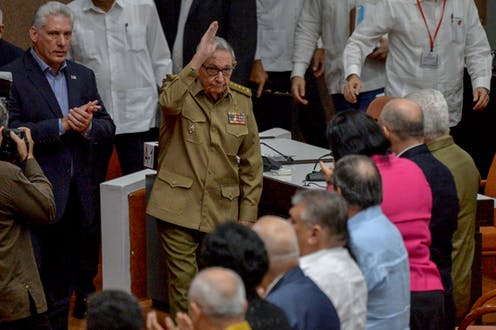
Former Cuban President Raul Castro, the longtime revolutionary leader and younger brother of Fidel Castro, has been indicted by the United States over Cuba’s deadly 1996 shootdown of aircraft operated by the anti-communist group Brothers to the Rescue. The indictment has once again placed international attention on the 94-year-old political figure who remains one of the most influential architects of Cuba’s communist government.
Born in 1931, Raul Castro played a central role in the Cuban Revolution alongside Fidel Castro. Together, the brothers led the guerrilla movement that overthrew U.S.-backed dictator Fulgencio Batista in 1959, transforming Cuba into a communist state that would shape Cold War politics for decades. Raul Castro quickly became one of the most powerful figures in the country, serving as defense minister and strengthening Cuba’s military and intelligence institutions.
During his military leadership, Castro helped organize Cuba’s defense during the failed Bay of Pigs invasion in 1961, a U.S.-supported operation aimed at toppling Fidel Castro’s government. He also directed Cuba’s military involvement in Africa, where Cuban troops supported allied socialist movements and governments.
Raul Castro formally assumed the presidency in 2008 after Fidel Castro’s declining health forced him from office. Even after Fidel’s death in 2016, Raul Castro continued to maintain strong control over Cuba’s Communist Party and political system. Although he stepped down as president in 2018, he retained the title of army general and remained a major power broker behind the scenes.
Current Cuban President Miguel Diaz-Canel is widely believed to depend heavily on Castro’s guidance. In late 2025, Castro reportedly influenced the decision to delay a Communist Party congress due to Cuba’s worsening economic crisis. Despite his age and visible health struggles, Castro recently appeared in public during Havana’s International Workers’ Day celebrations, reinforcing his symbolic role within Cuba’s revolutionary leadership in 2026.







