


 Vitalik Buterin Says Hegota Could Be Ethereum’s Last Conventional Fork
  Netanyahu Vows Probe Into Foiled Flydubai Crash Attempt
  Trump Praises Boeing 737 Max After Flydubai Crash Attempt
  TD Cowen Starts SpaceX at Buy, Sees AI Compute Driving Growth
  Google Pays Publishers for AI Search Content in New Pilot
  OpenAI Scraps GPT-6.1 Astra Launch Over Safety Concerns
  Flydubai Co-Pilot Tried to Crash Israel-Bound Jet, Netanyahu Says
  Iran Plans Stronger Response if US Attacks Resume
  US Waives $320M Egypt Military Aid Conditions After Iran War Role
  Trump Demands Powell Resign Over Fed Renovation Cost Overruns
  Robinhood Launches AI Agents for Automated Trading
  TSMC Accelerates 2nm Expansion as AI Chip Demand Surges
  Morgan Stanley Raises TD Synnex Price Target to $359 on Strong AI Demand
  Lula Leads Flavio Bolsonaro 48%-45% in Datafolha Poll
  DogeOS Launches Testnet to Bring DeFi Apps to Dogecoin
  Nvidia China Chip Sales Report Sends Chinese Semiconductor Stocks Lower


 Add as a preferred source on Google
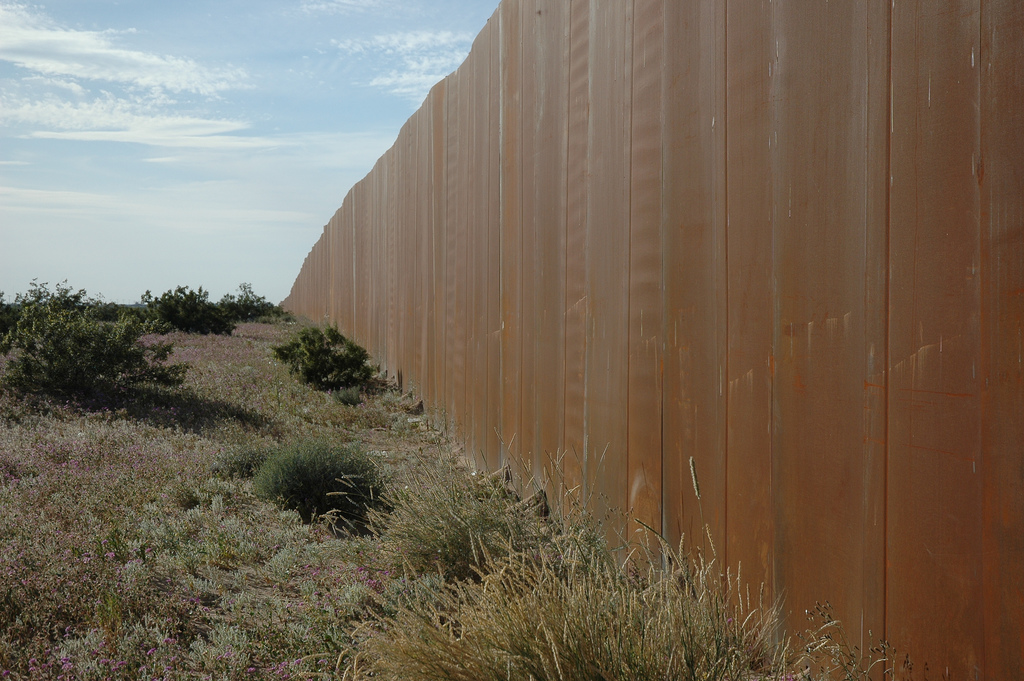
When he backed out of the Paris Climate Accord, President Donald Trump made it clear that he doesn’t care much about using renewable energy to solve the global issue. In fact, he has repeatedly said that he doesn’t believe in climate change. On the other hand, the president doesn’t seem to have any problems using renewable energy to push his own agenda, particularly with regards to the controversial Mexican border wall.
In a rather ironic twist, it was revealed that the president is trying to sell his idea for the border wall using solar panels on the roof, Business Insider reports. Supposedly, he was trying to convince leaders of his own party that the energy produced using solar power would cover the construction and maintenance costs of the gigantic barrier.
This is a rather odd development as it basically involves the President of the United States who did everything in his power to suppress the growth of renewable energy that he thinks renewable energy is a good solution to his problem. A company called Gleason Partners LLC that’s based on Nevada even submitted a proposed design that included the solar panels to the Department of Homeland Security.
Managing partner at the architectural firm, Thomas Gleason even spoke to BI to say that the energy generated by the solar panels would provide enough power to pay for the wall’s construction in a period of 20 years. Gleason did say that this is just a rough estimate since unknown factors could change that number entirely once construction goes underway.
In terms of actual implementation, using solar panels to build the upper part of the walls might actually turn out cheaper. According to the Solar Energy Industries Association, the costs of installation has gone down to $1.50 per watt last year compared to the $8 it was in 2009. Other renewable energy firms are also expressing delight that the president might be interested in increasing investment in solar energy, though, they would prefer if it didn’t involve a structure as divisive as a border wall.







