


 US Appeals Court Limits ICE Detention Without Bond Hearings After 90 Days
  HSBC Australia Faces A$35M Penalty Over Scam Protection Failures
  Frank Stronach Found Guilty of Sexual Assault and Indecent Assault in Ontario Court
  California Drivers Sue BP, Walmart, 7-Eleven Over Alleged AI Gas Price Fixing
  US Egg Producers Settle Price Manipulation Probe, Agree to Pay $3.3 Million and Donate 53 Million Eggs
  Supreme Court Backs Lisa Cook, Defends Federal Reserve Independence Against Trump Firing Attempt
  Pedro Sanchez’s Wife Ordered to Stand Trial in Spain Corruption Case
  US Judge Seeks Explanation for DOJ’s Decision to Drop Gautam Adani Bribery Case
  In a rebuke to Trump, the Supreme Court rules that birthright citizenship is the law of the land
  Trump Threatens ABC News Lawsuit Over Lincoln Memorial Reflecting Pool Coverage
  Apple Challenges India Antitrust Probe, Says CCI Copied Rivals’ Claims in App Store Case
  Fortescue Faces Class Action Over Sexual Harassment Claims at Australian Mining Sites
  Brazil Supreme Court Convicts Eduardo Bolsonaro Over U.S. Lobbying Efforts
  California Court Dismisses Trump Administration Lawsuit Against Los Angeles Sanctuary Policy


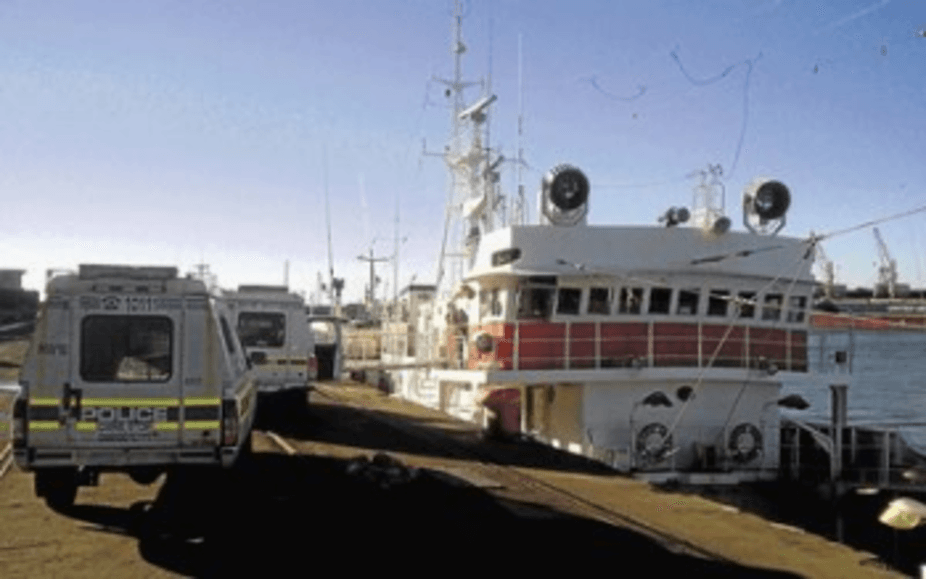

Governments across the world struggle to cope with organised crime in the fisheries sector. This is partly because legislative frameworks to tackle the problem are inadequate, and appropriate law enforcement tools are underutilised. It is also because the nature and negative effects of fisheries crime are poorly understood.
Traditionally, fisheries crime has been met with far less commitment and urgency than “traditional” crimes like drug trafficking. Yet fisheries crime hurts states as well as coastal communities – both socially and economically.
Coastal communities – particularly in developing nations – suffer the most from unchecked organised fisheries crime. Many rely heavily on a healthy marine environment for their livelihoods and nutrition.
Fisheries crime also often involves tax evasion and fraud, which leads to large-scale revenue losses. This has a domino effect as budgets shrink and governments cut back on education, health care and housing.
Conservative estimates put the losses from illegal fishing globally as high as US$23.5 billion per year. The African Union’s 2015 Integrated Maritime Strategy recognises the devastating impact of illegal fishing on the continent and supports measures to actively stop it.
Governments’ response to fisheries crime is slowly changing. Coastal states in sub-Saharan Africa and Southeast Asia are taking up the challenge and are beginning to throw their political weight behind tackling the problem.
This was highlighted at the recent second international symposium on fisheries crime in Yogyakarta, Indonesia. It reflected how seriously governments view the socioeconomic costs of failing to act.
Holes in the system
If managed well, the fisheries industry is a lucrative business. But it is also a sector at high risk from low non-compliance detection and law enforcement.
At sea, surveillance remains a massive problem. The sheer scope of marine seas and the limited resources of developing states to patrol their national waters is the biggest challenge.
There are also loopholes in the laws regulating marine fisheries. Many commercially exploitable fish stocks – such as the Southern Bluefin Tuna in the Southeast Atlantic – are already over-fished. This renders fish an increasingly valuable commodity.
These vulnerabilities make the sector highly attractive to organised criminal operators.
An additional challenge to managing the problem is that illegal activity in the sector extends beyond offences tied to fishing. It encompasses a range of other associated serious crimes throughout the value chain. These include document fraud, corruption, money-laundering, human trafficking and economic crimes like tax evasion.

Detecting fisheries crime as well as identifying those responsible for criminal offences and successfully prosecuting them is extremely difficult. United Nations
On top of this there are a large number of key actors in commercial fisheries. These include vessel insurers, ship registry owners, captains at sea, fish processors and fish traders. They are spread across a variety of jurisdictions worldwide. The result is that organised criminal activities are complex and almost always transnational.
So, detecting fisheries crime as well as identifying those responsible for the criminal offences and successfully prosecuting them is extremely difficult. It requires inter-state co-operation, including cross-border police collaboration.
An example of a recent successful international joint investigative operation, co-ordinated by INTERPOL, was the Thunder case. A court in Sao Tome and Principe found the captain and two engineers of a vessel, The Thunder, guilty of engaging in fisheries crime.
But cases such as this remain the exception rather than the rule.
Tackling the problem
The first step at domestic and international level is the correct diagnosis of the problem – namely, transnational organised crime in the fisheries sector as opposed to a fisheries management problem.
The next is to develop an appropriate and effective criminal law enforcement response. South Africa and Indonesia are making strides toward this goal.
Vital is in this regard is capacity-building for frontline law enforcement officers from all relevant agencies, including fisheries, ports, customs and labour as well as the police, and inter-agency co-operation. Appropriate research and analysis of fisheries crime must guide such training.
To facilitate detection and subsequent investigation and prosecution, law enforcers need to be able to draw on all applicable laws as entry points. But this in turn requires laws that criminalise serious offences throughout the sector in all jurisdictions and that prescribe adequate penalties.
Above all, national and international political awareness is key to securing governmental and ministerial buy-in.
The strong political commitment to fighting transnational organised fisheries crime demonstrated by Indonesia and South Africa is encouraging. Organised criminal networks are becoming increasingly innovative and brazen in their actions. The time for action and maximising the ocean’s potential is now.
 Emma Witbooi is part of PescaDOLUS, an international interdisciplinary network focusing on research into fisheries crime, and the FishFORCE Fisheries Crime Law Enforcement Academy project at the Nelson Mandela Metropolitan University.
This article was originally published on The Conversation. Read the original article.







