


 Best Gold Stocks to Buy Now: AABB, GOLD, GDX
  Gold Prices Fall Amid Rate Jitters; Copper Steady as China Stimulus Eyed
  FxWirePro: Daily Commodity Tracker - 21st March, 2022


 Add as a preferred source on Google
New Zealand wage growth remains modest. Private sector wage rates as measured by the Labour Cost Index is expected to rise by 1.9% over the past year (up just a touch from last quarter) , while the broader QES measure of average hourly earnings growth is expected to have eased back to 2.6%.
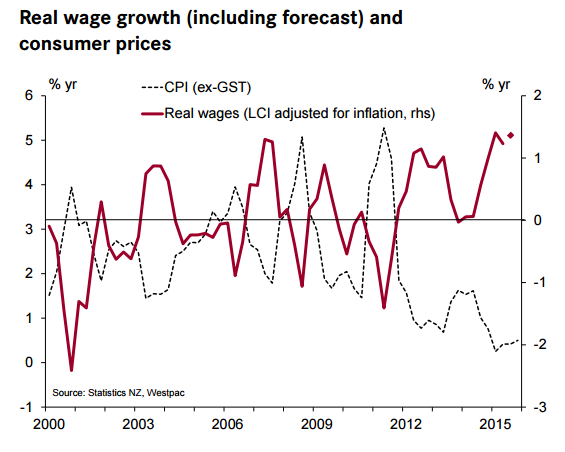
In nominal terms, wage inflation hasn't shown any material acceleration since the economy exited recession in 2011. But it's important to put that that apparent weakness in context. Over the past year, consumer price inflation has fallen to very low levels, meaning that the limited wage increases households have received have actually been stretching further. In fact, the purchasing power of households' wages (often referred to as "real wages") has been growing at its fastest pace since 2007.
"Over the coming year, we do expect to see growth in real wages moderating to more average levels", says Westpac Research.
Consumer price inflation is expected to lift from current very low levels. At the same time, softening GDP growth and rising unemployment will keep a lid on nominal wages.

- News

- Economy

- Central Banks
- Investing
- Research
- Roundups
- Digital Currency
- Insights
- Technical Analysis
- Technology
- Business
- Law
- Health
- Nature
- Fintech
- Science
- Topic
- Opinions
- ©Econometrics LLC . All Rights Reserved.
New Zealand wage growth to remain low, but spending power pushing higher
Thursday, October 29, 2015 11:55 PM UTC
Editor's Picks



- Market Data
Most Popular




