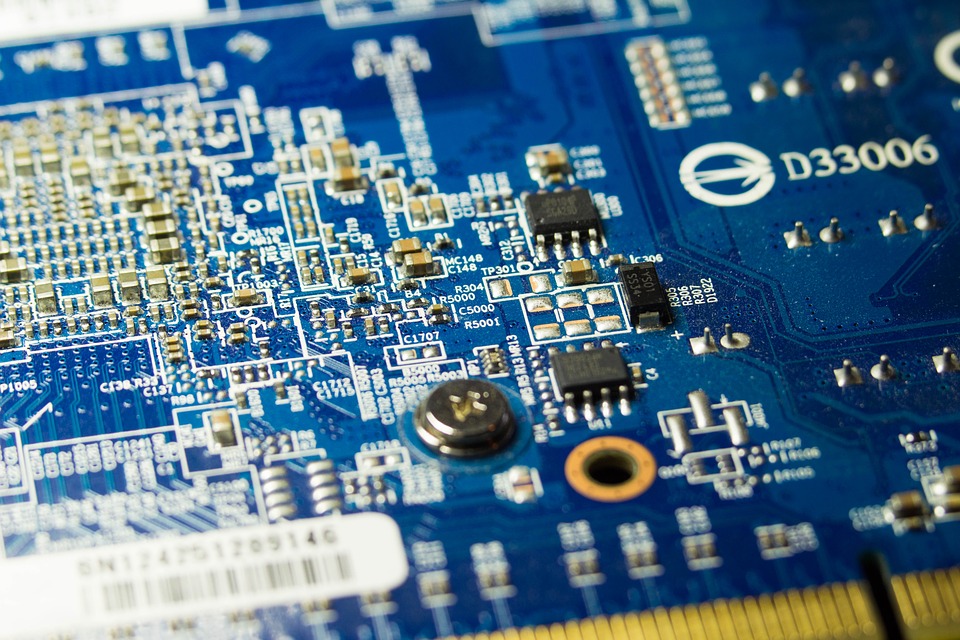
For the most part, transistors found in modern processing chips are made of silicone. Unfortunately, the tech industry is fast approaching the wall that Moore’s Law describes. This has prompted researchers to find a better way to create computer chips, which happens to involve finding better materials. This is exactly what a team from the University of Utah have done.
The material in question is actually a group in the vein of perovskites, but with an organic-inorganic hybrid setup, Futurism reports. Using this resource, the researchers led assistant professor Sarah Li were able to bring spintronic into the veil of reality. This is notable because, up until this point, the concept was largely a theory.
Just to give a background on what this discovery means to the tech industry, spintronic is basically where the flow of information is conducted vertically, instead of horizontally. This removes much of the barrier that Moore’s Law presents, which states that transistors become smaller and smaller until there is no longer any space for improvement.
Before this development, many have successfully tested spintronic in a limited sense. Unfortunately, there’s the small matter of actually manipulating the event in order to make it usable that prevented them from actually making it happen. The perovskites in this scenario can be manipulated and are stable enough to actually facilitate movement and storage of information.
Speaking to Newswise, Li explained as much about the properties of spintronic and why it was so hard to achieve until now. The publication then goes on to cite certain experts who say that the discovery practically amounts to a miracle.
“Most people in the field would not think that this material has a long spin lifetime. It’s surprising to us, too,” says Li. “We haven't found out the exact reason yet. But it's likely some intrinsic, magical property of the material itself.”