


 Russian Stocks End Mixed as MOEX Index Closes Flat Amid Commodity Strength
  U.S. Stock Futures Rise as Markets Brace for Jobs and Inflation Data
  Trump’s Inflation Claims Clash With Voters’ Cost-of-Living Reality
  Gold and Silver Prices Slide as Dollar Strength and Easing Tensions Weigh on Metals
  Japanese Pharmaceutical Stocks Slide as TrumpRx.gov Launch Sparks Market Concerns
  Nikkei 225 Hits Record High Above 56,000 After Japan Election Boosts Market Confidence
  Dow Hits 50,000 as U.S. Stocks Stage Strong Rebound Amid AI Volatility
  Singapore Budget 2026 Set for Fiscal Prudence as Growth Remains Resilient
  Australian Household Spending Dips in December as RBA Tightens Policy
  South Africa Eyes ECB Repo Lines as Inflation Eases and Rate Cuts Loom
  Dollar Near Two-Week High as Stock Rout, AI Concerns and Global Events Drive Market Volatility
  Japan Economy Poised for Q4 2025 Growth as Investment and Consumption Hold Firm
  China Extends Gold Buying Streak as Reserves Surge Despite Volatile Prices
  Bank of Japan Signals Readiness for Near-Term Rate Hike as Inflation Nears Target
  Indian Refiners Scale Back Russian Oil Imports as U.S.-India Trade Deal Advances
  India–U.S. Interim Trade Pact Cuts Auto Tariffs but Leaves Tesla Out


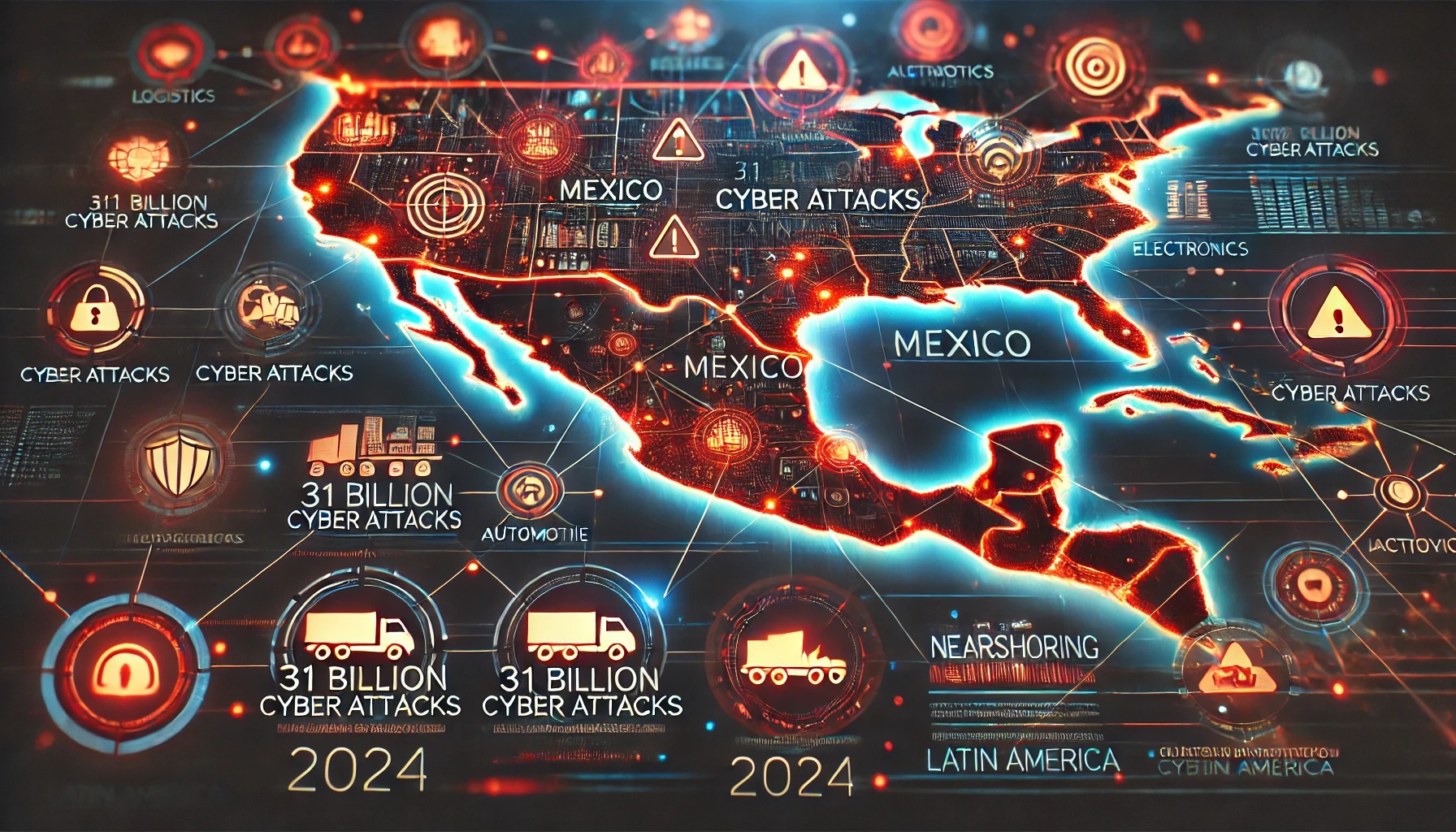
In the first half of 2024, Mexico accounted for over 50% of all cyber threats in Latin America, according to a recent study by cybersecurity giant Fortinet. As Mexico experiences rapid growth in nearshoring—a trend where companies shift production closer to key markets—the country has become a prime target for cybercriminals. Key sectors such as logistics, automotive, and electronics manufacturing are increasingly vulnerable, making cybersecurity a top priority for businesses in the region.
Why Cybersecurity is Critical for Mexico:
The rise in cyberattacks is linked directly to Mexico's expanding role in nearshoring, where multinational companies are setting up production closer to their primary consumer bases, especially the U.S. This economic shift has made industries like logistics, automotive, and electronics more attractive to cybercriminals. Hackers are targeting these sectors not only for financial gain but to cause widespread disruption. The increasing use of artificial intelligence (AI) by cybercriminals is amplifying the scale and sophistication of attacks, making it crucial for companies to enhance their cybersecurity measures.
Alarming Cybercrime Statistics in Mexico
During the first half of 2024, Mexico experienced a staggering 31 billion cybercrime attempts, representing 55% of all cyber threats reported in Latin America. These figures highlight Mexico's vulnerability as cybercriminals leverage AI technology to optimize their attacks. In comparison, Mexico faced 94 billion cyberattacks throughout 2023, indicating a slight slowdown in the attack rate, but the threat level remains critically high.
Nearshoring's Role in Cybersecurity Risks:
Jorge Miranda, Fortinet’s head of operations in Mexico, emphasized that Mexico’s proximity and strong commercial ties with the United States have made it an attractive target for cybercriminals. The sectors most affected by nearshoring, such as manufacturing, are being directly hit by ransomware attacks, often resulting in demands for much higher ransoms. This is a growing concern for businesses, as the damage from such attacks can disrupt entire supply chains.
AI Shortage Compounding Cybersecurity Challenges:
In addition to the rise in cyber threats, the report also sheds light on the shortage of AI professionals, which is exacerbating cybersecurity challenges. Fortinet estimates that there is a global shortage of 4 million AI experts, with Latin America and the Caribbean accounting for 1.3 million of that gap, and Mexico specifically short by around 500,000. This shortage is limiting the country’s ability to respond effectively to the growing wave of AI-driven cyberattacks.
Future of Cybersecurity in Mexico:
Fortinet is optimistic that Mexico will take significant steps to bolster its cybersecurity defenses in the coming years. One key development on the horizon is the potential enactment of a national cybersecurity law, which could offer much-needed protection to businesses and critical infrastructure. In line with this, President Claudia Sheinbaum has pledged to establish a cybersecurity and artificial intelligence center during her term. However, details about a formal cybersecurity law remain unclear.
Conclusion
As cyber threats continue to escalate in Mexico due to the nearshoring boom and advancements in AI technology, businesses must prioritize cybersecurity measures. With Mexico leading Latin America in cyberattacks, organizations must adopt robust defense strategies to protect their operations from evolving threats. Fortinet’s report serves as a wake-up call, underscoring the urgent need for both legislative action and investment in cybersecurity talent to safeguard Mexico's digital future.













