


 Dollar Falls as Oil Eases, Yen Jumps on Intervention Signals
  Japanese Bank Stocks Surge as Bond Yields Fuel Rate Hike Bets
  Asian Stocks Fall as Surging Bond Yields Rattle Markets
  US Comfortable With Canada Trade Standoff as Import Bans Loom
  Oil Prices Fall on U.S.-Iran Hormuz Deal Hopes
  Soybean Futures Slip as Traders Await Trump-Xi Trade Signals
  Germany’s 2026 Growth Outlook Strengthens on Fiscal Spending


 Add as a preferred source on Google
Malaysia’s economic fundamentals are stronger on multiple fronts today compared to the previous election, despite a politically charged climate and this could, very well, work in the ruling party’s favor, according to a recent research report from DBS Bank.
Malaysia is headed for a hotly contested general election on 9 May. The incumbent government, led by Prime Minister Najib Razak, will be challenged by the opposition coalition led by former Prime Minister Dr. Mahathir Mohamad.
In the previous election in 2013, PM Najib’s coalition won 133 out of a total of 222 parliamentary seats but secured only 47.38 percent of the popular vote. In recent years, issues such as the 1MDB scandal, as well as the introduction of an unpopular Goods and Services Tax (GST), have complicated matters for the incumbent government.
The generosity in the last fiscal budget also added some short-term support for private consumption. Total budget allocation increased by 7.5 percent to MYR280.25 billion for FY18, up from MYR260.8 billion previously. Subsidies and the social assistance scheme, which accounts for 11.3 percent of total operating expenditure, is projected to rise by 15 percent after two consecutive years of declines.
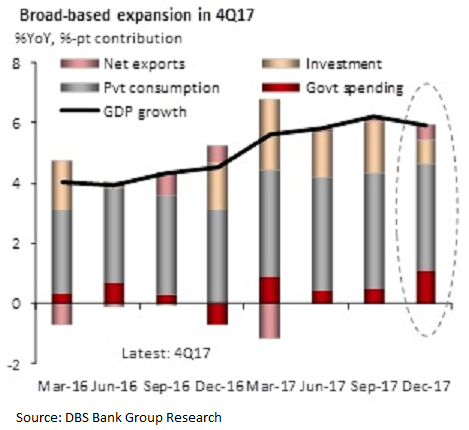
"GDP growth registered 5.9 percent in 2017, up from the commodity-/oil-driven slump in the preceding two years and significantly stronger than the 4.7 percent in 2013. While expected to be a tad slower at 5.0-5.5 percent, this year’s growth will be more broad-based and led mainly by robust domestic growth," the report added.
Lastly, FxWirePro has launched Absolute Return Managed Program. For more details, visit http://www.fxwirepro.com/invest







