


 Asian Stocks Rise as Bond Yields Ease Ahead of U.S. Inflation Data
  Best Gold Stocks to Buy Now: AABB, GOLD, GDX
  Asian Stocks Fall as US Jobs Data and Oil Risks Rattle Markets
  Oil Prices Surge as U.S.-Iran Tensions Fuel Supply Fears
  Yen Strengthens on Tokyo Inflation as Dollar Awaits US Jobs Data
  Scope Warns US Debt Could Hit 160% of GDP
  Asian Currencies Mixed as Yen Slides on BOJ Rate Signals
  FxWirePro: Daily Commodity Tracker - 21st March, 2022
  G20 Divided Over US Push to Curb Industrial Overcapacity
  Australia Trade Surplus Shrinks Sharply as Imports Surge


 Add as a preferred source on Google
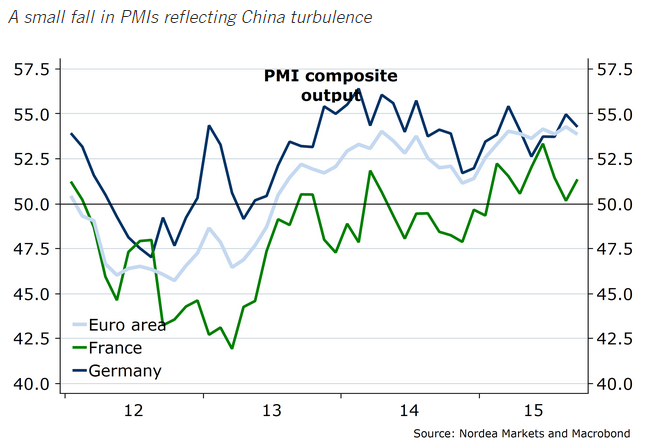
The PMIs fell more than expected in Germany, pulled down particularly by lower manufacturing confidence. Whereas, the levels are still high indicating a growth rate around 0,4 % in the third quarter of 2015, argues Nordea Bank.
Domestic demand appear to keep up the German incoming orders reflecting lower demand from emerging markets and China. This effect could be more than temporary since it is already visible in incoming orders.
The turbulence in China has had a negative effect on Euro area confidence, the effect being most visible in Germany. The manufacturing PMI of Euro zone fell to 52 from 52.3 and the services sector fell to 54 from 54.4, both still indicating solid growth in September, notes Nordea Bank.







