


 US 10-Year Treasury Yield at 6% Emerges as New Market Risk Threshold
  Drug pollution in water is making salmon take more risks – new research
  Rice feeds billions of people – but its role in fueling climate change is growing
  How to create a thriving forest, not box-checking ‘tree cover’
  RBI Uses $10 Billion Currency Swaps to Drain Excess Rupee Liquidity
  Japan Private-Sector Growth Slows as Domestic Demand Weakens
  Unsustainable – or manageable? We don’t yet know how data centres will impact Australia’s environment
  Trump, Xi Focus on Trade and AI at White House Summit
  Gold Drops Over 1% as Dollar, Treasury Yields Surge on Fed Rate Hike Bets
  Fungi are among the planet’s most important organisms — yet they continue to be overlooked in conservation strategies
  Russian Envoy Dmitriev Heads to US for Ukraine Talks
  Australia Unemployment Hits Five-Year High Despite Strong Jobs Growth
  South Korea, US Discuss Warship Building Cooperation
  China’s ‘Lipstick King’ Says AI Won’t Replace Livestream Hosts
  How is Antarctica melting, exactly? Crucial details are beginning to come into focus
  Burkina Faso and Mali’s fabulous flora: new plant life record released


 Add as a preferred source on Google
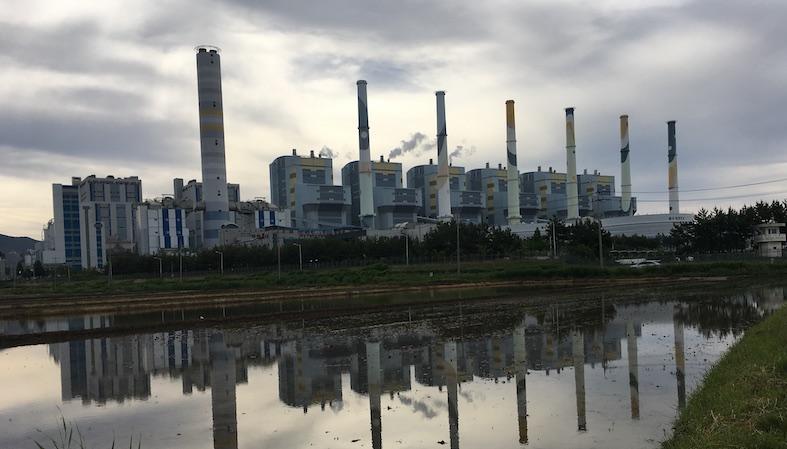
Environmental groups criticized the Presidential Committee on Carbon Neutrality for its poor skills in coming up with carbon neutrality plans that still emit greenhouse gas.
Only one of the three options unveiled by the committee for reducing carbon emissions by 2050 will achieve carbon neutrality.
The Korea Federation for Environmental Movements said that announcing carbon neutrality plans despite two of those still emitting greenhouse gas exhibits “poor skills.”
The Energy Justice Actions added that even the third plan that achieves carbon neutrality is not clear when coal-burning power plants and cars with internal combustion engines will come to an end.
The road map results in varying net emissions in 2050 from zero to 25.4 million metric tons.
Seoul National University’s environmental professor Yun Sun-jin, a co-chairperson of the committee, noted that they reviewed the scenario based on the principles of accountability, fairness, innovativeness, inclusiveness, and reasonableness.
Under the first plan, the country will continue fossil fuel use, including coal-fired power plants, which would produce 153.9 million tons of greenhouse gases in 2050. But 95 million tons will be eliminated using carbon capture, and absorbents such as forests will take out 24.1 million tons, while eco-friendly energy would offset it by 9.4 million tons.
It will lead to a total of 24.5 million tons of greenhouse gas emissions produced in Korea in 2050, down 96.5 percent from the 727.6 million tons in 2018.
The second plan will halt coal-fired power plant operations while maintaining liquefied natural gas power plants for emergency use, resulting in net carbon emissions of 18.7 million tons in 2050.
Under the third plan, it would shut down all coal-fired and LNG power plants while increasing renewable energy supply and green hydrogen technology use. It aims to eliminate all greenhouse gas emissions and achieve a “net-zero. The committee will collect feedback, where it would base its decision on coming up with a final blueprint in late October. maximizing the use of existing infrastructure.







