


 Heinz Wattie's to Close Three New Zealand Plants, Cutting 350 Jobs
  Nintendo Stock Surges 10% as Pokémon Pokopia Breaks Sales Records
  Iran-Israel War Sparks Global Oil Crisis as Tankers Burn in Gulf Waters
  U.S.-Israel War on Iran Sends Crude Oil Prices Surging Amid Strait of Hormuz Tensions
  Taiwan's MQ-9B SkyGuardian Drone Order Stays on Schedule Despite Middle East Conflict
  BMW Warns of Further Earnings Decline in 2026 Amid Global Trade Pressures
  Pentagon Taps Wall Street Talent to Manage $200 Billion Defense Investment Fund
  Iran-U.S. Oil Tensions Escalate as Revolutionary Guards Threaten Strait of Hormuz Blockade
  Bank of Japan Expected to Hold Rates at 0.75% Before June Hike Amid Middle East War Uncertainty
  U.S. Calls for Reassessment of International Aid to Taliban-Ruled Afghanistan
  Robinhood Banking Surpasses $1 Billion in Deposits Following Successful Relaunch
  Alphabet's GFiber Merges with Astound Broadband to Build Major U.S. Internet Provider
  Asian Stock Markets Rise as Oil Prices Pull Back; U.S. CPI in Focus
  Japan's BOJ Independence Under Fire as PM Takaichi's Rate Stance Draws Political Heat
  Oil Prices Surge Toward $100/Barrel After Tanker Attacks in Iraqi Waters
  Trump Administration Launches Trade Investigations Against 16 Countries Over Industrial Overcapacity
  Mexico's Electoral Reform Bill Fails in Congress as Coalition Fractures


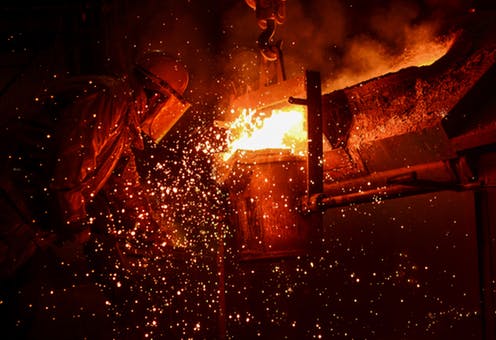
Korea Zinc’s board is set to convene on Monday to vote on a major overseas investment plan that could significantly strengthen the supply chain for critical minerals in the United States. According to a source familiar with the matter, the South Korean metals producer is considering a proposal to build a new smelter in the U.S. through a joint venture involving the U.S. government and several American companies. The total investment for the project is expected to reach 10 trillion won, equivalent to approximately $6.78 billion.
The planned smelter would focus on refining key strategic minerals, a move that aligns with growing efforts by the United States and its allies to reduce reliance on single-country supply sources for critical materials. South Korea’s Yonhap News Agency reported that the U.S. government and participating U.S. companies would collectively hold a 20% stake in the joint venture, contributing around 2 trillion won in investment capital.
According to the same report, the facilities are expected to produce antimony and germanium, both of which are considered essential minerals for advanced manufacturing, defense applications, and high-tech industries such as semiconductors and renewable energy. Antimony is widely used in flame retardants and alloys, while germanium plays a crucial role in fiber optics, infrared technology, and electronics.
The proposed project underscores Korea Zinc’s strategy to expand its global footprint while responding to shifting geopolitical and economic priorities around critical mineral security. For the United States, the partnership could represent a significant step toward boosting domestic processing capacity for minerals that are vital to national security and industrial competitiveness.
A spokesperson for Korea Zinc was not immediately available for comment, and the company has not yet publicly confirmed details of the board’s agenda. However, if approved, the investment would rank among the largest South Korean industrial projects in the United States and further deepen economic cooperation between the two countries.
The outcome of Monday’s board meeting will be closely watched by investors and policymakers alike, as it could signal a major acceleration in cross-border collaboration on critical minerals and clean technology supply chains.













