


 Cardano Price Drops 14% as ADA Funding Rate Hits Four-Month Low
  DWF Labs Sues BitGo for $114 Million Over Alleged Token Sales Breach
  XRP Ledger Activates New Security Feature for Banks and Stablecoins
  Cardano Hits Record 436 TPS as Network Scaling Advances
  XRP Whale Activity Drops 27% in Eight Days Amid Market Sell-Off
  XRP Price Eyes $1.50 as ETFs Attract $8.17M Inflows
  Morgan Stanley Raises Coinbase Stock Price Target to $258 Ahead of Earnings
  Chainlink Price Drops 3% Despite New CCIP Vault Launch
  Dogecoin Liquidations Surge as DOGE Bulls Face Heavy Losses
  MSTR Stock Rises as Barclays Raises Price Target to $175
  US Government Moves $1 Billion in Bitcoin Amid Sale Speculation
  Stellar Overtakes Ethereum in RWA Fund Inflows as XRP Leads Commodities
  Jameson Lopp Downplays AI Threat to Bitcoin Cryptography


 Add as a preferred source on Google
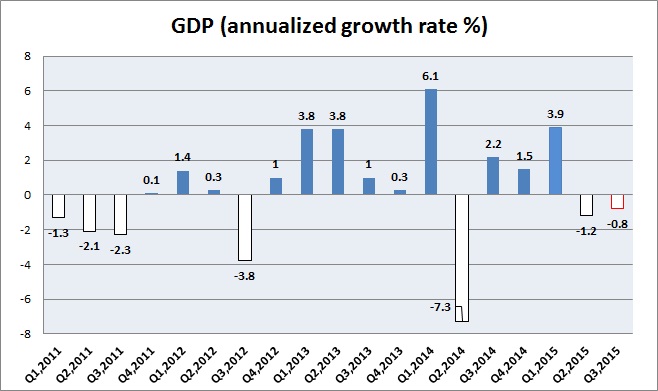
Recession and deflation, do not seem to be ready to leave Japanese economy, posing doubts over Abenomics 2, named after Japanese Prime Minister Shinzo Abe. Mr. Abe, in his stage two of Abenomics program has set a goal to raise Japan's GDP by 20% to ¥ 600 trillion by 2020. However, that target is seriously in doubt, along with bank of Japan's (BOJ) 2% inflation target as Japan is back on the verge of deflation.
- Latest flash reading showed, Japanese economy shrank by 0.2% in third quarter or 0.8% annualized pace after shrinking -0.3% in the second quarter.
Though, Bank of Japan, indicated that at current point further easing may not be necessary, without any further risks from emerging markets or China but calls are going strong from economists and analysts for BOJ to do more to fight back current slowdown in economic activity and weaker inflation.
However, with BOJ purchasing at pace of ¥ 800 trillion per annum, it is likely to own close to 90% of outstanding Japanese bonds by 2019 and any further increase in pace of purchase will only bring that time line closer. Moreover, as Japan imports almost all of its energy need could face worsening current account should energy price rise, thanks to weaker Yen.
Yen's devaluation since 2012, might lose its charm if European Central Bank (ECB), choose to expand its stimulus program leading to much weaker Euro.
Yen is currently at 122.5 per Dollar, trading strong over risk aversion.







