


 U.S. Senate Greenlights AI Chatbots for Official Staff Use
  Trump-Putin Call Addresses Iran War, Ukraine Peace, and Global Oil Crisis
  U.S. and Russia Hold Diplomatic Talks in Florida Amid Ongoing Tensions
  U.S.-Israel War on Iran Sends Crude Oil Prices Surging Amid Strait of Hormuz Tensions
  Trump Hints at Possible U.S. Takeover of Cuba Amid Deepening Humanitarian Crisis
  U.S. Calls for Reassessment of International Aid to Taliban-Ruled Afghanistan
  Iran-Israel War Sparks Global Oil Crisis as Tankers Burn in Gulf Waters
  Pentagon Taps Wall Street Talent to Manage $200 Billion Defense Investment Fund
  Trump Announces New U.S. Oil Refinery in Texas with Indian Energy Giant Reliance
  Iran's Government Remains Stable Despite U.S. and Israeli Strikes, Intelligence Shows
  Taiwan's MQ-9B SkyGuardian Drone Order Stays on Schedule Despite Middle East Conflict
  FBI Warns of Possible Iranian Drone Attacks on California Amid U.S.-Iran War
  Russian Drone Strikes Hit Kharkiv and Dnipro, Injuring Over 20 Civilians
  IEA Releases Record 400 Million Barrels of Oil Amid U.S.-Iran War
  Shots Fired at U.S. Consulate in Toronto in Suspected National Security Incident
  Ukraine Strikes Russian Missile Component Factory in Bryansk Using British Weapons


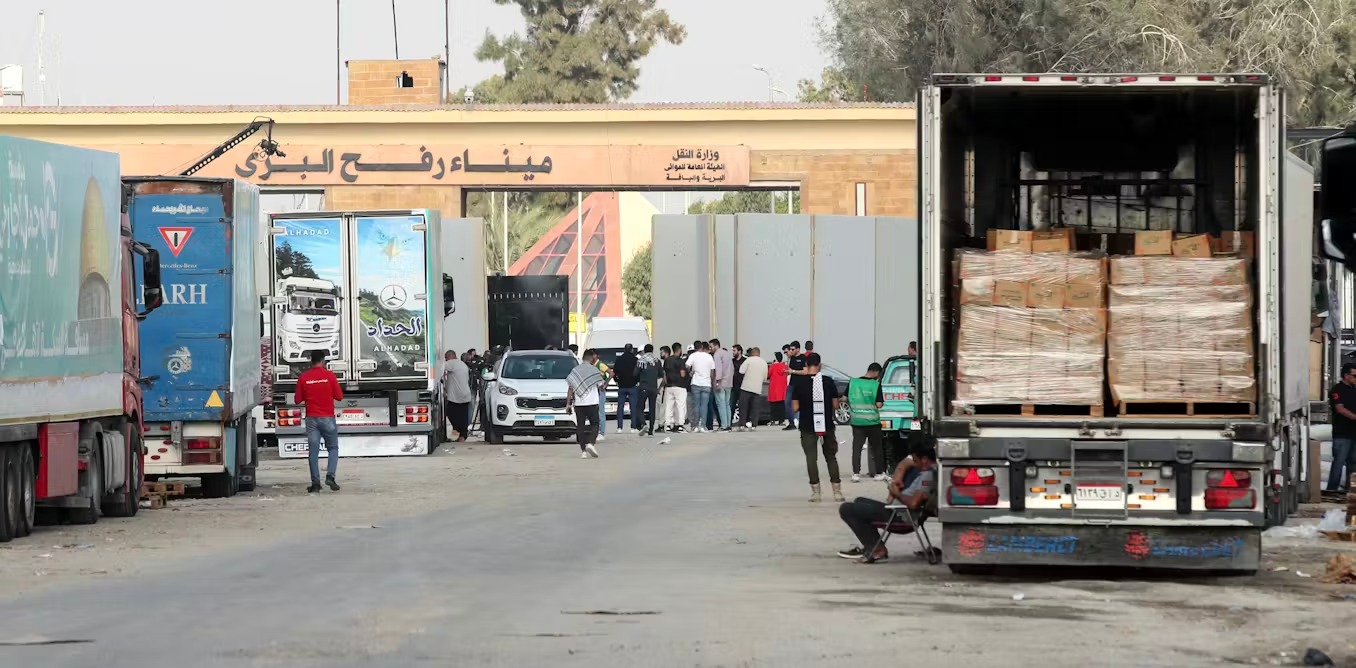
Israel on Monday partially reopened the Rafah border crossing, allowing a small number of Palestinians to move in and out of Gaza for the first time in months, marking a key step in a U.S.-backed ceasefire plan aimed at ending the war. The Rafah crossing, surrounded by widespread destruction, is Gaza’s only gateway to the outside world for most of its more than two million residents.
The crossing reopened at around 9 a.m., with expectations that roughly 50 Palestinians would enter Gaza and a similar number would exit, primarily medical patients seeking urgent treatment abroad. However, by nightfall, only 12 Palestinians had been allowed to reenter Gaza, while 38 others were left waiting overnight on the Egyptian side after failing to clear Israeli security checks. On the outbound side, Israeli authorities approved the exit of five patients, each accompanied by two relatives, bringing the total number of crossings to just 27.
Palestinian officials blamed the slow progress on strict Israeli security inspections, while Israel’s military offered no immediate comment. Despite the limited movement, the reopening was welcomed by many Gazans, particularly the estimated 20,000 people hoping to leave Gaza for specialized medical care. Patients described the crossing as a critical lifeline after months of isolation and shortages.
Israel took control of the Rafah crossing in May 2024, about seven months into the Gaza war, and it has remained largely closed since, except for a brief reopening during an earlier truce in early 2025. Reopening Rafah was one of the final conditions of an October ceasefire brokered by the United States under President Donald Trump’s plan to halt fighting between Israel and Hamas.
Even as crossings resumed, Israeli airstrikes reportedly killed at least four Palestinians on Monday, including a three-year-old child. Meanwhile, foreign journalists remain barred from entering Gaza, with Israel citing security risks, a move challenged by international press groups.
While the partial reopening of Rafah offers limited relief, uncertainty remains high as negotiations over Gaza’s future governance, reconstruction, and security continue, and the risk of renewed conflict persists.













