


 Yen Sinks as BOJ Rate Hike Fails to Impress Markets
  Fed’s Williams Signals One More Rate Hike Before Year-End
  BOJ Flags Import Costs and Yen Shocks as Persistent Inflation Risks
  Best Gold Stocks to Buy Now: AABB, GOLD, GDX
  South Korea Exports Set for 16th Monthly Gain on AI Chip Demand
  RBA Set for September Rate Hike as Inflation Stays High


 Add as a preferred source on Google
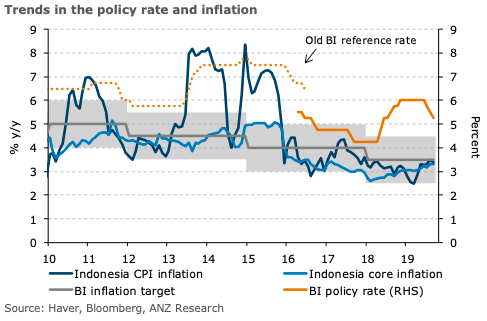
Indonesia’s headline inflation eased to 3.39 percent y/y in September, following two straight months of acceleration. A pullback in volatile food inflation more than offset a pick-up in administered prices and core inflation, ANZ Research reported.
On a sequential basis, headline CPI fell by 0.27 percent m/m in September, the first decline in seven months. The decline was led by food prices, which fell by 1.97 percent.
Most other major categories — such as housing, clothing, healthcare and education — saw prices rise further, but at a slower pace compared to the previous month.
Core CPI, which excludes volatile food and government-controlled prices, rose by 0.29 percent m/m in September, slower than the 0.43 percent gain seen in August. In y/y terms, core inflation edged up to 3.32 percent, the highest since February 2017.
The bottom line is that both headline and core inflation are likely to stay comfortably within the central bank’s 2.5-4.5 percent target band and will not prevent BI from easing monetary policy.
"We continue to see scope for at least one more 25bp cut in BI’s easing cycle, which will take its policy rate to 5.00 percent by end-2019," the report further commented.







