


 Trump Suspends Some Morocco Fertilizer Tariffs to Ease U.S. Supply Shortage
  Asian Currencies Stay Range-Bound as Investors Eye China Data, RBNZ Outlook and U.S.-Iran Ceasefire
  World Bank Approves $1.1 Billion Emergency Funding for Bangladesh Amid Food and Energy Price Pressures
  Central Banks Eye Gold, Reduce Dollar Exposure as AI Adoption Accelerates: OMFIF Survey
  Oil Prices Slip as U.S.-Iran Peace Talks and Strait of Hormuz Risks Keep Markets on Edge
  China Factory PMI Seen Returning to Growth in June as AI Export Demand Supports Economy
  US Stock Futures Rise as US-Iran Ceasefire Hopes Boost Market Sentiment
  Canada Grants C$7 Million to Greenland Molybdenum Mine to Strengthen Critical Minerals Supply
  Gold Price Hits Annual Low as Fed Rate Hike Bets and Sticky Inflation Weigh on Bullion
  Japan Targets 1%+ Real Economic Growth With ¥370 Trillion Investment Plan
  Gold Price Ends Lower for Fourth Week Despite Rebound as Fed Rate Hike Bets Strengthen
  US Dollar Slips After PCE Inflation Data as Fed Rate Hike Expectations Stay Elevated
  Gold Price Falls as Fed Rate Hike Fears and U.S.-Iran Tensions Weigh on Bullion
  Oil Prices Rise as US-Iran Tensions Threaten Strait of Hormuz Oil Shipments
  China Sets 1.25% Overnight Reverse Repo Rate Below Market Expectations
  Argentina Economy Shrinks 1.5% in April, Recovery Under Milei Loses Momentum
  Yen Falls to 40-Year Low as Markets Watch Japan Intervention and U.S. Jobs Report


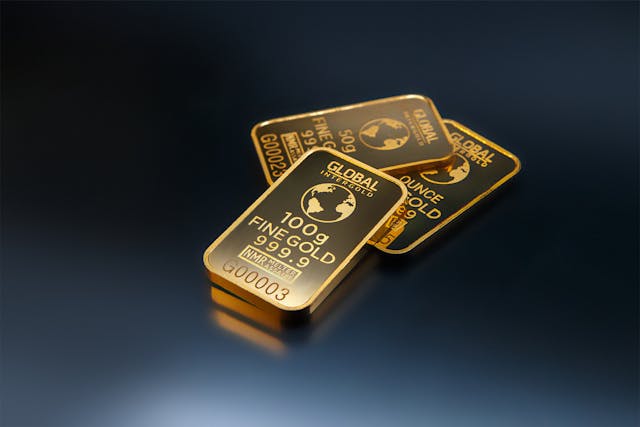
Gold prices moved lower on Monday as a stronger U.S. dollar and rising geopolitical uncertainty pressured the precious metal market. The decline came after Iran announced it would suspend negotiations with the United States following recent military strikes and escalating tensions involving Israel and Lebanon. However, U.S. President Donald Trump stated that discussions with Tehran remain active and claimed that a planned Israeli military operation in Beirut would not proceed.
Spot gold fell 1.2% to close at $4,484.86 per ounce, while gold futures declined 1.7% to settle at $4,514.95 per ounce. The precious metal is coming off a weak May performance, driven by dollar strength and growing expectations that interest rates could remain elevated for longer than previously anticipated.
According to Adam Turnquist, Chief Technical Strategist at LPL Financial, gold has undergone a significant correction since reaching a record high of $5,595 in January. He noted that prices have established a pattern of lower highs and are currently testing an important support zone near the rising 200-day moving average. This area also aligns with the long-term uptrend that began after gold’s breakout in early 2024.
Turnquist added that technical indicators continue to reflect bearish momentum, although there are early signs suggesting that selling pressure may be beginning to ease.
Gold was also pressured by increased investor appetite for riskier assets, including equities, as markets had anticipated progress toward a potential peace agreement between the U.S. and Iran. Those expectations weakened after renewed military exchanges over the weekend, Iran’s decision to halt negotiations, and concerns surrounding the Strait of Hormuz, a critical global energy shipping route.
Iran’s semi-official Tasnim News Agency reported that Tehran had suspended diplomatic exchanges with Washington through mediators and was considering measures that could affect access to the Strait of Hormuz. The move followed U.S. military strikes targeting radar and drone-control facilities in Iran, which Washington described as defensive actions.
Despite the setback, Trump maintained that negotiations with Iran are continuing rapidly. Key issues under discussion reportedly include Iran’s nuclear program and the future status of the Strait of Hormuz. Market participants will continue monitoring developments closely, as any escalation or breakthrough in negotiations could significantly influence gold prices and broader commodity markets in the coming weeks.







