


 Gold Prices Fall Amid Rate Jitters; Copper Steady as China Stimulus Eyed
  UBS Projects Mixed Market Outlook for 2025 Amid Trump Policy Uncertainty
  Global Markets React to Strong U.S. Jobs Data and Rising Yields
  Gold Prices Slide as Rate Cut Prospects Diminish; Copper Gains on China Stimulus Hopes
  BOJ Set for 25-Basis-Point Rate Hike as Yen Weakness Fuels Inflation
  RBA Says ASX Still Falls Short on Governance and Risk Controls
  European Stocks Rally on Chinese Growth and Mining Merger Speculation
  Fed May Resume Rate Hikes: BofA Analysts Outline Key Scenarios
  U.S. Stocks vs. Bonds: Are Diverging Valuations Signaling a Shift?
  Indonesia Surprises Markets with Interest Rate Cut Amid Currency Pressure
  US Futures Rise as Investors Eye Earnings, Inflation Data, and Wildfire Impacts
  China's Refining Industry Faces Major Shakeup Amid Challenges
  S&P 500 Relies on Tech for Growth in Q4 2024, Says Barclays


 Add as a preferred source on Google
The BoJ maintains status quo in its monetary policy, focusing to soothing 10Y Treasury bond yield, the benchmark for long-term borrowing costs, at around zero pct and keep the overnight interest rate around -0.1%. and asset purchases program at ¥80 trillion.
The goal is to correct the excessively flat yield curve caused by its negative interest rate policy that took effect in February.
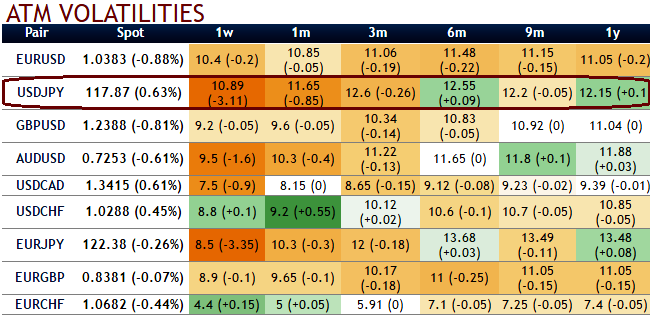
The recent fast spot upside lifted the 6m implied volatility to return to its highest level since 2013, which in itself is a reason to suspect mean-reversion will occur. It turns out that the relationship between spot and implied volatility suggests with more insistence that USDJPY.
Mounting global inflation, lifting US long yields, and persistent policy uncertainty have elected the dollar as the winner. The risk is for risk sentiment to change, thus the resilience of the risk mood bears watching because it is the key to the yen's continued weakness. Uncertainty is, however, unlikely to lift FX volatility further until the environment turns risk-off. Trump’s victory has so far not been conducive to such a shift.
On reduced central bank activity BoJ maintained unchanged monetary policy, which has committed to an overshooting commitment of achieving the 2% price stability target. The bank has shifted its primary tool for easing from quantity to the interest rate and, as the target is not a rigidly timed goal, the central bank is unlikely to implement additional easing. One of our key market themes was that the BoJ’s peg of long-term yields will transfer the suppressed rate volatility to the currency and equities.
You could probably understand the shrinking vols from the above IV nutshell and both RVs and IVs have constantly been making lower lows, this would demonstrate much about underlying USDJPY sentiments
Unlike NKY volatility, USDJPY volatility already has benefited from the volatility boost via an impressive topside acceleration. But now that US rates have picked up post the US election and following the Fed’s hike and adjustment higher of the dot plot, the yen depreciation should be more gradual. The market is due to take a breather which will dampen USDJPY realized volatility.







