


 3 clinical-grade skincare creams you really shouldn’t buy online
  World game at war: why some European nations have threatened a World Cup boycott
  SpaceX Earnings Preview: Bernstein Says 4 Key Factors Will Drive Long-Term Valuation
  Gold Slips Below $4050 as Bond Yields Surge to 4.7% on Fed Inflation Concerns – Sell Rallies at $4060 Targeting $3940
  Meta-backed research finds exposure to ‘untrustworthy’ social media is rare. The fine print is less reassuring
  ‘Vibe coding’ is fun and easy, but there’s a major catch
  Gold Shines on Oil Relief: Buy Dips at $4160, Targeting $4305 as Bullish EMAs Dominate
  How an OpenAI safety test became a real-world cyberattack on the Hugging Face platform


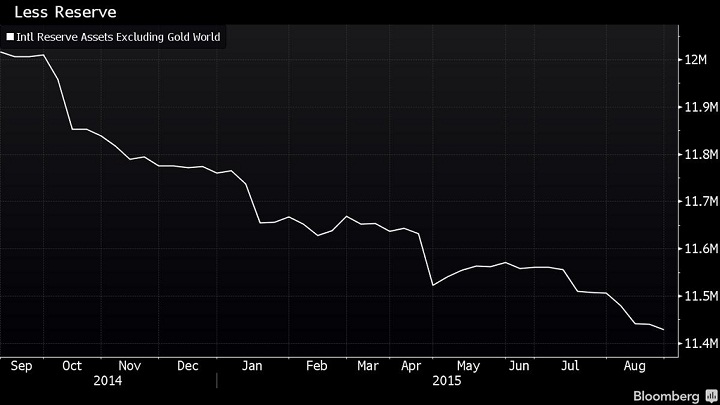
Bets on reversal of recent expansionary monetary policy has led to quantitative tightening across the world, especially across emerging economies.
- According to latest data from International Monetary Fund (IMF), global reserve across central banks are in decline, especially across emerging markets. As per latest data reserves has fallen quite rapidly over the past year from their peak of 11.98 trillion to 11.43 trillion as of August leading to a quantitative tightening.
What's causing reserves to decline?
The reasons are multiple.
- Recent decline in oil prices has led oil exporting emerging economies use their reserves to gap budget deficit and trade deficit.
- Many emerging market economies have used up reserves to defend their currencies, as dollar flies out of their economy.
- Rate hike bets by developed market economies has led to reverse of portfolio inflows into emerging markets, which has also contributed to the drop.
We expect reserves to decline further as US FED and Bank of England (BOE) prepares to hike rates and commodities decline.
The sharper the decline, the more trouble it is going to cause for vulnerable economies.







